



பதிற்றுப்பத்து 55 · ஆறாம் பத்து
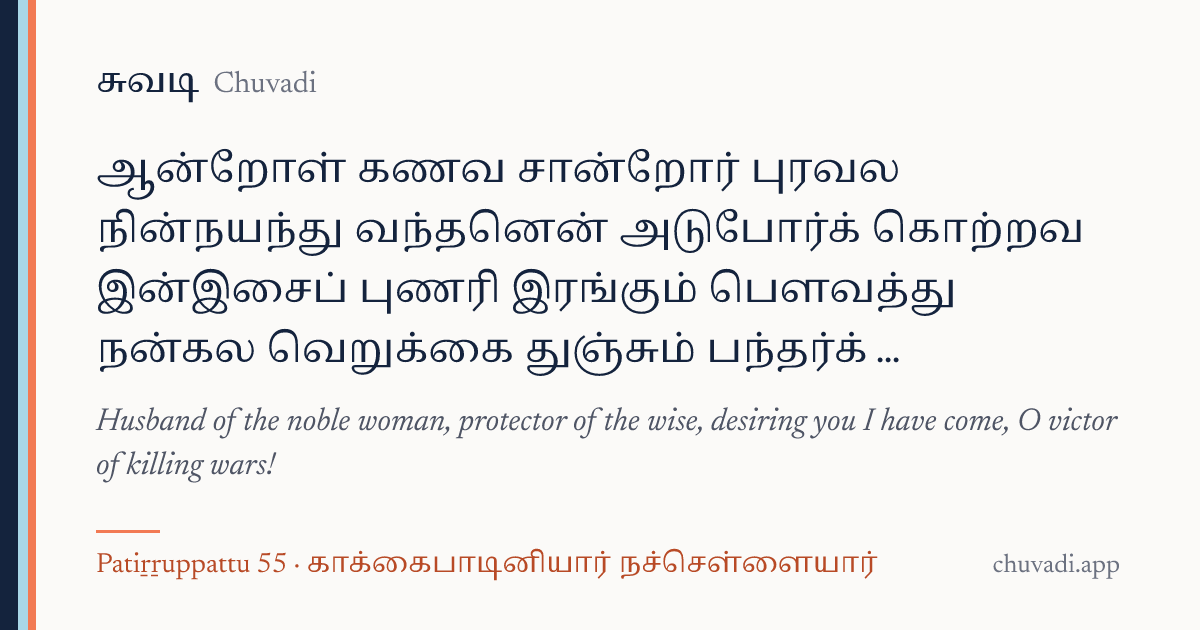
பாடல் · The poem
Tap a word to see where else it occurs.
பொருள் · Meaning in TamilAI
ஆன்றமைந்த அரசியின் கணவனே, சான்றோரைக் காப்பவனே, போரில் வெல்லும் கொற்றவனே, உன்னை விரும்பி வந்தேன். இனிய ஓசையுடைய கடற்கரையில் நல்ல அணிகலன் செல்வம் உறங்கும் பந்தரும், தாழை மணக்கும் பெருந்துறையும் உடைய குளிர்ந்த கடல்சார் நல்ல நாட்டின் தலைவனே! சிவந்த ஊன் தெரியாத வெண்மையான முதிரைத் துவையலும் வெள்ளிய ஊனும் உணவாகக் கொண்ட மழவர்க்குக் கவசம் போன்றவனே, குடவர் கோவே, கொடித்தேர் அண்ணலே! இரவலர் வராவிட்டாலும் அவர்களை விரும்பித் தேரில் அழைத்து வந்து வயிறார உணவு அளிப்பவனே, மகிழ்ச்சி தரும் வாய்மொழியும் புகழும் உடையவனே! பெருமானே, பெய்து நிலத்தைக் காத்து, பொங்கி எழுந்து மலையைச் சேரும் வெண்மேகம் போல, நீ விரும்பும் அளவுக்குப் பல ஆண்டுகள் உன் நாட்கள் கழிவனவாக. பகை வேந்தர் மாலை அழிந்து அலற, உயர்ந்த மலைச்சரிவு நாடுகளைக் கைப்பற்றி, போர்ச்சினம் தணிந்த ஆண்மையும், பகைவரைத் தடுத்த ஒள்வாளும், உயர்ந்த உள்ளமும் உடைய தலைவனே, உன் நாட்கள் அவ்வாறே செல்வனவாக.
துறை: செந்துறைப்பாடாண்பாட்டு. காக்கைபாடினியார் நச்செள்ளையார் சேரலாதனை வாழ்த்துகிறார். செல்வம் உறங்கும் 'துஞ்சும் பந்தர்' (4ஆம் அடி) பாடலின் பெயர். கொடையும் மழைமேக உவமையும் முக்கியக் கூறுகள்.
ஆங்கிலம் · English translationAI
Translation
- Husband of the noble woman, protector of the wise,
- desiring you I have come, O victor of killing wars!
- On the ocean where the sweet-sounding waves resound,
- at the pantar where the wealth of fine goods lies sleeping,
- in the great harbour with fragrant tāḻai on the shore,
- lord of the good land with cool sea-side fields!
- White mash of pulses in which no red meat shows
- and white flesh are their food: armour of the Maḻavar,
- king of the Kuṭavar, lord of the bannered chariot!
- Even if the suppliants do not come, you want them,
- bring them in your chariot and give them food to fill them;
- scion of fame, whose true word is full of gladness!
- Within the measure of what is wished, may many years pass;
- having rained and sustained the land, billowing up,
- like the white clouds that have reached the mountain,
- may they pass, great one, every single day,
- while kings of wide lands cry out, their garlands ruined;
- taking the lands on the slopes of the tall mountains,
- fighting till your anger cooled, with manhood that loves war,
- with the bright sword that held back those who resisted,
- lord of lofty heart, may your days pass so.
What the poem says
The poet addresses Āṭukōṭ Pāṭṭuc Cēralātaṉ with a string of titles and ends with a blessing on his days. The turai is centuṟaip pāṭāṇ pāṭṭu, direct praise.
He is the husband of a noble queen, the protector of wise men and a winner of wars. He rules a coastal land with a great harbour where fine goods are stored, and he is the shield of the Maḻavar warriors and king of the Kuṭavar, the western people. He is so eager to give that, even when suppliants do not come, he sends his chariot for them and feeds them.
The poet then blesses him: may his days pass many years, as many as he wishes, like white rain clouds that pour, nourish the land and rise to the mountains; and may they pass in victory, as he takes mountain lands, makes rival kings cry out, and checks his enemies with his bright sword.
The poem's name, tuñcum pantar, 'the pantar where wealth sleeps' (line 4), refers to a storehouse or market at the harbour where goods lie in plenty. Pantar may also be the name of a port; this is not certain. Viṇṭu in line 15 is read here as 'mountain'; it may be a named mountain.