



பதிற்றுப்பத்து 56 · ஆறாம் பத்து
பாடல் · The poem
Tap a word to see where else it occurs.
பொருள் · Meaning in TamilAI
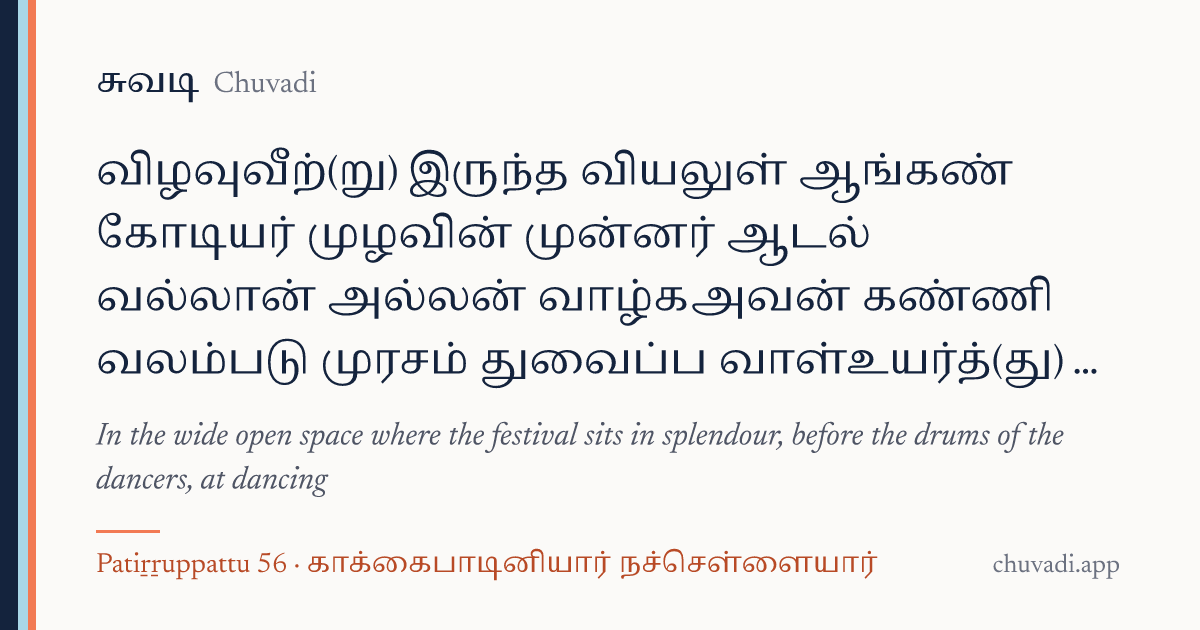
விழா நடைபெறும் அகன்ற இடத்தில், கூத்தரின் முழவுக்கு முன்னால் ஆடுவதில் அவன் வல்லவன் அல்லன்; அவன் கண்ணி வாழ்க. ஆனால், வெற்றி முரசு முழங்க, வாளை உயர்த்தி, ஒளிரும் அணிகளும் பொன்போன்ற உழிஞை மாலையும் அணிந்து, அறியாமையால் சினந்து தன்மேல் போருக்கு வந்த வேந்தர்கள் உடலை மறந்து இறந்துபட்ட போர்க்களத்தில் அந்த அரசன் ஆடுகிறான்.
துறை: ஒள்வாள் அமலை. காக்கைபாடினியார் நச்செள்ளையார் சேரலாதனைப் பாடுகிறார். 'வேந்துமெய்ம் மறந்த வாழ்ச்சி' (7ஆம் அடி) பாடலின் பெயர்; பகை வேந்தரின் மரணத்தைக் குறிக்கும் சொல்லாட்சி. விழா ஆடலில் வல்லமை இல்லாதவன் போர்க்களத்தில் ஆடுகிறான் என்ற முரணே பாடலின் சுவை.
ஆங்கிலம் · English translationAI
Translation
- In the wide open space where the festival sits in splendour,
- before the drums of the dancers, at dancing
- he is not skilled; long live his garland!
- As the victorious drum roars, raising his sword,
- he with shining ornaments, he with the golden-creeper uḻiñai,
- when kings, from great foolishness, came against him in rage,
- in the life where those kings forgot their bodies,
- on the battlefield where they fall and perish, the king dances.
What the poem says
This is a short poem by Kākkaipāṭiṉiyār Nacceḷḷaiyār about Āṭukōṭ Pāṭṭuc Cēralātaṉ. The turai is oḷvāḷ amalai, the victory dance of warriors with bright swords over the fallen enemy.
The poem works by contrast. At the festival, before the drummers, the king is not a skilled dancer. But on the battlefield, as the drum of victory roars, he raises his sword, wears his shining ornaments and the uḻiñai flower of siege warfare, and dances where foolish kings who attacked him have fallen dead.
The poem's name, vēntu mey maṟanta vāḻcci, 'the life in which the kings forgot their bodies' (line 7), is a grim way of saying the enemy kings died. The word vāḻcci, 'life' or 'state', is used ironically. Its exact construction with the line before is not fully clear.