



பதிற்றுப்பத்து 57 · ஆறாம் பத்து
பாடல் · The poem
Tap a word to see where else it occurs.
பொருள் · Meaning in TamilAI
ஓடாத உறுதியுடைய வீரர்களின் வலிமை அழிய, பெரிய பனைமாலை அணிந்து, கழல் குருதியால் சிவக்க, இரத்தம் தெறிக்கும் புலால் நாறும் போர்க்களத்தில் இருக்கிறான், துணங்கை ஆடிய வெற்றியுடைய அரசன். சில வளையல் அணிந்த விறலியே, மென்மையான வழியில் உன் சிறிய அடிகளை மெல்ல வைத்து நாம் செல்லமாட்டோமா? பாணர் கையிலுள்ள, நரம்பு கட்டிய பேரியாழைப் பாலைப் பண்ணில் இசைத்து, குரலோடு இணைந்த இனிய இசையில் தழிஞ்சி பாடிக்கொண்டு செல்வோம். நல்ல புதல்வர்களைப் பெற்ற, குடைச்சூல் அணிந்த, அடக்கமும் அறிவும் புகழும் உடைய ஒளிநுதல் மகளிரின் ஊடல் பார்வையைவிட இரவலரின் துன்பத்தையே அவன் அதிகம் அஞ்சுகிறான். அவ்வாறு காக்கும் பொறுப்பை ஏற்பவனைக் காண நாம் செல்வோம்.
துறை: விறலியாற்றுப்படை. காக்கைபாடினியார் நச்செள்ளையார் விறலியை சேரலாதனிடம் ஆற்றுப்படுத்துகிறார். 'சில்வளை விறலி' (6ஆம் அடி) பாடலின் பெயர். போர்க்களக் காட்சியும் யாழிசையும் கொடையும் இணைகின்றன.
ஆங்கிலம் · English translationAI
Translation
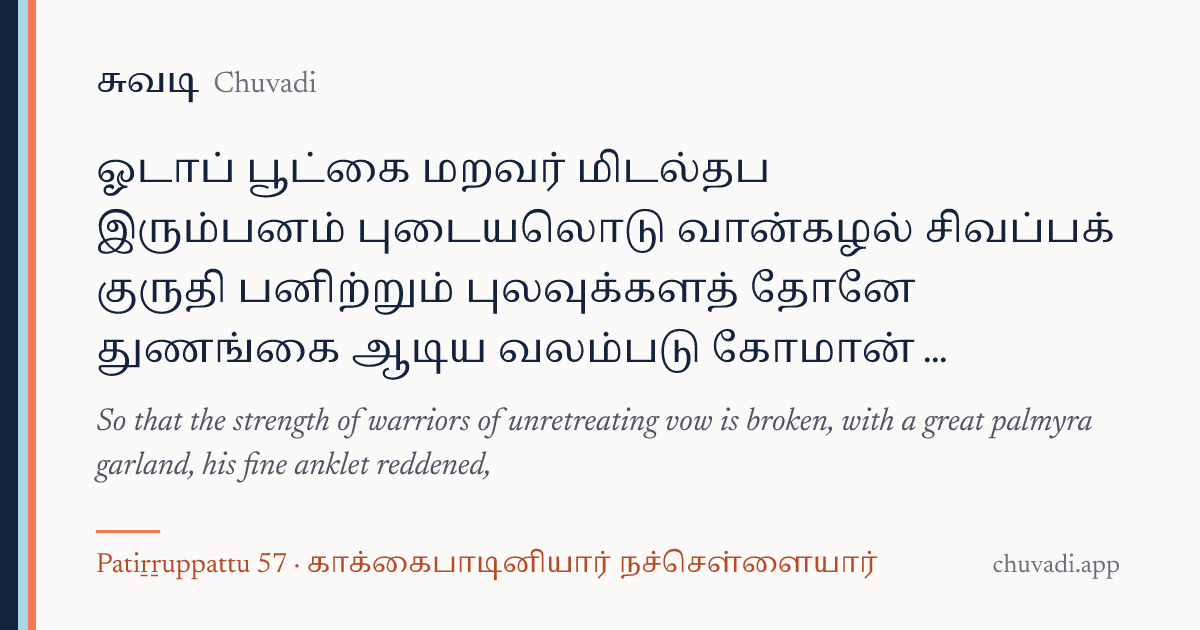
- So that the strength of warriors of unretreating vow is broken,
- with a great palmyra garland, his fine anklet reddened,
- he is on the flesh-reeking field where blood sprays,
- the victorious lord who danced the tuṇaṅkai.
- Stepping your small feet softly along the gentle path,
- shall we not go, O viṟali of few bangles?
- Tuning to the pālai mode the great yāḻ in the bard's hand,
- its strings bound tight, plucked by the fingers,
- singing the taḻiñci in sweet music joined to the voice,
- who bore young sons, good and fortunate, as companions,
- rich with kuṭaiccūl anklets, of restrained conduct,
- of full wisdom, of good fame shining forth,
- more than the sulking eyes of the bright-browed women
- he fears the sorrow of the suppliants;
- to see the one who takes up their protection, let us go.
What the poem says
This is a viṟaliyāṟṟuppaṭai, a guiding poem. One of the bard's company tells a viṟali, a dancing woman, to go with him to the king Āṭukōṭ Pāṭṭuc Cēralātaṉ, who will reward them.
Lines 1 to 4 show the king on the bloody battlefield. He wears the palmyra garland of the Chera, his anklet is red with blood, and he has danced the tuṇaṅkai of victory after breaking the strength of brave warriors.
Lines 5 to 15 urge the viṟali to walk softly with her small feet, while the bard tunes his great yāḻ to the pālai mode and sings the taḻiñci, a song about mercy to the defeated. Lines 10 to 12 seem to praise the queen, who has borne good sons, wears rich anklets and is wise and famous. The king himself fears the sorrow of those who beg more than the sulking looks of women, so the poet says: let us go and see the one who protects us.
The poem's name, cil vaḷai viṟali, 'viṟali of few bangles' (line 6), names the woman addressed. Lines 10 to 12 are hard to attach: they may describe the queen, as read here, or the king's household in general. Kuṭaiccūl is read as a type of anklet.