



பதிற்றுப்பத்து 59 · ஆறாம் பத்து
பாடல் · The poem
Tap a word to see where else it occurs.
பொருள் · Meaning in TamilAI
பகல் நீளாமல் இரவுப்பொழுது பெருகும், பனி நிலைத்த கடுங்குளிர் மாதத்தில், குளிர்ந்த பாலைவழியில் செல்லும் பாணன் மகிழும்படி, மங்கிய இருள் விடிந்து, தனிமை நீங்கி, இருள் அகல, பல கதிர்களைப் பரப்பிக் கிழக்கில் கதிரவன் தோன்றுவது போல, நீ இரவலரின் சிறுகுடிகளைப் பெருகச் செய்கிறாய். உலகம் சார்ந்திருக்கும் சிறந்த கல்வியுடையவனே, வில்வீரர்களின் கவசமே, வெற்றியுடன் வீற்றிருக்கும் செல்வர்க்கெல்லாம் செல்வனே! உன்னைச் சேர்ந்தவர்க்கு நீ அரண் என்பதை அறியாமல் உன்னை எதிர்த்து, வலிமை குன்றி, உன் பகைவர் பணிந்து திறை தருகின்றனர். அப்படியானால் உன் சினம் தணியுமா? உன் கண்ணி வாழ்க. மலையிலும் கடலிலும் உண்டான பலவகைப் பொருட்களை வணிகர் பகிர்ந்து விற்கின்றனர்; வழிகளில் தடை இன்றி அறவழியில் நடக்கின்றனர். தேடிவரத்தக்க வலிமையும் பெருந்தோளும் உடையவனே, சிறந்த செல்வம் தரும் இந்த நாட்டைக் காப்பதும் உன் கடமையே.
துறை: செந்துறைப்பாடாண்பாட்டு. காக்கைபாடினியார் நச்செள்ளையார் சேரலாதனைப் புகழ்கிறார். 'மாகூர் திங்கள்' (2ஆம் அடி) பாடலின் பெயர். குளிர்கால விடியலில் தோன்றும் கதிரவன் உவமை முக்கியமானது.
ஆங்கிலம் · English translationAI
Translation
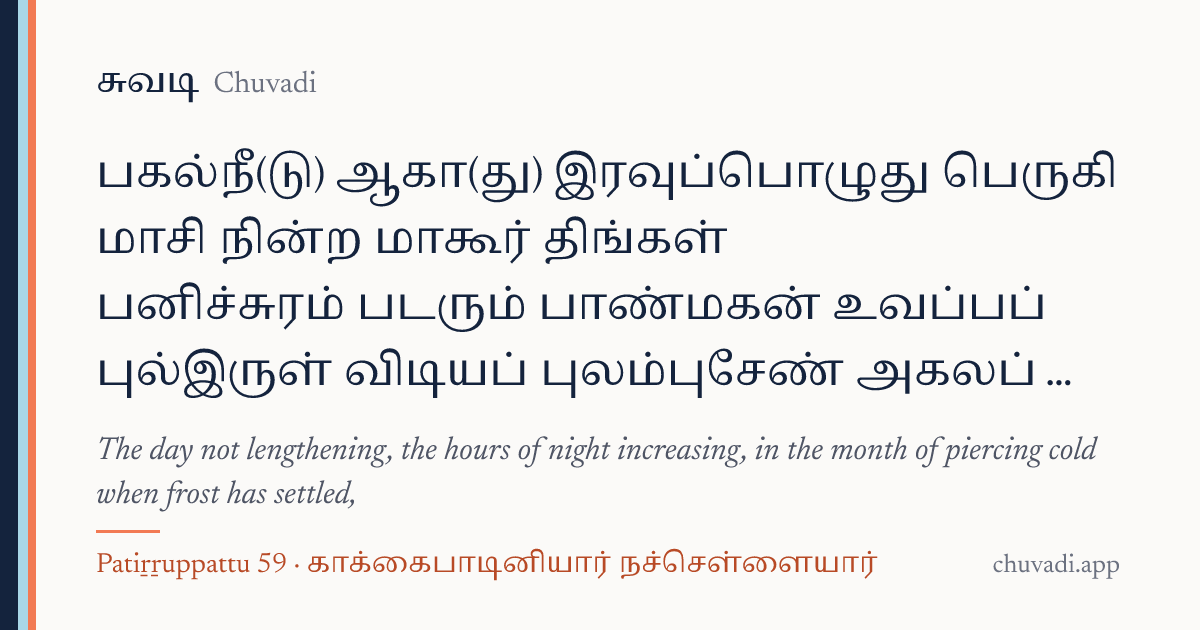
- The day not lengthening, the hours of night increasing,
- in the month of piercing cold when frost has settled,
- so that the bard who walks the cold wasteland rejoices,
- as the dim darkness dawns and loneliness goes far away,
- as the spreading dark withdraws, spreading its many rays
- the sun rises in the east; just so
- you make the small homes of suppliants grow great,
- you of eminent learning in which the world rests,
- armour of the bowmen, of victory seated in splendour,
- rich one among the rich! That you are a refuge to those who come to you
- they did not know; they opposed you, fell short in strength,
- and now your enemies bow and pay tribute; if so,
- will your anger cool as it passes? Long live your garland!
- Goods of many different kinds, gathered in the wide land,
- from the hills and from the sea, which the traders share out,
- with no hindrance on the roads, following dharma in their ways;
- with strength fit to be sought, with broad shoulders,
- bringing fine treasures of great worth,
- to protect the land is your duty too.
What the poem says
The poet addresses Āṭukōṭ Pāṭṭuc Cēralātaṉ. The turai is centuṟaip pāṭāṇ pāṭṭu, direct praise.
The poem opens with a long simile. In the cold month, when the nights are long and the days short, a bard walking through a frozen wasteland is glad when the sun rises in the east and drives away the dark. Just so, the king makes the poor homes of suppliants prosperous. The poem's name, mā kūr tiṅkaḷ, 'the month of piercing cold' (line 2), comes from this opening.
Lines 8 to 13 praise his learning, his victories and his wealth, and turn to his enemies. They did not know he protects those who submit; they fought, failed, and now bow and pay tribute. The poet asks: will your anger now cool? Long live your garland.
Lines 14 to 19 remind him of his duty. Goods from the hills and the sea are traded in his land, and merchants travel safely on the roads. It is his duty to protect this land. Line 2 may name the month Māci; the word may also mean frost or mist, and the translation reads it so. Line 8 kaṟpu is read as 'learning'; it can also mean chastity, which would refer to the queen.