



பதிற்றுப்பத்து 60 · ஆறாம் பத்து
பாடல் · The poem
Tap a word to see where else it occurs.
பொருள் · Meaning in TamilAI
அவன் படை கொல்லும் போரை விரும்புவது; அவனும் போர்ச்செயலை விரும்புபவன்; ஆயினும் ஓயாமல் கொடுப்பவன். பாண்மகளே, அவனைக் காணச் செல்லமாட்டோமா? வண்டுகள் மொய்த்தாலும் இனிய சுவை மாறாத, அரத்தால் அறுக்கப்படாத மரத்தில் பழுத்த இனிய கனிகளும், அழகிய சாறு நிறைந்த முண்டைப் பழங்களும் வழிச்செல்வோரின் களைப்பைப் போக்குகின்றன. குறையாத விளைச்சலும் நீங்காத வளமும் உடைய நாடு அது. வில்தொழிலில் சோம்பலைக் களைந்த வில்வீரர்கள், பொங்கும் அலைத்துளிகள் பனிமூட்டத்தோடு கலந்து வரும் கடற்காற்றில் நடுங்குகின்றனர். அத்தகைய, தீராத கள்வளமுடைய நறவு என்னும் ஊரில், தன் மென்மையான சுற்றத்தோடு அவன் இருக்கிறான்.
துறை: விறலியாற்றுப்படை. காக்கைபாடினியார் நச்செள்ளையார் பாண்மகளைச் சேரலாதனிடம் ஆற்றுப்படுத்துகிறார். 'மரம்படு தீங்கனி' (5ஆம் அடி) பாடலின் பெயர். வழியில் கிடைக்கும் கனிகளும், கடற்கரைக் காட்சியும் மன்னனின் கொடையைக் குறிக்கின்றன. 5, 6, 12ஆம் அடிகளின் பொருள் உறுதியற்றது.
ஆங்கிலம் · English translationAI
Translation
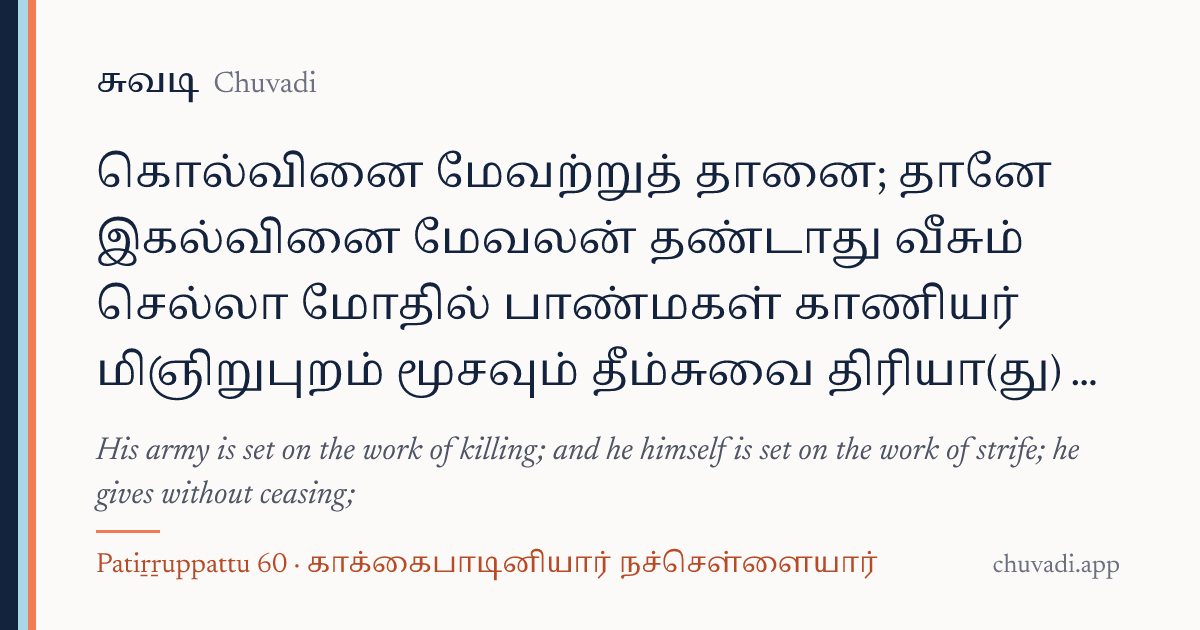
- His army is set on the work of killing; and he himself
- is set on the work of strife; he gives without ceasing;
- shall we not go, O bard-woman, to see him?
- Though bees swarm on their skins, their sweet taste does not turn;
- sweet fruits growing on trees, which no file has learned to cut,
- and ripe muṇṭai fruits filled with lovely pulp
- stop the weariness of those who travel the road;
- with harvests that never fail and plenty that never ends,
- where bowmen who have cast off the slack of the bowstring,
- where the waves with rising spray mingle with the mist,
- shiver in the cold wind coming from the sea,
- he is at Naṟavu of unspent liquor, among his gentle company.
What the poem says
This is the last poem of the Sixth Ten, a viṟaliyāṟṟuppaṭai. The speaker tells a bard-woman to come and see Āṭukōṭ Pāṭṭuc Cēralātaṉ, who gives without stopping.
The king's army loves killing and he himself loves battle, yet he is endlessly generous. The way to him is easy: sweet fruits that keep their taste even when bees swarm on them, and ripe muṇṭai fruits full of pulp, refresh travellers on the road. His land has harvests that never fail. On the coast, his bowmen, who have cast off all slackness at the bow, shiver in the sea wind and spray. There, at Naṟavu, the king is to be found.
The poem's name, maram paṭu tīṅkaṉi, 'the sweet fruit growing on the tree' (line 5), comes from the image of fruit freely given to travellers, which mirrors the king's own giving.
Several readings are uncertain. In line 5, arampōḻ kallā, 'which no file has learned to cut', is obscure; it may mean fruits that need no cutting or trees no one fells. Muṇṭai in line 6 is an unclear fruit name. In line 12, Naṟavu is read as the name of a Chera coastal town, and cāy iṉam as 'gentle company'; tuvvā naṟavu may instead mean 'liquor not yet drunk', and the whole line is open to other readings.