



பதிற்றுப்பத்து 61 · ஏழாம் பத்து
பாடல் · The poem
Tap a word to see where else it occurs.
பொருள் · Meaning in TamilAI
பலாப்பழம் பழுத்து வெடித்த பிளவிலிருந்து வழியும் சாற்றை வாடைக்காற்று தள்ளிச் செல்லும் வளமான நாட்டின் பெரிய வெற்றியாளனே! ஓவியம் போல் வேலைப்பாடு அமைந்த நல்ல மாளிகையில் வாழும், பாவை போன்ற அழகியின் கணவனே! பொன் போன்ற பூவும் சிறிய இலையும் மெல்லிய அடியும் கொண்ட உன்ன மரத்தின் பகைவனே, எம் தலைவனே! பூசிய சந்தனம் உலர்ந்தாலும் கொடை உலராத, அகன்ற மார்பு கொண்ட பெருங்கொடையாளன் பாரி, முழவுகளின் மண் உலரவும் இரவலர் வருந்தவும் திரும்பி வர முடியாத தொலைவான உலகுக்குச் சென்றுவிட்டான். அதனால் நீ கொடுப்பாய் என்று இரந்து வரவில்லை; மிகைப்படுத்திப் பேசவும் மாட்டேன். கொடுத்ததற்கு வருந்தாதவன், கொடுக்கும் போதெல்லாம் பெருமிதம் கொள்ளாதவன், கொடுக்கும் ஒவ்வொரு முறையும் பெருவள்ளல் என்று எல்லோரும் சொல்லும் உன் நல்ல புகழே என்னை இங்கு அழைத்து வந்தது. ஒளிரும் வாளும் வலிய களிறுகளும் உள்ள, புலால் மணக்கும் பாசறையில், நிலவு போன்ற உன் வெண்வேலைப் பாடும் பாடினியும், முழவின்றிக் கைதட்டும் தாளமும் கொண்ட, விழாப் போன்ற உன் களிப்பான மகிழ்ச்சியைக் காணவே வந்தேன்.
துறை: காட்சிவாழ்த்து. கபிலர் சேர மன்னன் செல்வக்கடுங்கோ வாழியாதனைக் கண்டு வாழ்த்துகிறார். தன் நண்பன் பாரி இறந்த பின் மன்னனின் கொடைப் புகழ் தன்னை ஈர்த்தது என்கிறார். பெயர் "புலாஅம் பாசறை" (15ஆம் அடி) — புலால் நாறும் போர்ப் பாசறை. கொடுத்ததற்கு இரங்காத, பெருமிதம் கொள்ளாத கொடை இப்பாட்டின் முக்கியக் கருத்து.
ஆங்கிலம் · English translationAI
Translation
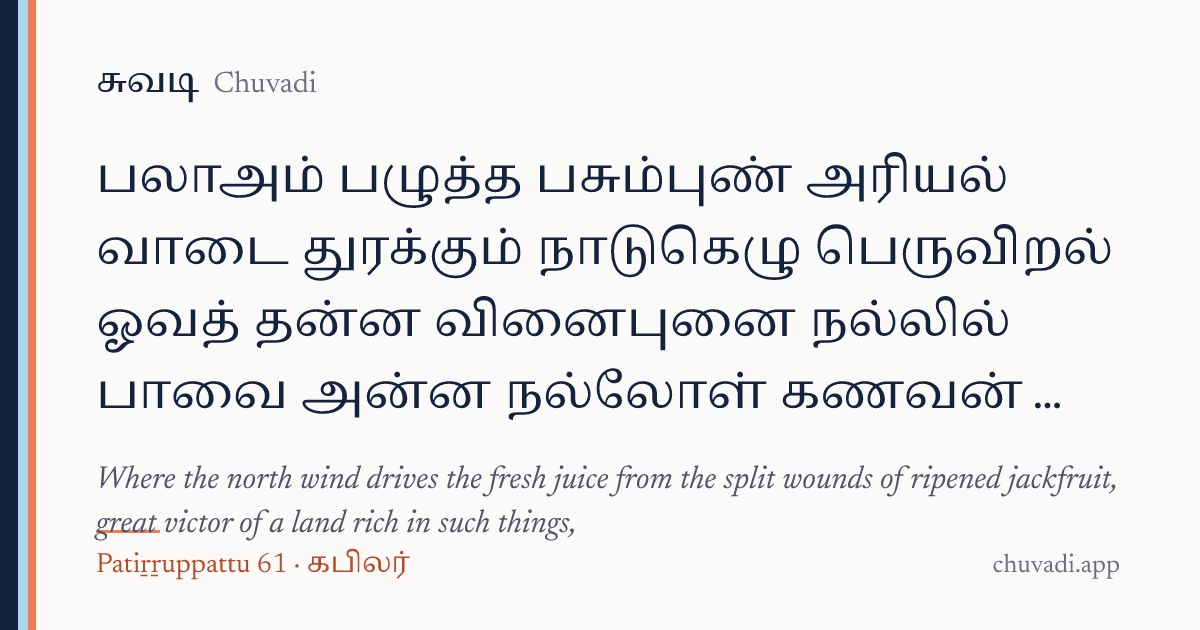
- Where the north wind drives the fresh juice from the split wounds of ripened jackfruit,
- great victor of a land rich in such things,
- in a fine house of crafted work, like a painting,
- husband of the good woman who is like a doll,
- enemy of the unnam tree with small leaves and flowers like gold
- and a slender trunk, our lord!
- Pāri, whose sandal paste dried but whose giving never dried,
- great giver Pāri of the broad chest,
- so that the clay on the drums dried and the suppliants grieved,
- has gone to the far land from which no one returns. Saying, let him give,
- I do not come begging; I do not speak beyond the truth.
- He does not regret what he has given; he does not exult each time he gives;
- each time he gives he is a great giver: so they proclaim your
- good fame, and it brought me here. In the camp of bright swords,
- smelling of flesh, among strong war elephants,
- the bardess who sings your white spear like moonlight,
- the bare-handed beat that keeps time apart from the drum,
- to your joyous revelry, which is like a festival.
What the poem says
The poet Kapilar speaks to the Chera king Celvakkaṭuṅkō Vāḻiātaṉ. This is the first poem of the Seventh Ten, and Kapilar explains why he has come. His friend and patron Pāri, the famous giver, has died: the clay on the drums of the bards has dried, the suppliants grieve, and Pāri "has gone to the far land from which no one returns" (line 10). Kapilar says he has not come to beg or to flatter. He has come because the king's fame for giving drew him.
The opening lines praise the king's land, where the north wind carries the juice of split, over-ripe jackfruit, and his home life as husband of a woman lovely as a doll. Lines 5-6 call him the "enemy of the unnam tree". The unnam was an omen tree; the phrase seems to praise a king who defies ill omens or who cut down an enemy's guardian tree. The exact sense is not certain.
Lines 12-13 are a famous description of true giving: he does not regret a gift and does not boast of it. The poem ends with the war camp: bright swords, strong elephants, the smell of flesh, a bardess singing and the beat of hands, all like a festival. The poem's name, "Pulāam pācaṟai" (line 15), means "the war camp that smells of flesh". Line 17 is obscure; I read "veṇkai" as bare-handed clapping that keeps time apart from the drum.