



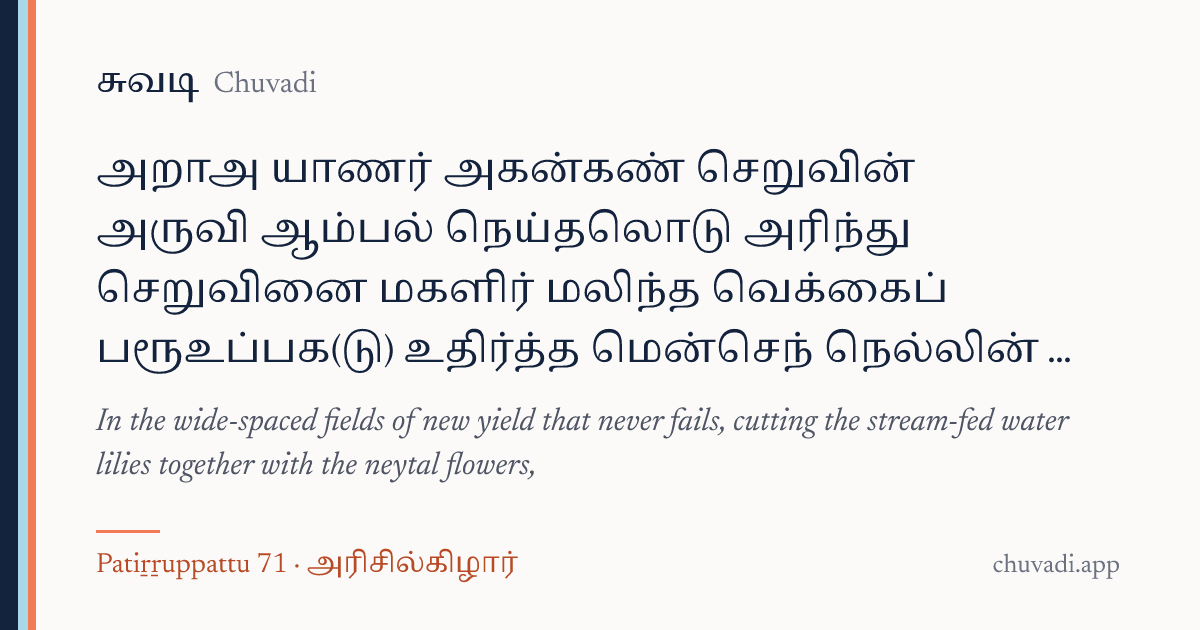
பதிற்றுப்பத்து 71 · எட்டாம் பத்து
பாடல் · The poem
Tap a word to see where else it occurs.
பொருள் · Meaning in TamilAI
என்றும் குறையாத புது வருவாய் உடைய அகன்ற வயல்களில், ஓடைநீர் ஆம்பலையும் நெய்தலையும் அரிந்து, வயல்வேலை செய்யும் மகளிர் நிறைந்த களத்தில், பெரிய எருதுகள் மிதித்து உதிர்த்த மென்மையான செந்நெல் அம்பண அளவையால் அளந்து குவிக்கப்படுகிறது. கொடிய கொட்டும் தேனீக்கள் கூடி உறங்கும் வளமான கூட்டைக் கிண்டிய சிறுவர்களைப் போல, பெருமானே, உன்னைச் சினப்படுத்தியவர்கள் துன்புற்றனர். அவர்களின் ஊர்களைத் தீ பற்றிச் சினந்து எழுந்து பரவியது; போரில் எரிந்த மணமுள்ள புகை திசைகளை மறைத்தது. மதில் வாயிலில் உனக்குப் பணியாமல் தம் அழிவை நோக்கி முனைந்தவர்களின் ஆழ்ந்த அகழியும் குறுந்தாள் ஞாயிலும் கொண்ட அரணை நீ கைப்பற்றினாய். எருதுகளுடன் கன்றுடைய ஆநிரைகளைக் கொண்டு வந்து, புலால் மணக்கும் வில்லேந்திய இளைஞர் மகிழ்ந்து அவற்றை அள்ளிக் கொடுத்தனர். மத்துக் கயிறு ஆடாத காலைகளை நினைத்து, ஆன்பயத்தால் வாழும் இடையர் தலைவன் கழுவுள் தலைவணங்கினான். தம் ஊர்கள் பாழாகாதிருக்க வேற்று நாட்டுக்குச் சென்று, விருந்தினர் வாழ்க்கையோடு பெருஞ்செல்வம் அற்றது என்று எண்ணினர். அரிய போரில் நிலைகுலையாது நின்ற புள்ளி நெற்றியுடைய பெரிய களிறுகளையும் அரிய அணிகலன்களையும் தர மறுத்தவர்கள், உடல் மிக நடுங்கி, உன்னை அணங்கெனப் போற்றினர். பலியைப் பெற்றுச் செல்லும் தெய்வம் போல நீ திறையைப் பெற்றுச் செல்கிறாய். உன் வாழ்நாள் நீடு வாழ்க! வலியோரையும் எளியோரையும் அறிவால் ஆராய்ந்து நீ அருள் செய்யாவிட்டால், நெடுந்தகையே, இங்கு யார்தான் வாழ முடியும்?
துறை: செந்துறைப் பாடாண்பாட்டு. அரிசில்கிழார் பெருஞ்சேரல் இரும்பொறையை நோக்கிப் பாடியது. பெயர் 'குறுந்தாள் ஞாயில்' (வரி 12) — பகைவர் அரணின் குட்டையான அடிப்பகுதியுடைய மதில் உறுப்புகள். தேன்கூட்டைக் கிண்டிய சிறுவர் உவமையும், பலிகொள்ளும் தெய்வ உவமையும் முக்கியப் படிமங்கள்.
ஆங்கிலம் · English translationAI
Translation
- In the wide-spaced fields of new yield that never fails,
- cutting the stream-fed water lilies together with the neytal flowers,
- on the threshing floor crowded with women who work the fields,
- the soft red paddy that the big bullocks have trodden loose
- is heaped up in measures of the ampaṇam; just so,
- where the kin of the fierce-stinging bee crowd close and sleep,
- like young children who have broken open the rich hive,
- they are in distress, great one, those who angered you.
- Fire seized their towns, rising up in rage and spreading,
- the fragrant smoke of burning war hid the directions;
- at the mouth of the walls, men who would not yield to the hero pressed on to their own ruin;
- the moat with its deep pits, the short-based bastions,
- you seized the hard fort and its guard; with the bulls
- you brought the herds with their calves, and, eager in delight,
- your young men with flesh-smelling bows gave them away from their lovely hands;
- thinking of mornings when the churning rope no longer moves,
- Kaḻuvuḷ, chief of those who live on the yield of cattle, bowed his head;
- so that their towns should not be ruined, going off to other lands,
- saying that their great fortune was gone, with a life spent as guests,
- elephants with spotted brows that held firm in the hard battle,
- great tusked elephants, and rare treasures: those who would not give them,
- their bodies trembling, praising you as a fierce god;
- like the spirit that takes its offering and goes away,
- you take your tribute and depart. Long live your age!
- Weighing with knowledge the strong and the simple,
- if you, knowing all, did not show grace,
- who here, noble one, would remain alive?
What the poem says
The poet Aricilkiḻār speaks to the Chera king Peruñcēral Irumpoṟai. This first poem of the Eighth Ten begins with a rich farming scene: women cut water lilies and neytal flowers in the wet fields, and bullocks tread out red paddy on the threshing floor, where it is heaped in ampaṇam measures (lines 1-5). The link of this scene to what follows is not certain; it may picture the wealth of the enemy land before the war. The main simile follows: those who angered the king suffer like children who break open a beehive full of stinging bees (lines 6-8).
The poem then describes the war. Fire takes the towns, smoke hides the sky, and the king captures a strong fort with a deep moat and short-based bastions. His young warriors seize cattle herds and give them away. The cowherd chief Kaḻuvuḷ, fearing for his towns, submits (line 17). Those who would not give him elephants and rare treasures now tremble and praise the king as a fearsome god (lines 20-22; tarāar in line 21 is read here as a negative, "those who do not give"). The king takes the tribute and leaves, like a spirit that takes its offering and goes. The poem ends with praise of his mercy: without his grace, no one could live.
The poem's name, kuṟuntāḷ ñāyil, "the short-based bastions", comes from line 12. Lines 11 and 16-19 are compressed and their exact construction is uncertain; the word pācam in line 23 is read here as a demon or spirit.