



பதிற்றுப்பத்து 72 · எட்டாம் பத்து
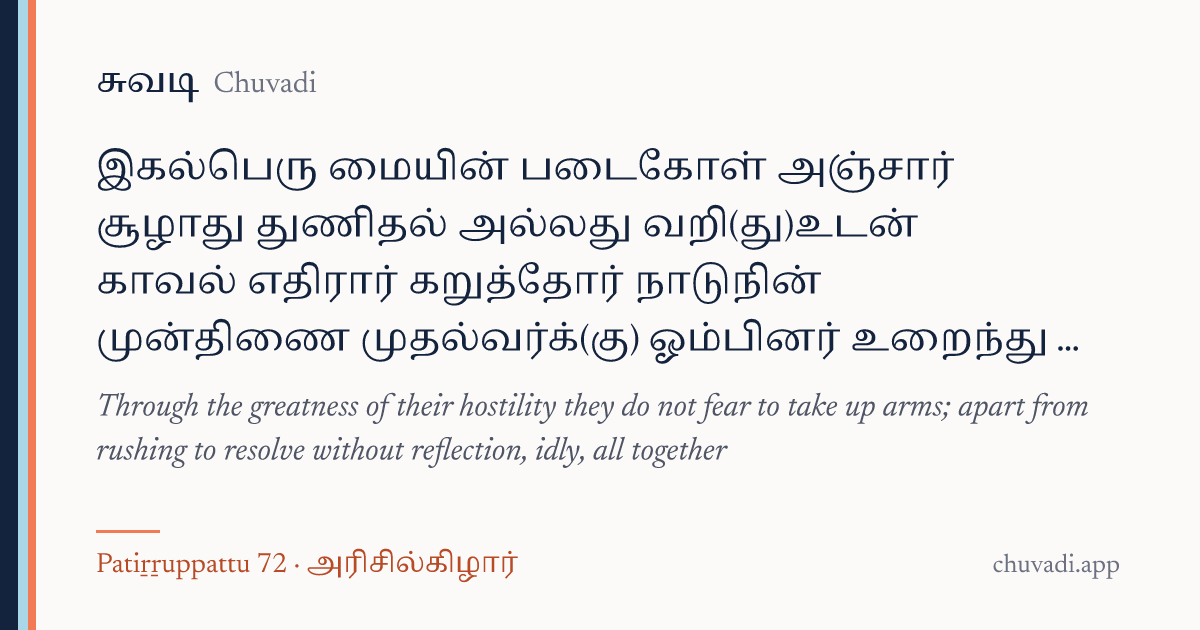
பாடல் · The poem
Tap a word to see where else it occurs.
பொருள் · Meaning in TamilAI
பகைமை மிகுதியால் படை எடுக்க அஞ்சாதவர்கள், ஆராயாமல் துணிந்து போருக்கு எழுவதன்றி, அமைதியாகக் காவல் ஏற்று வாழ மறுக்கின்றனர். சினந்த அப்பகைவர் நாட்டில் உன் முன்னோர்களான முதல்வர்களுக்கு விசுவாசமாக வாழ்ந்தவர்களும் உண்டு. மக்களைக் காக்க அறிவை வலிமைப்படுத்தும், நன்மை அறிந்த உள்ளமுடைய சான்றோரைப் போன்றது உன் பண்பு; ஆனால் தம் அறியாமை மிகுதியால் பகைவர் அதை நன்கு அறியவில்லை. உறக்கம் வரும் பகல் முடியும் மாலையில், நிலம் தாங்க முடியாதபடி நீர் பெருகி வந்து திரண்டு, வலிய அலைகள் விரையும் சினந்தெழும் வெள்ளம் பெருகி, எல்லையற்ற திசைகளில் இருள் பரவி ஞாயிறு மறைந்த ஊழிக்கால ஒன்றுகூடலில், உன் இனிய விழாப் போன்ற அமைதிச் செயல்களைக் கைவிட்டு, பொங்கும் தீப்பொறிகளை உதிர்க்கும் செந்தழல் ஓட்டத்தோடு கூடிய ஊழித்தீ போன்றவன் நீ, சினம் மிக்க தலைவனே, உன்னோடு போரிடுவோர்க்கு.
துறை: செந்துறைப் பாடாண்பாட்டு. அரிசில்கிழார் பெருஞ்சேரல் இரும்பொறையைப் பாடியது. பெயர் 'உருத்தெழு வெள்ளம்' (வரி 10) — சினந்து எழும் ஊழிவெள்ளம். ஊழி முடிவின் வெள்ளமும் இருளும் மடங்கல் தீயும் அரசனின் போர்ச் சினத்துக்கு உவமையாகின்றன.
ஆங்கிலம் · English translationAI
Translation
- Through the greatness of their hostility they do not fear to take up arms;
- apart from rushing to resolve without reflection, idly, all together
- they will not accept the guarding of peace; in the land of the wrathful ones
- there dwelt men who kept faith with the founders of your former line;
- to protect the people, making knowledge strong,
- like the wise ones with hearts that know the good is your
- nature, yet they do not know it well, through the greatness of their folly;
- in the evening when day goes in and sleep comes on,
- the water swelling till the earth cannot bear it, coming and gathering,
- the flood that rises in rage, its strong waves rushing,
- darkness gathering and spreading over the boundless directions,
- in the wide coming-together when the sun has set,
- setting aside your deeds that are like a lovely festival,
- with the course of red flames shaking off the rising sparks,
- you are like the fire of the world's end,
- lord full of wrath, to those who make war on you.
What the poem says
Aricilkiḻār addresses Peruñcēral Irumpoṟai and warns, through the king, the enemies who resist him. They are proud and hostile, they rush to war without thought, and they will not live in peace. They do not understand the king's true nature, which is like that of wise men who protect the people with knowledge (lines 5-7).
The second half builds a great cosmic image of the end of the world. Evening falls, a flood rises in rage until the earth cannot bear it, darkness covers all directions and the sun is gone (lines 8-12). Then comes the doomsday fire, maṭaṅkal tī, throwing off red flames and sparks. To his enemies the king is like that fire. If the reading of line 13 is right, the contrast is between his gentle, festive deeds of peace and his destructive form in war.
The name of the poem, uruttu eḻu veḷḷam, "the flood that rises in rage", comes from line 10. Lines 3-4 are hard to construe; they are read here as speaking of people in the enemy land who were loyal to the king's ancestors. In line 13 the phrase "añcāṟu" is obscure; it is read here as am cāṟu, "a lovely festival", but this is uncertain.