



பதிற்றுப்பத்து 73 · எட்டாம் பத்து
பாடல் · The poem
Tap a word to see where else it occurs.
பொருள் · Meaning in TamilAI
வலியோர் ஆராய்ந்தாலும் எளியோர் ஆராய்ந்தாலும், பிறருக்கு நீயே உவமையாவாயன்றி, உனக்குப் பிறர் உவமையாக மாட்டார்; ஒப்பற்ற பெருவேந்தே! மருத வளம் நிறைந்த, மலர் பரந்த விளைவயல்களில் நாரைகளை ஓட்டும் மகளிர் இரவும் பகலும் பசும் அணிகலன்களைக் களையாமல், பலவகைப் புது வருவாயிடையே குரவைக் கூத்து ஆடுகின்றனர். காவிரி பாய்ந்து பரந்த அழகுடைய புகாரின் செல்வனே! பூழியர்களுக்குக் கவசம் போன்றவனே! மூங்கில் விரிந்து எழும், மேகம் தவழும் உயர்ந்த சிகரங்களையுடைய கொல்லி மலையின் வீரனே! கொடியுடைய தேருடைய பொறையனே! உன் செல்வமும் வீரமும் கொடைத்திறனும் மனிதர் அளவைக் கடந்தவை என்று பல நாள் நான் சென்று சொன்னாலும் பிறர் நம்புவதில்லை. சான்றோர் சொன்னால் நம்புவார்களோ என எண்ணினாலும், அங்கும் அவர்கள் மனம் மயங்குவதைக் காண்கிறேன். எப்படி உரைப்பேன் என்று நான் வருந்துகிறேன்.
துறை: செந்துறைப் பாடாண்பாட்டு. அரிசில்கிழார் பெருஞ்சேரல் இரும்பொறையைப் பாடியது. பெயர் 'நிறந்திகழ் பாசிழை' — வயல் காக்கும் மகளிரின் ஒளிரும் பசும் அணிகள் (வரி 6). அரசனின் பெருமை சொல்லுக்கு அடங்காது என்ற புலவரின் வருத்தமே இப்பாடலின் மையம்.
ஆங்கிலம் · English translationAI
Translation
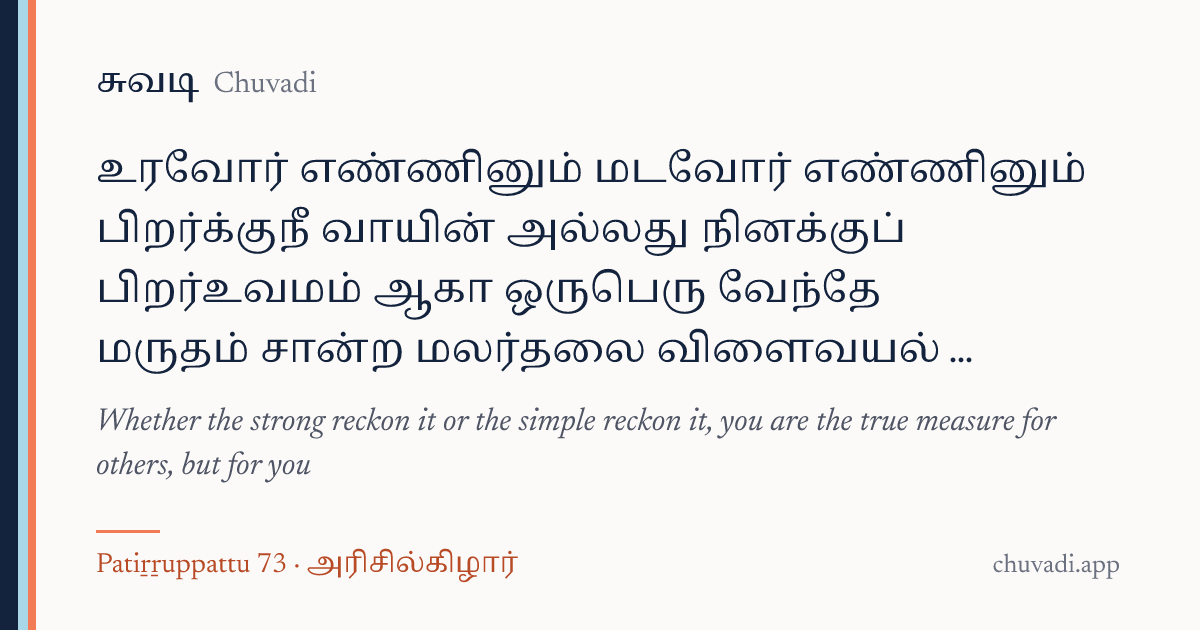
- Whether the strong reckon it or the simple reckon it,
- you are the true measure for others, but for you
- others are no comparison, O one great king!
- In the ripening fields full of marutam, their flowers spread wide,
- the women who drive off the herons from the fields
- night and day do not take off their fresh ornaments
- and dance the kuravai amid many small new yields;
- in the far-spreading beauty where the Kāviri rushes in,
- lord of the wealth of Pukār! armour and shield of the Pūḻiyar!
- on the tall peaks where clouds crawl and bamboo rises spreading,
- warrior of Kolli! Poṟaiyaṉ of the bannered chariot! Your
- wealth and your manliness and the generosity of your hand
- go beyond the measure of men; so for many days
- I have gone and told it, but others do not believe;
- thinking, perhaps they will believe when the wise say it,
- I see their minds confused there,
- and I grieve, wondering how I shall tell it.
What the poem says
The poet speaks to the king about the difficulty of praising him. Wise or simple, all men compare others to him, but nothing can be compared to him (lines 1-3). The middle of the poem names his lands and titles: the rich marutam fields where women guarding the crops from herons dance the kuravai, the region where the Kāviri river flows, Pukār, the Pūḻiyar people whose protector he is, and Kolli, the hill with tall bamboo and clouds.
The ending is personal. For many days the poet has told people about the king's wealth, courage and generosity, but they do not believe him, because these go beyond human measure. Even when the wise speak, people stay confused. So the poet grieves: how can he describe the king truly? This is a familiar praise device, in which the subject is too great for words.
The colophon gives the name niṟantikaḻ pāciḻai, "fresh ornaments with shining colour". The text of line 6 here has only pāciḻai, "fresh ornaments", so the reading of the line in the edition may differ from the colophon. Pukār is usually the Chola port at the Kāviri mouth; why a Chera king is called its lord is not clear, and it may reflect a victory or a wider use of the name.