



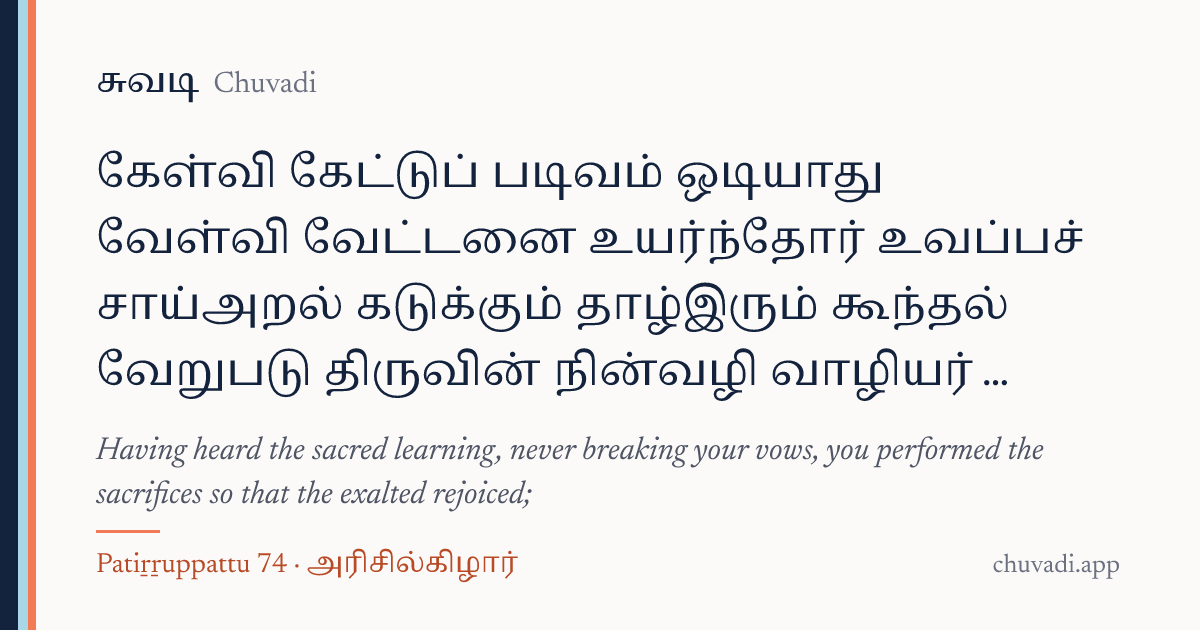
பதிற்றுப்பத்து 74 · எட்டாம் பத்து
பாடல் · The poem
Tap a word to see where else it occurs.
பொருள் · Meaning in TamilAI
அறநூல்களைக் கேட்டறிந்து, நோன்பு தவறாமல், உயர்ந்தோர் மகிழும்படி வேள்விகளைச் செய்தாய். வளைந்த மணல் அலை போன்ற தாழ்ந்த கருங்கூந்தலும் தனிச்சிறப்புடைய அழகும் உடைய உன் தேவி உன் அருகே நீடு வாழ்க! கொடுமணத்தில் செய்யப்பட்ட வேலைப்பாடு மிக்க அரிய அணிகலன்களும், பந்தர் தந்த பலர் புகழும் முத்துகளும், மலைகளுக்குள் சென்று சிறு பாறைகளில் தேடி வல்லுநர் தேர்ந்தெடுத்த புள்ளியுடைய பசுமணிகளும் உண்டு. கிளைத்த மரம் போன்ற கொம்புடைய புள்ளி மானின் தோலும் ஊனும் நீக்கி, குற்றம் களைந்து எஞ்சிய ஒளிரும் வட்டத்தை, அதன் விளிம்பைக் கட்டி, எஃகு உடைய இரும்பினுள் அமைத்து, வல்ல கொல்லன் சூடேற்ற, அது சுடர்விடும் தோற்றத்தால் வானில் திரியும் பருந்து அதை நோக்கிப் பாய அளக்கின்றது. அத்தகைய சிறந்த திருமணி பொருந்திய நல்ல தோளும், அடங்கிய குளிர்ந்த கூந்தலும், ஒளிரும் நெற்றியும் உடைய அவள் கருவில், உரிய மாதங்கள் நிறைந்து பிறந்த, இருவகை அறிவும் உடைய, சால்பும் செம்மையும் பிற நலன்களும் கொண்ட, காவலுக்குத் தகுந்த, அரசியல் நெறியில் தேர்ந்த சிறந்த மகனைப் பெற்றாய். இதனால் இங்குள்ள முன்னோருக்குரிய அரிய கடனைத் தீர்த்தாய், போரை விரும்பும் வலியோனே! ஆனால் அவற்றைக் கண்டு நான் வியக்கவில்லை. எல்லாம் உணர்ந்து உன்னை நெறிப்படுத்தும் நரைத்த முதியவனிடம், கொடையும் பெருமையும் செல்வமும் மக்கட்பேறும் தெய்வமும் எல்லாமும் தவமுடையோர்க்கே உரியன என்று கூறி, அவன் வேறுபட்ட பரந்த இடத்துக்குச் செல்லும்படி, பெருமானே, நீ உன் நோன்பு நிலையால் கூறினாய்; அதுவே வியப்புக்குரியது.
துறை: செந்துறைப் பாடாண்பாட்டு. அரிசில்கிழார் பெருஞ்சேரல் இரும்பொறையைப் பாடியது. பெயர் 'நலம்பெறு திருமணி' (வரி 16). வேள்வி, அரசியின் அழகு, மகப்பேறு, தவத்தின் சிறப்பு ஆகியவை பாடலின் பொருள்கள்.
ஆங்கிலம் · English translationAI
Translation
- Having heard the sacred learning, never breaking your vows,
- you performed the sacrifices so that the exalted rejoiced;
- she whose long dark hair is like the bending ripples of sand,
- of a beauty set apart, may she live long at your side;
- the rare finely worked jewels made at Koṭumaṇam,
- the pearls much praised by many that Pantar yielded,
- reaching into the hills, searching among the small rocks,
- the fresh gems with scattered flecks that the experts chose;
- with forked horns like a branching tree,
- the spotted stag, its skin and flesh stripped away;
- the bright round disc left when the flaws were cleared,
- its sides bound where the round rim ran,
- set inside iron that holds steel, the skilled smith
- brought it to the heat, and its look sent out flame
- so that the kite of sky-roaming kind measured its stoop;
- her fine shoulders matched with the sacred gem of high worth,
- she with gathered cool tresses and bright brow, from her womb,
- when the counted months were full, devoted to twofold knowledge,
- with nobility and rectitude and other virtues too,
- fit for guarding, a master of the ways of kingship,
- a son of great splendour you begot; for those here
- you paid the hard debt, mighty one eager for battle.
- Yet it is not at these that I marvel. Toward you,
- the grey-haired elder who knows all and guides your conduct,
- saying that generosity, greatness, wealth, offspring,
- god and all things belong to those who have penance,
- so that he might go to a different wide land,
- you spoke, great one, in your ascetic vow.
What the poem says
Aricilkiḻār praises Peruñcēral Irumpoṟai for his religious life and his family. The king has heard the sacred texts, kept his vows and performed Vedic sacrifices that pleased the learned. His queen has long dark hair like rippled sand, and the poet wishes her long life.
Lines 5-16 are a long and difficult passage about precious things: jewels worked at Koṭumaṇam, pearls from Pantar, gems sought in the hills, and a shining disc set in iron by a skilled smith, so bright that a kite stoops at it. All this seems to lead to the queen's shoulders, adorned with a fine gem. The lines about the spotted stag stripped of skin and flesh (lines 9-10) and the disc (lines 11-14) are obscure; the translation follows the words, but how they fit into the jewel description is uncertain. Koṭumaṇam and Pantar are places known in Sangam poetry for jewels and pearls.
The queen bore a son fit to rule, so the king paid the debt owed to his ancestors (lines 17-22). But the poet says he marvels most at something else: the king, speaking with ascetic resolve, told his aged elder and guide that all good things belong to those who practise penance, and so sent him off to another land, apparently to a life of renunciation (lines 23-28). The exact sense of lines 24-28 is uncertain.
The poem's name, nalampeṟu tirumaṇi, "the sacred gem of high worth", comes from line 16.