



பதிற்றுப்பத்து 77 · எட்டாம் பத்து
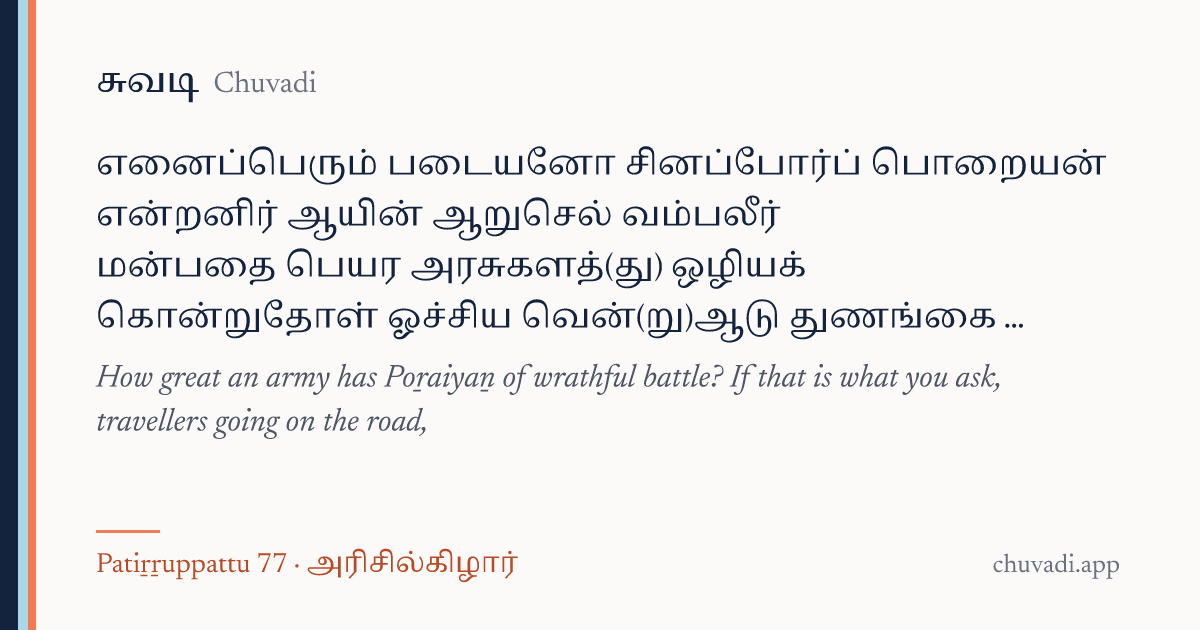
பாடல் · The poem
Tap a word to see where else it occurs.
பொருள் · Meaning in TamilAI
சினமிக்க போருடைய பொறையன் எவ்வளவு பெரிய படையுடையவன் என்று கேட்பீர்களானால், வழிச்செல்லும் பயணிகளே, கேளுங்கள். மக்கள் ஓடவும், அரசர்கள் போர்க்களத்தில் வீழவும், கொன்று தோள்களை உயர்த்தி வெற்றித் துணங்கைக் கூத்து ஆடுகின்றனர். பிணங்களின் மீது உருண்டும் தேயாத சக்கரங்களுடைய நன்கமைந்த தேர்களும், குதிரைகளும், வீரர்களும் எண்ணுவதற்கு அரியவை; ஆதலால் அவன் அவற்றை எண்ணியதே இல்லை. கட்டுத்தறியில் நிற்க மறுத்து, பல முளைகளை முறித்து, உயரப் பறக்கும் பருந்தின் நிழலைத் தரையில் மிதித்து, தொலைவிலுள்ள பரல்கற்கள் நிறைந்த மேட்டுநிலத்தில் கொங்கரின் ஆநிரைகள் பரந்தது போன்ற நடையுடைய பல யானைகளை அவன் படையில் நான் காண்கிறேன்.
துறை: உழிஞை அரவம். அரிசில்கிழார் பெருஞ்சேரல் இரும்பொறையின் படைப்பெருமையைப் பயணிகளுக்குக் கூறியது. பெயர் 'வென்றாடு துணங்கை' (வரி 4) — வெற்றிக்குப் பின் ஆடும் துணங்கைக் கூத்து. எண்ணற்ற படையும், கொங்கர் ஆநிரை போலப் பரந்த யானைகளும் முக்கியப் படிமங்கள்.
ஆங்கிலம் · English translationAI
Translation
- How great an army has Poṟaiyaṉ of wrathful battle?
- If that is what you ask, travellers going on the road,
- as the people flee and kings fall on the battlefield,
- having killed, they dance the victorious tuṇaṅkai with arms raised;
- with unworn wheels that rolled over heaps of corpses,
- the well-made chariots, the horses and the men
- are so hard to count that he has not counted them;
- refusing to be held at the post, smashing many tethering stakes,
- trampling on the ground the shadow of the soaring kite,
- like the cattle of the Koṅkar with their fresh weapons spread over the far gravel uplands,
- with such a movement, the many
- elephants I see in his army.
What the poem says
This poem is in the uḻiñai aravam mode, the stir before a siege. The speaker answers travellers who ask how large the king's army is. The answer is that it cannot be counted.
On the battlefield the people flee, enemy kings fall, and warriors raise their arms in the tuṇaṅkai, a victory dance. Chariot wheels roll over corpses but do not wear out. The chariots, horses and soldiers are so many that the king himself has never counted them (lines 5-7). Then the speaker turns to the elephants: they refuse to stand at their posts, break their stakes, and trample the shadow of the kite flying above. They move like the herds of the Koṅkar spreading over the stony uplands. The Koṅkar were the people of the Koṅku country, known here for their cattle.
The poem's name, veṉṟu āṭu tuṇaṅkai, "the tuṇaṅkai danced in victory", comes from line 4. The word īrmpaṭai in line 10 is not clear; it is read here as "fresh weapons", but it may describe the herds or the land.