



பதிற்றுப்பத்து 78 · எட்டாம் பத்து
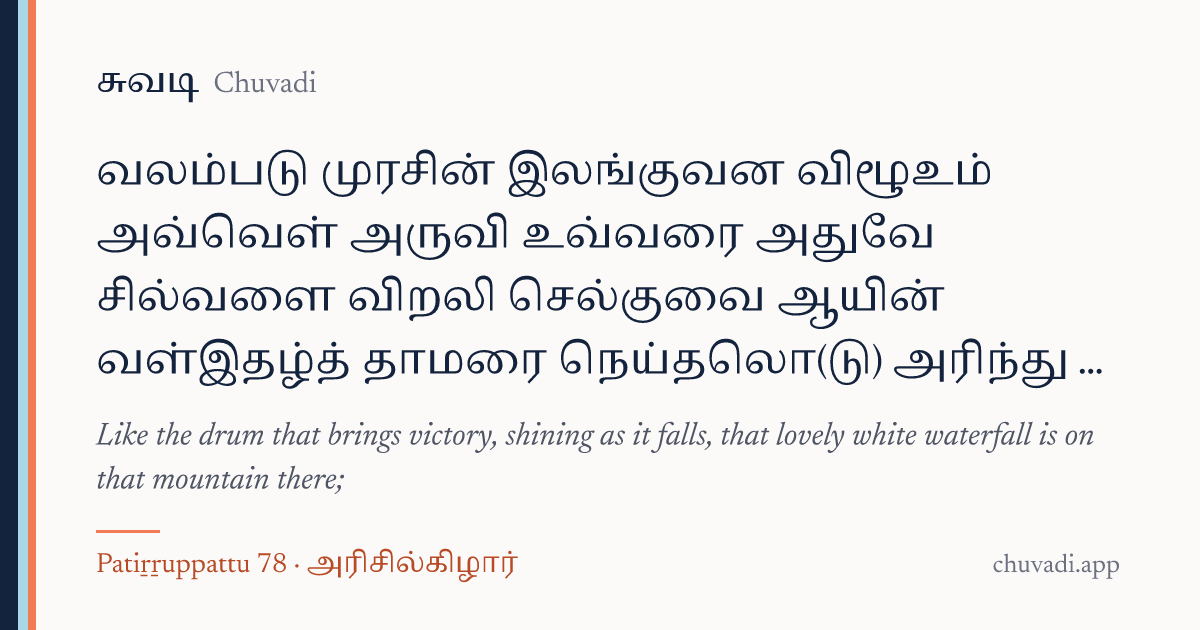
பாடல் · The poem
Tap a word to see where else it occurs.
பொருள் · Meaning in TamilAI
வெற்றி தரும் முரசின் ஒலிபோல ஒளிர்ந்து விழும் அந்த அழகிய வெண்ணிற அருவி அந்த மலையில் உள்ளது. சில வளையல்களை அணிந்த விறலியே, நீ செல்வாயானால், வளமான இதழ்களுடைய தாமரையையும் நெய்தலையும் அரிந்து, மென்மையான இயல்புடைய மகளிர் பறவைகளை ஓட்டி நடந்து, கிளிகளை விரட்ட விரும்பி ஒவ்வொரு தோப்பிலும் குரல் எழுப்பும், பலவகை வளங்கள் நிலைத்த காடுகளுடைய ஊர்களைக் காண்பாய். வெல்லும் போருடைய வீரர்கள் மறத்துடன் காக்கும், விற்கள் நிறைந்த புதர்க்காடுகளுடைய தகடூரை அவன் அழித்தான். தன்னைச் சினந்து பிறழ நோக்கியவர்கள் உண்மையில் பித்துப் பிடித்தவர்கள்; அவர்களின் கடும் பகைமை உடைந்து ஓடும்படி சென்று, கொடிய போர்முனையை அழித்த பின், தன் நாட்டில் ஆடுகள் பரந்தது போன்ற குதிரைகளும், ஆநிரை பரந்தது போன்ற யானைகளும் உடையவனின் மலை அதுவே.
துறை: விறலியாற்றுப்படை. அரிசில்கிழார் விறலியைப் பெருஞ்சேரல் இரும்பொறையிடம் ஆற்றுப்படுத்தியது. பெயர் 'பிறழநோக்கியவர்' (வரி 10) — அரசனைப் பகைமையுடன் கோணலாக நோக்கியவர்கள். தகடூர் வெற்றி இப்பாடலில் குறிக்கப்படுகிறது.
ஆங்கிலம் · English translationAI
Translation
- Like the drum that brings victory, shining as it falls,
- that lovely white waterfall is on that mountain there;
- viṟali with few bangles, if you go there,
- cutting the lotus with rich petals together with the neytal,
- the women of gentle nature drive the birds as they go,
- eager to scare off parrots, calling out in every grove,
- in the land of forests where many kinds of yield abide,
- which warriors of conquering battle guard with valour,
- in the thickets where bows abound, he smashed Takaṭūr;
- those who looked at him askance, surely possessed,
- he went on so that their fierce enmity broke and fled,
- and when he had destroyed the hot battle front, in his own land
- with horses spread like flocks of goats,
- with elephants spread like herds of cattle: that is his hill.
What the poem says
This is a viṟali āṟṟuppaṭai, a poem in which one performer guides another to a generous patron. The poet speaks to a viṟali, a female dancer and singer, and points out the road to the king's hill. Its sign is a white waterfall that falls with a sound like the victory drum (lines 1-2).
On the way she will see a rich land: women cutting lotus and neytal flowers, girls chasing parrots from the crops, and forests guarded by brave archers. The poem then recalls the king's great deed: he destroyed Takaṭūr (line 9). Takaṭūr was the stronghold of the chief Atiyamāṉ, and this Chera king is remembered for its capture. He broke the enemies who looked at him with hostility. Now his land is full of horses like flocks of goats and elephants like herds of cattle.
The poem's name, piṟaḻa nōkkiyavar, "those who looked askance", comes from line 10. It refers to the enemies who looked at the king with defiant, sidelong glances. The phrase pē maṉṟa in the same line is read as "surely possessed" or "surely mad", but its exact force is uncertain.