



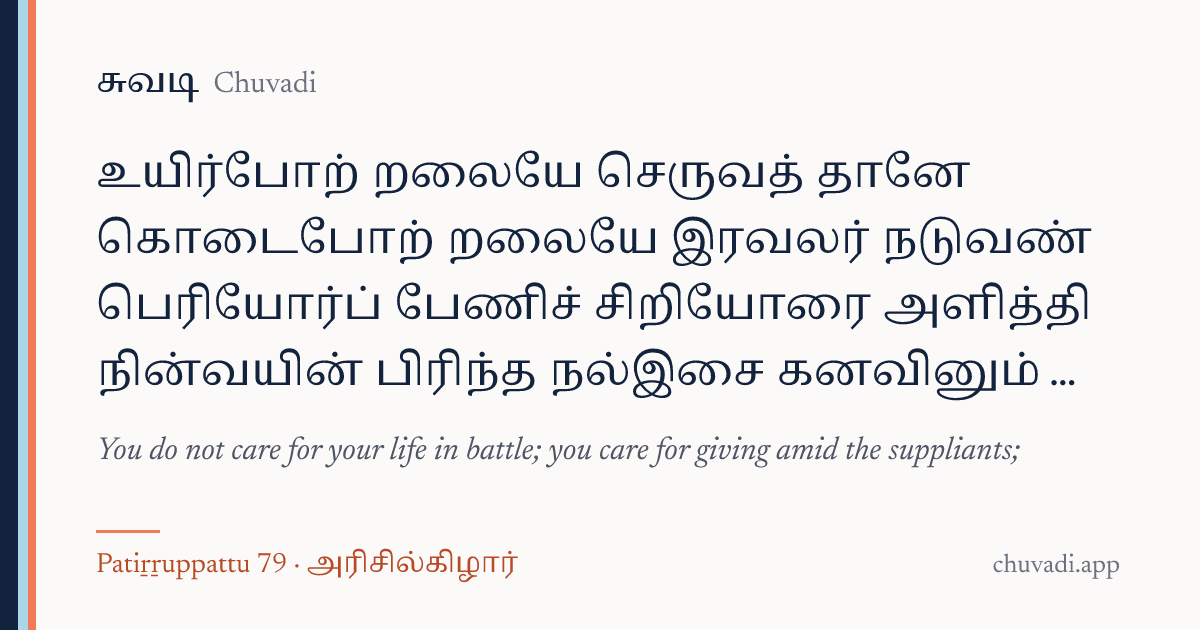
பதிற்றுப்பத்து 79 · எட்டாம் பத்து
பாடல் · The poem
Tap a word to see where else it occurs.
பொருள் · Meaning in TamilAI
போர்க்களத்தில் நீ உன் உயிரைப் பொருட்படுத்துவதில்லை; இரவலர் நடுவே கொடையையே போற்றுகிறாய். பெரியோரைப் பேணிச் சிறியோரைக் காக்கிறாய். உன்னிடமிருந்து பரவிய நல்ல புகழும், கனவிலும் பிறர்மேல் ஆசை அறியாத ஒளிரும் உண்மை நாவும் உடையவனே! பகைவரைத் தேய்த்த வீரமுடையவனே, வளையணிந்த மகளிரின் தோள்களுக்கிடையே கசங்கிய மாலையணிந்த மார்பனே! நீ அளக்க முடியாத பெருமையுடையவன். ஆதலால் உன்னுடன் சேராமல் தம் நாட்டிலேயே தங்கிய வெல்போர் வேந்தர்களின் கொல்லும் களிறுகளின் பிடரி வெறுமையாகும்படி, அவர்களின் வில்நாண்களை அறுத்து, உன் ஆட்சிக்குப் பணியாத அவர்களின் முரசுகளின் கண்ணைக் கிழித்து, அவர்களின் பட்டத்து யானைகள் கதறும்படி அவற்றின் கொம்புகளை அறுத்துச் செய்த அச்சம் தரும் மரபுடைய கட்டிலின் மேல் அமர்ந்தாய். தும்பைப் போருக்குரிய உடல் சோர்ந்து நடுங்கும் நிலையில், மார்பிலிருந்து குருதி வெளிப்பட்டாலன்றிப் பலியை ஏற்காத, அஞ்சத்தக்க மரபுடைய அயிரை மலைத் தெய்வம் போல நிலைத்து, பெருமானே, உன் புகழ் கேடின்றி விளங்குக!
துறை: செந்துறைப் பாடாண்பாட்டு. அரிசில்கிழார் பெருஞ்சேரல் இரும்பொறையை வாழ்த்தியது. பெயர் 'நிறம்படு குருதி' (வரி 16) — மார்பிலிருந்து வெளிப்படும் குருதி. அயிரைத் தெய்வ உவமையும், கொம்புக் கட்டில் படிமமும் முக்கியமானவை.
ஆங்கிலம் · English translationAI
Translation
- You do not care for your life in battle;
- you care for giving amid the suppliants;
- honouring the great, you cherish the small;
- the good fame that has gone forth from you, even in dream
- knowing no desire for others, of bright and truthful tongue,
- with manliness that wore down your rivals, O chest where the garland
- is crushed between the shoulders of women who wear bangles!
- So hard to measure are you; therefore
- those who did not come with you but stayed behind in their own lands,
- so that the necks of their killing elephants were left bare,
- cutting their bowstrings, not coming under your rule,
- kings of conquering battle, you split the faces of their drums,
- and while their royal elephants cried out, you cut their tusks and made
- a throne of fearful tradition, and seated upon it,
- with the weary trembling of a body worthy of the tumpai,
- unless the blood from the chest spills outside,
- she accepts no offering, she of fearful tradition,
- like the goddess of Ayirai, standing firm,
- may your fame be without ruin, great one.
What the poem says
The poet praises the king's character and ends with a blessing. The king does not care for his own life in war, but he cares for giving to suppliants. He honours the great and protects the small. He has good fame and a bright, truthful tongue that never desires what belongs to others, even in dream, and his chest bears garlands crushed in the embrace of women (lines 4-7). He is beyond measure.
The second part speaks of the kings who would not join him. He defeated them, stripped their elephants, cut their bowstrings, split their drums, and cut the tusks of their royal elephants to make a throne (lines 9-14). The tumpai in line 15 is the flower worn in open battle, and here it marks the weary body of a warrior after the fight.
The poem ends with a comparison to the goddess of Ayirai, a hill shrine of the Cheras, a fierce deity who accepts no offering unless warriors' blood is shed. The poet wishes that the king's fame may stand as firm as that goddess. The poem's name, niṟampaṭu kuruti, "blood from the chest", comes from line 16. Lines 5 and 11 are compressed and their exact grammar is uncertain.