



பதிற்றுப்பத்து 80 · எட்டாம் பத்து
பாடல் · The poem
Tap a word to see where else it occurs.
பொருள் · Meaning in TamilAI
வெண்ணிறக் கொம்புடைய களிறுகளைப் பெரிய மலையில் கைப்பற்றிய பின், அவர்கள் எடுத்து அறைந்த வெற்றி முரசு கார்மேகம் போல விரைந்து முழங்குகிறது. சந்தனம் உலர்ந்த அகன்ற மார்பும், தொடி ஒளிரும் வலிய முன்கையும், புண்ணுடைய வலிய தோளும், புடையல் கழல் அணிந்த காலும், பின்வாங்காத உறுதியும், ஒளிரும் வாளும் உடையவனே! உடைந்த பகைவர் உன் முன் நின்று, காவல் ஏற்றவனுக்குத் திறை செலுத்துக என்று கூறுகின்றனர்; அம்புடைய வலக்கையுடைய உயர்ந்தோர் உன்னைப் போற்றுகின்றனர். நீ அத்தகையவனாக இருப்பதால், சினமிக்க போரில் நில எல்லை வரை நிலைநிறுத்திய நல்ல புகழுடைய, தளராத உறுதியுடையவனே, உன் பகைவர் போர்முனையில், காற்று எழுந்தது போன்ற விரைந்த குதிரைகளும், விரைந்து ஓடும் நெடுந்தேர்களின் மேல் அசையும் கொடிகளும், புலால் நாறும் போர்க்களத்தில் எப்படித் தோன்ற முடியும்?
துறை: வஞ்சித்துறைப் பாடாண்பாட்டு; தூக்கு செந்தூக்கும் வஞ்சித்தூக்கும். அரிசில்கிழார் பெருஞ்சேரல் இரும்பொறையைப் பாடியது. பெயர் 'புண்உடை எறுழ்த்தோள்' (வரி 7) — போர்ப்புண்கள் உடைய வலிய தோள். முரசு முழக்கமும் அரசனின் வீர உருவமும் முக்கியப் படிமங்கள்.
ஆங்கிலம் · English translationAI
Translation
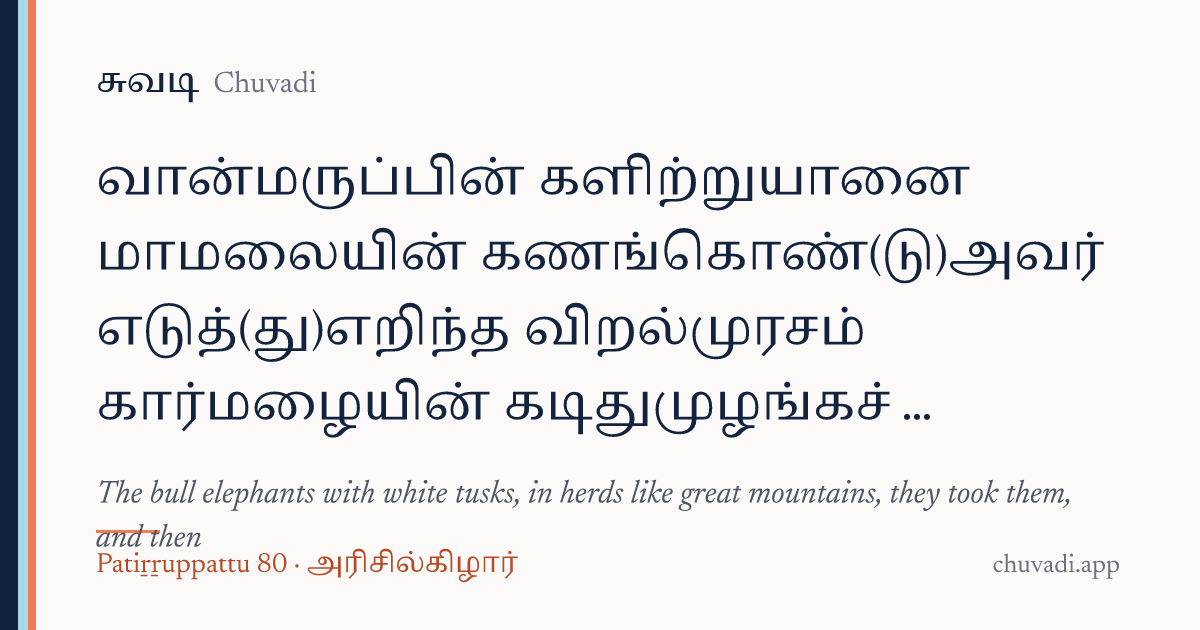
- The bull elephants with white tusks,
- on the great mountain, they took them, and then
- the victorious drum they lifted and struck
- thunders swiftly like the monsoon rain cloud;
- your broad chest where the sandal paste has dried,
- your strong forearm where the bracelet gleams,
- your mighty shoulders with wounds, your feet with lovely puṭaiyal anklets,
- your vow never to step back, your shining sword;
- the broken enemies, standing before you, moving about,
- say, let tribute be paid to him who has taken up protection;
- the exalted, with arrows at their right side, praise you;
- since you are such a one, how could the enemies'
- horses of eager gallop as if the wind had risen,
- and the banners waving high on swift tall chariots,
- appear at all within the field reeking of flesh? In wrathful war,
- with good fame set firm to the earth's bounds,
- O you of unfailing resolve, at your enemies' front.
What the poem says
This last poem of the Eighth Ten is in the vañci mode, which concerns a march against the enemy. It mixes two metres, as the colophon says: lines 1-6 are in the short vañci measure and the rest in the longer cental measure.
The poem opens with the victory drum, struck after white-tusked elephants were taken on a great mountain, thundering like rain clouds (lines 1-4). Line 2 is damaged; the word kaṇaṇ is not clear, and the reading "they took them" is a guess. Then comes a portrait of the king: his broad chest with dried sandal paste, his bracelet, his wounded shoulders, his anklets and his shining sword, with his vow never to retreat. Broken enemies stand before him and agree to pay tribute, and high-born warriors praise him.
The ending is a rhetorical question: because the king is such a hero, how could enemy horses and bannered chariots ever appear on the battlefield against him? He is addressed as a man of unfailing resolve whose fame reaches the ends of the earth. The poem's name, puṇ uṭai eṟuḻt tōḷ, "the mighty shoulders with wounds", comes from line 7. Line 15 is uncertain; pulavarai is read here as "the field reeking of flesh".