



பதிற்றுப்பத்து 81 · ஒன்பதாம் பத்து
பாடல் · The poem
Tap a word to see where else it occurs.
பொருள் · Meaning in TamilAI
உலகைக் காக்கும் அச்சம் தரும் சிறப்புடைய, பல நிறம் கொண்ட, நீர் நிறைந்த மேகம் அகன்ற வானில் சினம் மிகுந்து முழங்கி, வானை அடைய உயர்ந்து, விடியலில் இடிக்கிறது; அந்தக் காலத்தோடு பிரிந்தோர்க்குத் தனிமைத் துயர் உண்டாகிறது. யானைகள் பாய்ந்து திரிகின்றன; குதிரைகள் அடக்கப்படுகின்றன; கொடிகள் அசைகின்றன; தேர்கள் சுழல்கின்றன. பகை அரசர் அருகில் தங்கினாலும் அஞ்சாமல் திரியும், வாயிலுக்குள் அடங்காத வலிமையுடைய வீரர்கள், இருண்ட இரவிலும் வளைகள் ஒளிர, தோளில் அணி பூண்டு, நாள்தோறும் போரை முடிக்கும் ஆவலுடன் வஞ்சினம் கூறி, தம் குடிக்குக் கெடாத புகழை நிறுத்த அகன்ற போர்க்களத்தில் சுற்றுகின்றனர். நாடுகளை அடிப்படுத்தியதால் கொள்ளையைக் கைவிட்டு, நெருப்பில் உருக்கி ஒளிவிடும் பொன் கட்டிகளை உரைகல்லில் தேர்ந்து உன் படைக்கு வழங்கி, பகைநாட்டில் தங்கிய வெற்றிப் போர்த் தலைவனே! முழவு போன்ற பெரிய பலாப்பழம் பழுக்கும், விழாக் கோலம் போன்ற கார்கால வளம் உடைய, மூங்கில் குழாயில் முதிர்ந்த இனிய கள்ளை உண்டு, காந்தள் மாலை அணிந்த செல்வர்கள் இரவலர்க்கு வழங்கும், வண்டு மொய்க்கும் சோலையும் பெருமழையும் உடைய கொல்லி மலையில், மலர்களோடு மகிழ்ந்து, மின்னல் போல ஒளிரும் அணிகளுடைய தோழியர் நடுவே, வண்டு மொய்க்கும் கரிய கூந்தலும், ஒளிரும் நெற்றியும், குழையோடு போரிடும் கண்களும், இனிய மொழியும் உடைய உன் அரசியைக் காண ஒருநாள் உன் நெடுந்தேரில் குதிரைகளைப் பூட்டுவாயாக! உன்னை எதிர்க்க முடியாமல், குடி அழியுமோ என அஞ்சி அரணுக்குள் அடைந்து தூங்காதிருக்கும் பகை வேந்தரும் தூங்கட்டும்; உன் பெருந்தோளுக்கும் புதிய இன்பம் கிடைக்கட்டும்.
துறை முல்லை. பெருங்குன்றூர்கிழார் நீண்ட காலம் பாசறையில் தங்கிய இளஞ்சேரல் இரும்பொறையை நாடு திரும்பி அரசியைக் காணுமாறு வேண்டுகிறார். பெயர் 'நிழல்விடு கட்டி' (16ஆம் அடி): ஒளிவிடும் பொன் கட்டி. கார்கால மேகம், பாசறை, கொல்லி மலை வளம், அரசியின் அழகு ஆகியவை முதன்மைப் படிமங்கள்.
ஆங்கிலம் · English translationAI
Translation
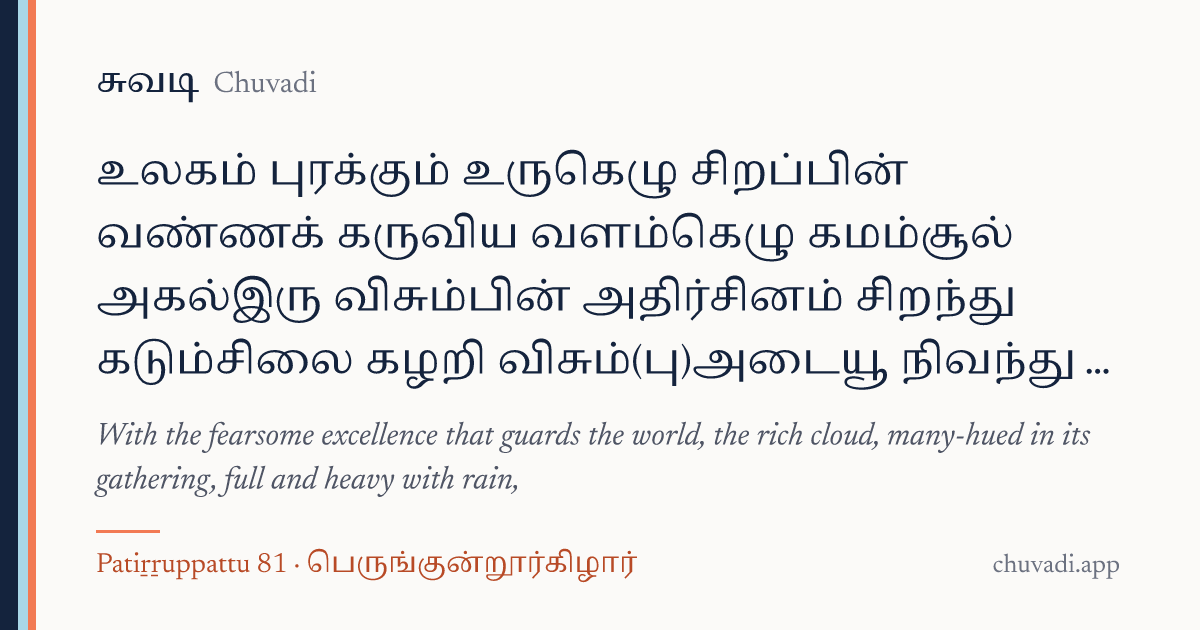
- With the fearsome excellence that guards the world,
- the rich cloud, many-hued in its gathering, full and heavy with rain,
- in the wide great sky, its roaring fury rising high,
- thunders with a harsh bow-like roar and climbs to reach the sky,
- and sounds at dawn, so that with that season loneliness takes hold;
- elephants charge and move about, swift horses are reined in,
- bright banners sway, chariots wheel and circle;
- even when kings encamp outside the walls, they roam unshaken,
- the warriors, of a strength no gateway can contain,
- even in the great dark night, their fine bracelets shining,
- with armlets bound on their arms, their eagerness grown great, every day
- longing to finish the fight, uttering long vows,
- to set their clan in unfading good fame,
- they circle the wide rocky field that no ladder can measure;
- because you have brought the lands under your feet, you gave up plunder,
- and the shadow-casting ingots of gold wrought by the work of fire,
- proved true by the touchstone, you gave to help your army,
- O lord of victorious war, who has encamped in a foreign land!
- Where the great jackfruit, round like a drum, ripens in plenty,
- in the new wealth of the rainy season, beautiful as a festival,
- drinking the sweet pressed wine that matured inside bamboo tubes,
- the wealthy men of thriving clans with garlands of kāntaḷ
- who love loud revelry give to suppliants;
- in Kolli of heavy rains, with groves where bees swarm,
- delighting in wide-mouthed flowers and fresh piṭi blossoms,
- amid her companions whose bright jewels seem to spit out lightning,
- with tresses that hide their own colour under swarming bees,
- her slender cool locks, her bright forehead adorned,
- with eyes that do battle with her curved earrings, lovely to see,
- with a fair face of soft words that pleases the great one,
- your woman of fine jewels: to see her, one day
- let your horses be yoked, lord, to your tall chariot!
- Leaving the battle front, not going forward to face you,
- with faultless fighters who could not win when they met your strength,
- fearing their ancient line would be cut off, holding to their forts,
- may the sleepless kings too sleep at last,
- and may there be a fresh feast for your great shoulders.
What the poem says
The poet Peruṅkuṉṟūrkiḻār speaks to the Chera king Iḷañcēral Irumpoṟai, who has been camped for a long time in enemy country. The turai is mullai, the theme of waiting: the rains have come, and the poet asks the king to yoke his chariot and go home to his queen.
The poem opens with the monsoon cloud thundering at dawn (lines 1-5), a season that brings loneliness to separated lovers. It then shows the camp: restless elephants and horses, banners, and warriors who stay awake through the night, bound by vows to win fame for their clans (6-14). The king has conquered so much that he no longer needs plunder, and he gives his army gold ingots, assayed and bright (15-18). The name of the poem, niḻalviṭu kaṭṭi, 'ingots that cast a shadow' or 'ingots that give off light' (line 16), comes from this image of shining refined gold.
Lines 19-31 describe the king's own land around Kolli mountain, with ripe jackfruit, bamboo-matured wine and generous chiefs, and then the queen among her companions, with dark hair, bright brow and eyes that rival her earrings. The poem ends with a double wish: let the enemy kings, who cannot sleep for fear, at last sleep, and let the king's shoulders enjoy the queen's embrace. The particle 'māḷa' in line 32 and the sense of 'iṭāa ēṇi' in line 14 are not fully certain.