



பதிற்றுப்பத்து 82 · ஒன்பதாம் பத்து
பாடல் · The poem
Tap a word to see where else it occurs.
பொருள் · Meaning in TamilAI
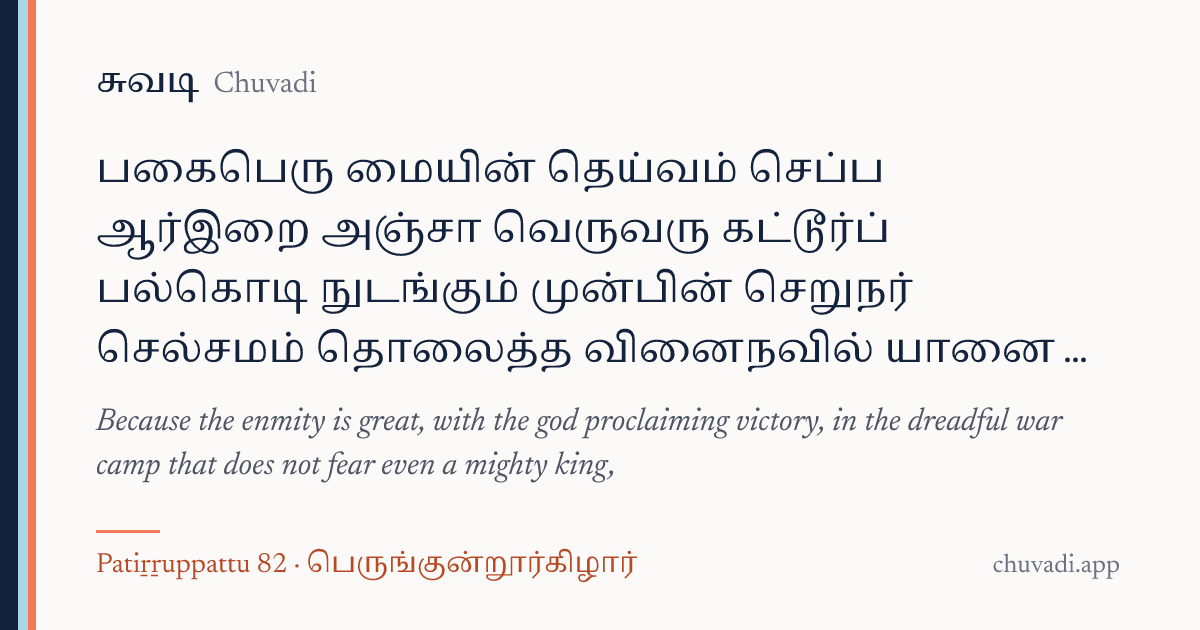
பகை பெரிதாக இருப்பதால் தெய்வம் வெற்றியை அறிவிக்க, வலிய அரசரையும் அஞ்சாத, அச்சம் தரும் பாசறையில் பல கொடிகள் அசைகின்றன. வலிமை மிக்க பகைவரின் போரை அழித்த, போர்த் தொழில் பழகிய யானைகள் மதம் வழிய, கடுஞ்சினம் மூள, வண்டு மொய்க்கும் தலையுடன் பிடியோடு சேர்ந்து திரிகின்றன. வீரர்கள் மோத, பெரும்படை தாக்க, தேர்க்கொடி அசைய, கேடயங்கள் ஒலிக்க, அருகிலுள்ள காடுகளைக் கருக்கிய நீண்டநாள் பாசறை இருக்கை இது. இத்தகைய நாட்கள் பல நாட்களாகத் தொடரட்டும்! பெருமானே, உன்னைப் பாடிக் காண வந்தேன். பாடுநர் கொள்ளக் கொள்ளக் குறையாத செல்வமும், பகைவர் கொல்லக் கொல்லக் குறையாத படையும் உடையவனே! உன் கொடையையும் நடுநிலையையும் சால்பையும் வீரத்தையும் சான்றோர் விரும்பிப் புகழ்கின்றனர்; அசையாத நல்ல புகழும் நிலம் தரும் செல்வமும் உடைய நெடியோனே!
துறை முல்லை. பெருங்குன்றூர்கிழார் இளஞ்சேரல் இரும்பொறையின் பாசறையைப் பாடுகிறார். பெயர் 'வினைநவில் யானை' (4ஆம் அடி): போர்த் தொழில் பழகிய யானை. குறையாத செல்வம், குறையாத படை என்ற இணை முதன்மைப் படிமம்.
ஆங்கிலம் · English translationAI
Translation
- Because the enmity is great, with the god proclaiming victory,
- in the dreadful war camp that does not fear even a mighty king,
- where many banners wave, the foes of great strength
- and their advancing battle were crushed by the elephant trained in war;
- its musth streaming, its fierce anger blazing up,
- with bee-swarmed heads they move along joined with their cow-elephants;
- as warriors clash and the great army strikes,
- as chariot banners wave and shields roar at the sides,
- this long-lasting camp that has scorched the forests at its edge:
- may such days become many days!
- I have come to sing and to see you, great one,
- you whose wealth does not lessen though singers take and take,
- whose army does not lessen though foes kill and kill; the wise
- your generosity, your rectitude, your nobility and your valour
- praise with delight, an unshaken good fame,
- O tall one, rich with the wealth the earth yields, you!
What the poem says
The poet addresses Iḷañcēral Irumpoṟai in his war camp. The turai is mullai, here the steady life of a camp kept up through a long campaign.
Lines 1-9 describe the camp: banners, war-trained elephants with streaming musth walking with their cow-elephants, warriors clashing, shields roaring, and the forests nearby scorched by the army. The poet then wishes that such days of victory may continue for many days (line 10), and says he has come to sing and to see the king (line 11).
The last lines are the praise proper. The king's wealth does not shrink however much the bards take, and his army does not shrink however many the enemy kill. The wise praise his generosity, justice, nobility and courage. The poem's name, vinainavil yāṉai, 'the elephant trained in war-work' (line 4), comes from the camp scene. The opening line, with 'the god proclaiming', is unclear; it may refer to an omen or to the war goddess. 'Ār iṟai' in line 2 is also uncertain.