



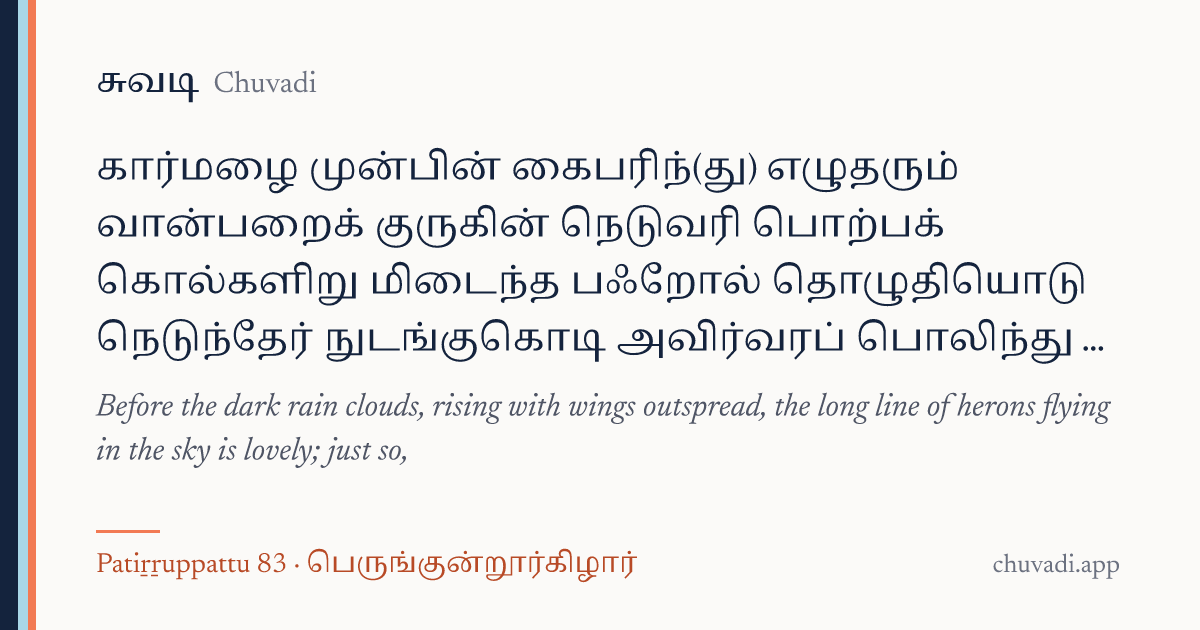
பதிற்றுப்பத்து 83 · ஒன்பதாம் பத்து
பாடல் · The poem
Tap a word to see where else it occurs.
பொருள் · Meaning in TamilAI
கார்மேகத்தின் முன்னே சிறகு விரித்து எழும் வானில் பறக்கும் கொக்குகளின் நீண்ட வரிசை அழகாக இருப்பது போல, கொல்லும் யானைகள் நெருங்கிய பல கேடயங்களுடைய படைத்தொகுதியோடும், நெடுந்தேர்களின் அசையும் கொடிகள் ஒளிர்வதோடும் பொலிந்து செல்லும் உன் படையெழுச்சி, அதைக் காண்பவர்க்கு மிக இனியது. ஆனால் அதுவே, பல பெரிய நாடுகள் அழிய அழித்து நல்ல அணிகலன்களைக் கொண்டுவரும் உன் எதிர்க்க அரிய கடுஞ்சினத்தை எதிர்கொண்டு, பாசறையில் இருக்கும் பகை வேந்தர்க்கு மிகவும் துன்பமானது.
துறை தும்பையரவம்: போருக்குச் செல்லும் படையின் ஆரவாரம். பெருங்குன்றூர்கிழார் இளஞ்சேரல் இரும்பொறையைப் பாடுகிறார். பெயர் 'பஃறோல் தொழுதி' (3ஆம் அடி): பல கேடயங்களுடைய படைத்தொகுதி. கொக்கு வரிசை உவமையும், இனிமை-துன்பம் என்ற எதிர்நிலையும் முதன்மையானவை.
ஆங்கிலம் · English translationAI
Translation
- Before the dark rain clouds, rising with wings outspread,
- the long line of herons flying in the sky is lovely; just so,
- with the troop of many shields crowded with killer elephants,
- with the waving banners of tall chariots shining bright,
- your march is very sweet to those who watch it;
- but bitter, alas, is that same thing; many great
- lands you ruin and lay waste, bringing away fine treasures, your
- fierce anger hard to fight: to those who face it,
- the hostile kings in their war camps.
What the poem says
A short poem in the turai tumpai aravam, the noise and stir of an army marching to battle. The poet speaks to Iḷañcēral Irumpoṟai.
The king's army on the march is compared to a long line of white herons flying before dark rain clouds (lines 1-2): shields, elephants and the bright banners of chariots move together in one long line. To those who watch, the march is a sweet sight (line 5). The second half turns the same image around: for enemy kings in their camps, who must face the king's fierce anger as he lays their lands waste and takes their treasures, the same sight is bitter (lines 6-9).
The poem's name is paḵṟōl toḻuti, 'the troop of many shields' (line 3). The sweet-and-bitter contrast is a common way in praise poetry to show both the beauty and the terror of the king's power.