



பதிற்றுப்பத்து 84 · ஒன்பதாம் பத்து
பாடல் · The poem
Tap a word to see where else it occurs.
பொருள் · Meaning in TamilAI
கோலால் எடுத்து அடிக்கப்படும் போர்முரசின் கண் அதிர்வது போலக் கார்மேகம் முழங்கினாலும், அதைப் போர்முரசு என்று எண்ணிக் கட்டுத்தறியின் கயிற்றை அறுத்து நெற்றியை உயர்த்தி எழும், போர்த்தொழில் பழகிய யானைகளைக் காவல் மிக்க பாசறைக்குக் கொண்டுவரும் பல வேல்படை உடைய பூழியர் அரசே! பொன்தேர் உடைய பொறையனே! மக்களை அழிக்கும் கூற்றுவன் போன்ற வலியோனே! கொடி அசையும் எண்ணற்ற அரிய கோட்டைகளையும், பல குதிரைகள் பரந்த நாட்டையும் ஒரு பொருட்டாக எண்ணாமல், நீ வலியவன் என்பதை நன்றாக அறிந்திருந்தும் உன்னைப் பகைத்தவர்கள், மேகமுழக்கால் வெறிகொண்ட இளங்களிறு முறிக்கும் கவர்த்த மூங்கில் போல, எப்படித் தப்புவர்? பணிய அறியாமல் ஒன்றாக எழுந்து, தண்ணுமை முழங்க, வேல் நெருங்கிய போர்க்களத்தில், போர்முனையை விரும்பும் வீரர்களோடு, இடி தாக்கிய மலை போல யானைகள் நிலத்தில் வீழ, காஞ்சிக்குரிய பல போர்களைச் செய்தாய். காலை மழை பெய்த பின், மேகம் மலையை அடையும் நீண்ட கார்காலத்தில் மழை பொழிய, பல குரல் பறவைகள் ஒலிப்பது போல ஆரவாரம் மிக்க உன் பாசறை இருக்கையை இனிதாகக் கண்டோம்.
துறை வாகை: வெற்றியைப் புகழ்தல். பெருங்குன்றூர்கிழார் இளஞ்சேரல் இரும்பொறையைப் பாடுகிறார். பெயர் 'தொழில்நவில் யானை' (4ஆம் அடி): மேக முழக்கை முரசு என எண்ணி எழும், போர்த் தொழில் பழகிய யானை.
ஆங்கிலம் · English translationAI
Translation
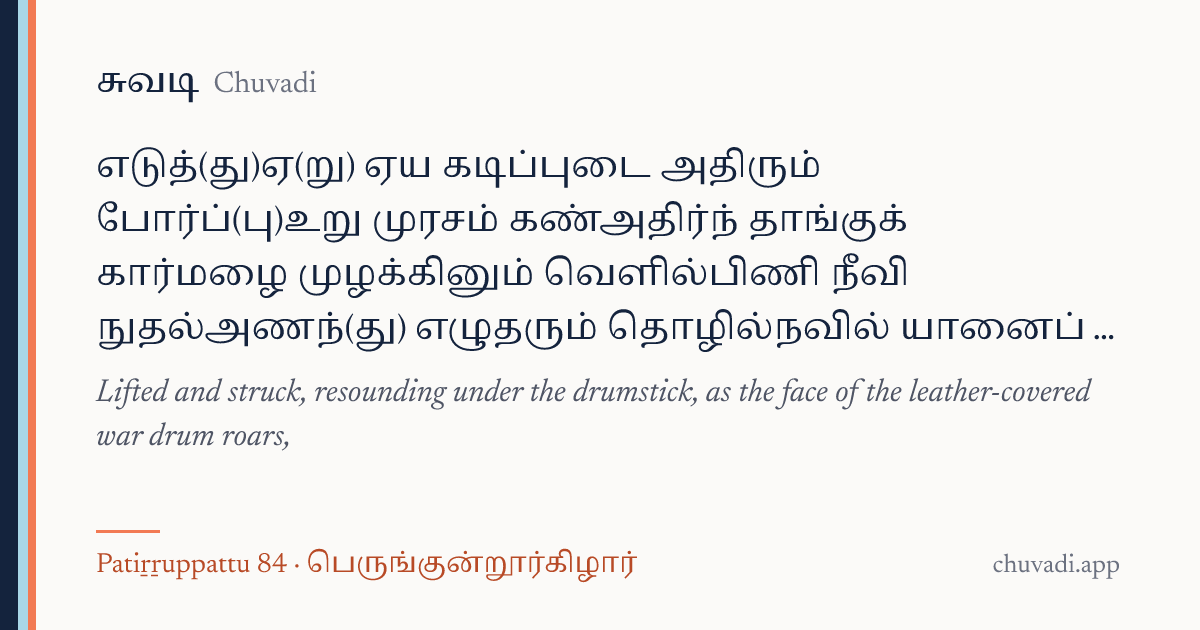
- Lifted and struck, resounding under the drumstick,
- as the face of the leather-covered war drum roars,
- even at the thunder of dark rain clouds, slipping the tie at its post,
- the elephant trained in its work rises with lifted forehead;
- you of many spears, who bring such elephants to the watchful war camp,
- king of the Pūḻiyar, Poṟaiya of the golden chariot,
- mighty one like Death, who crushes multitudes!
- Your strong forts where banners wave, beyond the bound of counting,
- the land where many horses spread, they did not count as one thing;
- though they knew well that you are mighty,
- like a young elephant roused by the roar of trailing clouds, a forked bamboo
- with shoots springing from its foot, that it breaks,
- what escape is there for those who angered you?
- Not knowing how to bow, rising together and moving about,
- as the roar of the leather-covered drum rises and proclaims,
- in the battlefield crowded with spears that do painful work,
- with warriors who never turn from their eagerness to enter the front,
- as elephants fall to the ground like peaks struck by thunder,
- you fought many battles worthy of kāñci; and your
- crowded, resounding camp we have seen with joy,
- like when the morning rain has poured and done its work,
- in the long season when clouds approach the mountain,
- the great rain gathers on the hills and pours,
- and the noise of many-voiced birds rises up.
What the poem says
The turai is vākai, the celebration of victory. The poet addresses Iḷañcēral Irumpoṟai as king of the Pūḻiyar and Poṟaiyaṉ of the golden chariot, mighty like Death.
The first image (lines 1-4) is of a war elephant so trained to battle that it takes the thunder of rain clouds for the war drum, breaks its tether and rises for the fight. The poem's name, toḻilnavil yāṉai, 'the elephant trained in its work' (line 4), comes from here. Lines 8-13 ask what escape there can be for enemies who ignored the king's countless forts and horses: they are like a forked bamboo that a young, excited elephant breaks.
Lines 14-20 describe the battle, with drums, spears, fearless warriors and elephants falling like peaks struck by lightning, battles worthy of kāñci, the theme of courage facing death. The poet says he has seen the king's noisy, crowded camp with joy, and compares its sound to the cries of many birds after the morning rain on the hills (lines 21-24). Line 14 has an odd form in the edition (uṭaṉ(ru)eḻuntu), read here as 'rising together'; lines 11-12 are compressed and the reading is not certain.