



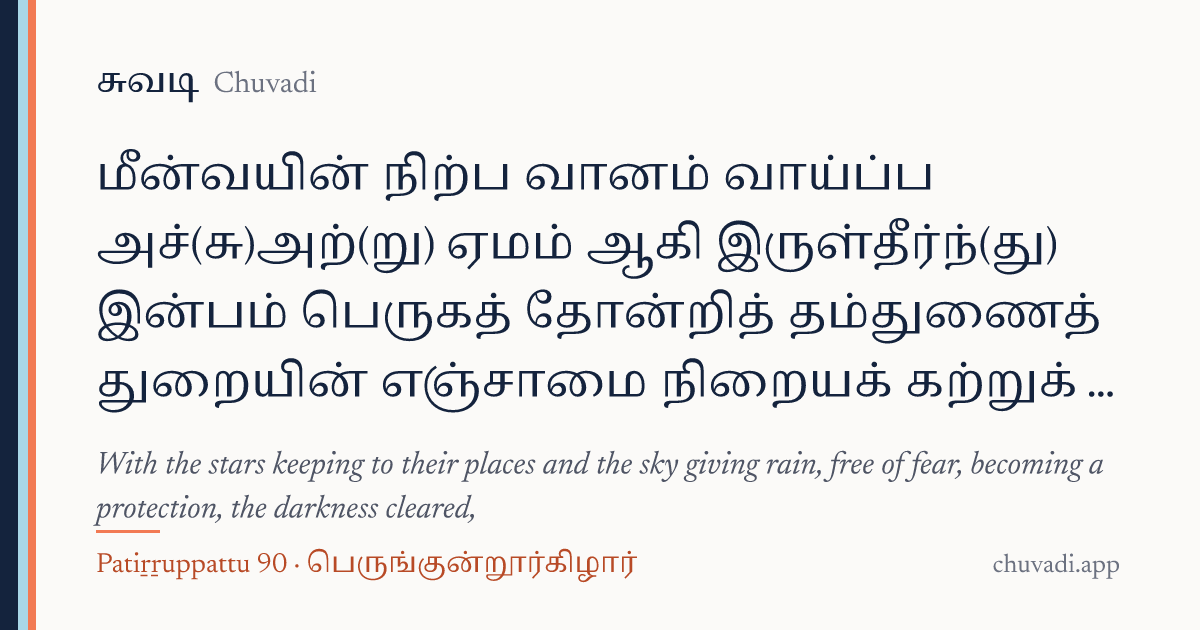
பதிற்றுப்பத்து 90 · ஒன்பதாம் பத்து
பாடல் · The poem
Tap a word to see where else it occurs.
பொருள் · Meaning in TamilAI
விண்மீன்கள் தம் நிலையில் நிற்க, வானம் மழை பொழிய, அச்சம் நீங்கிக் காவலாகி, இருள் தீர்ந்து, இன்பம் பெருகத் தோன்றி, தமக்குரிய துறைகளில் எஞ்சாமல் முழுதும் கற்று, சிறந்தோரையும் வருத்தும் கடுவலிமைக்கு அஞ்சாத ஒளிரும் வாளுடைய வலிய வேந்தர்கள் யானைகளோடு அணிகலன்களைக் கொண்டுவந்து, பழைய உறவைச் சொல்லி ஏவல் கேட்க, அகன்ற உலகில் நடுநிலையோடு ஆண்டு, அழியாத புகழ் வானளாவ, வாள்வலிமையைக் காட்டி, செம்மையைப் பூண்டு, அறம் வாழ்த்த நன்கு ஆண்ட வெற்றியுடைய மாந்தரனின் வழித்தோன்றலே! அன்புடைமையால் நீருக்கு ஒப்பானவன்; அளக்க முடியாமையால் வானுக்கு ஒப்பானவன்; கொள்ளக் குறையாமையால் கடலுக்கு ஒப்பானவன்; பல விண்மீன்களுக்கு நடுவே திங்கள் போலச் சுற்றத்தோடு பொலிந்து தோன்றுகிறாய். அயிரை தெய்வத்தை வழிபட்டும், கடல் பின்வாங்க வேல் எறிந்தும், பகைவர் வலிமையை அழித்தும், மலையிலும் நிலத்திலும் உள்ள அரண்களைக் கைப்பற்றியும், பெற்ற பெருஞ்செல்வத்தைப் பலர் கையில் தங்கச் செய்த வெற்றிச் செல்வமுடைய வலியோரின் வழித்தோன்றலே! வெல்லம் சேர்த்த உணவுடைய கொங்கர் அரசே! தேன் கலந்த உணவுடைய குட்டுவர் ஏறே! பின்வாங்காத தோள்களுடைய பூழியர் கவசமே! ஒலிக்கும் கடற்பரப்புடைய மரந்தை மக்களின் தலைவனே! வெள்ளை வேளைப்பூவும் சுரைக்கொடியும் கலந்த, பல மொழி பேசும் பாசறை வீரர்களின் வேந்தே! கடல் போன்ற தாங்க முடியாத படையோடு, சிறந்த வில்லை மார்பு வரை வளைத்து, நாண் உரசி ஒளிரும் வலிய பெரிய கையும், உயர்ந்த தோள்களும் உடையவனே! விண்மீன் பூத்தது போன்ற மணிச் சேணமும் கவரியும் உடைய குதிரை மேல் ஏறி, வேல் எறிந்து, துன்பத்திலும் பின்வாங்காத ஆண்மையுடைய காஞ்சி வீரர்களின் தலைவனே! ஓங்கிய புகழுடையவனே! வயல் உழவர் தண்ணுமை முழக்கினால் மயில் மழை என்று எண்ணி ஆடும், நீராடுவோர் ஆரவாரமும் கிணைப்பறை ஒலியும் எருதுகளின் முழக்கமும் கலந்த, வளமான வயல்கள் சூழ்ந்த காவிரி நாடு போன்ற வளமும், அடங்கிய ஒழுக்கமும், அமைதியான கற்பும், நிலைத்த புகழும், வண்டு மொய்க்கும் கூந்தலும் உடைய அரசியின் கணவனே! உன் நாட்கள் திங்கள் போலவும், திங்கள்கள் ஆண்டு போலவும், ஆண்டுகள் ஊழி போலவும், ஊழிகள் வெள்ளம் என்னும் எண்ணையும் கடந்தனவாகவும் ஆகுக என்று எண்ணி உன்னைக் காண வந்தேன்; போரில் இடிபோல முழங்கும் முரசும் பெரிய யானைகளும் உடைய அரசே!
துறை காட்சிவாழ்த்து. பெருங்குன்றூர்கிழார் இளஞ்சேரல் இரும்பொறையைக் கண்டு வாழ்த்துகிறார். பெயர் 'வலிகெழு தடக்கை' (33ஆம் அடி): வலிமை மிக்க பெரிய கை. நீர், வான், கடல், திங்கள் உவமைகளும், நாள் திங்களாக, திங்கள் ஆண்டாக என்ற வாழ்த்தும் முதன்மையானவை.
ஆங்கிலம் · English translationAI
Translation
- With the stars keeping to their places and the sky giving rain,
- free of fear, becoming a protection, the darkness cleared,
- joy increasing, they appeared; in their own fitting
- branches of learning they learned fully, leaving nothing out;
- not fearing the fierce strength that troubles even the excellent,
- the strong kings with shining swords,
- bringing jewels together with elephants,
- declaring their old allegiance and obeying your command;
- keeping impartial justice in the wide world,
- as unfading many fames rose up into the wide sky,
- making the strength of the sword felt, putting on righteousness,
- ruling well so that dharma blessed him,
- O victorious descendant of victorious Māntaraṉ!
- Because of your kindness, you are like water;
- because you are beyond measure, you are like the great sky;
- because you do not lessen when taken from, you are like the ocean;
- like the moon amid many stars,
- you shine forth with your flourishing kin.
- Worshipping Ayirai of fearsome tradition,
- hurling the spear so that the sea drew back,
- breaking the strength of those who opposed,
- seizing the strongholds of the hills and of the plains,
- placing the great riches won in many hands,
- O offspring of the mighty ones with the wealth of victory!
- King of the Koṅkar with food boiled with jaggery,
- bull of the Kuṭṭuvar with honeyed food,
- armour of the Pūḻiyar, with twin shoulders that never retreat,
- chief of the people of Marantai by the expanse of roaring water,
- where white-flowered vēḷai is mixed with gourd shoots,
- king of the warriors of the camp of many tongues!
- With an army hard to withstand, like the mighty sea,
- drawing the finely made bow back to the chest,
- the strong large hand that shines where the bowstring rubs,
- with lofty heaped shoulders as if cast and then adorned,
- on a saddle of shining gems like a blooming of stars,
- mounting the leaping horse with its fine-haired yak-tail plume,
- grasping and hurling the spear with its iron head,
- with manliness that never turns back, eager even in danger,
- great one among warriors worthy of kāñci,
- you of soaring fame and swelling great excellence!
- When farmers in the fields beat the drum,
- the peacock of the wetlands dances, taking it for rain;
- mingling with the shouts of those who bathe in cool water,
- as the clear kiṇai drums of fierce warriors sound,
- as the bulls in good houses full of grain bellow back,
- with many rich crops standing in fertile cool fields,
- like the good land of the Kāviri gardens,
- of restrained nature, with richly made anklets,
- of calm chastity and steadfast good fame,
- husband of the bright-bangled lady with bee-swarmed hair!
- May your days be as long as months, the months
- be as long as years, the years
- be as long as ages, the ages
- be beyond the count of a veḷḷam: thinking this
- I have come to see you, I; excelling in war,
- with the drum that roars like thunder,
- O lord who rules with great fine elephants!
What the poem says
The last poem of the ninth decade is a kāṭci vāḻttu, a blessing on seeing the king. It mixes the flowing oḻuku metre with shorter vañci lines (lines 6-9, 12-13, 20-21, 37), as the colophon notes.
Lines 1-13 praise the king's ancestor Māntaraṉ, under whom the stars kept their courses, rain came on time, and strong kings brought elephants and jewels and obeyed his command. Lines 14-18 then praise the king himself with three comparisons: he is like water in kindness, like the sky in being beyond measure, like the ocean in never running short when others take from him; among his kin he is like the moon among the stars. Lines 19-30 recall the deeds of his line, worship of the goddess Ayirai and the spear hurled at the sea, and give him many titles: king of the Koṅkar, bull of the Kuṭṭuvar, armour of the Pūḻiyar, chief of Marantai.
Lines 31-40 picture him as a warrior, drawing his bow, mounted on a plumed horse, hurling the spear. The poem's name, valikeḻu taṭakkai, 'the strong large hand' (line 33), comes from here. Lines 41-50 praise the queen through an image of the rich Kāviri country, where peacocks dance at the farmers' drums. The poem ends with a famous blessing: may his days be as months, months as years, years as ages, and ages beyond counting. Line 16 appears to have a misprint, read here as munnīr, ocean,, and 'kuṭaiccūl' in line 48 is uncertain.