



பதிற்றுப்பத்து Fragment f1
பாடல் · The poem
Tap a word to see where else it occurs.
பொருள் · Meaning in TamilAI
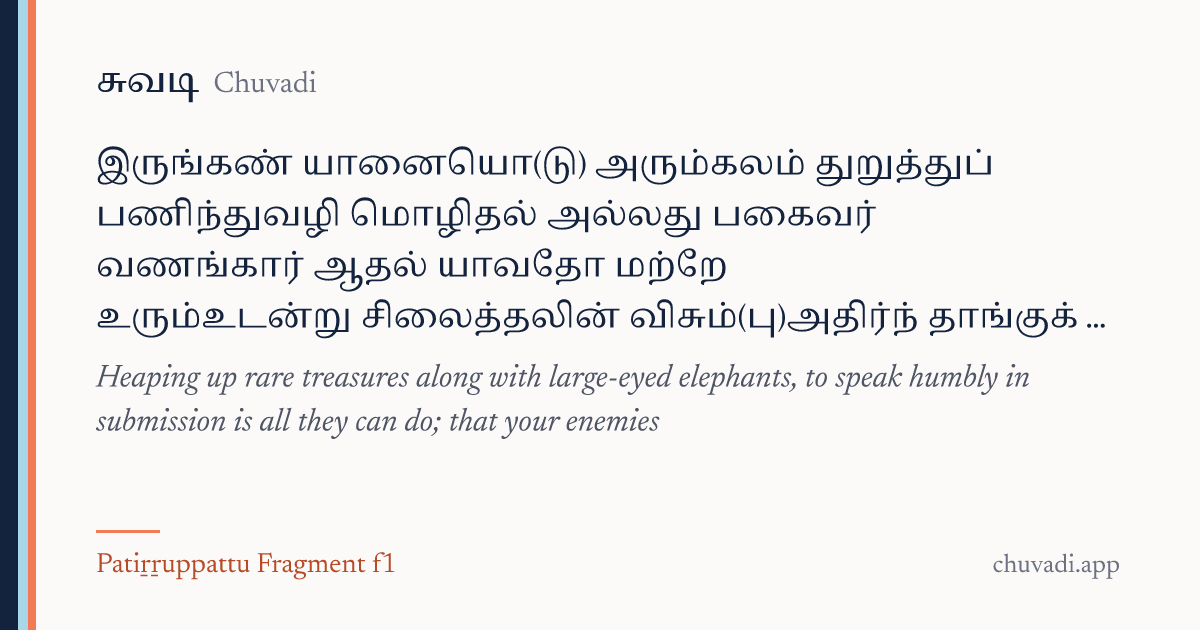
பகைவர் பெரிய கண்களையுடைய யானைகளோடு அரிய அணிகலன்களைக் குவித்துக் கொண்டு வந்து, பணிந்து வழிபாட்டுச் சொற்களைச் சொல்வதை அல்லாமல், உனக்கு வணங்காமல் இருப்பது எப்படி முடியும்? இடி சினந்து முழங்குவதால் வானம் அதிர்வது போலக் கண் அதிர்ந்து முழங்கும் கடுங்குரல் முரசுடனும், காற்று எழுந்தது போன்ற ஊர்திகளுடனும், காற்றால் மூண்ட தீ பரவியது போன்ற அடக்க முடியாத சினத்துடனும், பரந்த கரிய பெருங்கடலை நோக்கி நீர் விரைந்து செல்வது போன்ற செலவுடனும், நிலமே அலையாகச் சுருண்டு எழுந்தது போன்ற படையையும் உடையவனே, உனக்கு.
இது உரையாசிரியர்கள் மேற்கோளாகக் காட்டிய, இழந்த பத்துகளைச் சேர்ந்த ஒரு பகுதி. புலவரும் அரசனும் தெரியவில்லை. புலவர் சேர மன்னனை நோக்கிப் பாடுகிறார். பகைவர் பணிவதைத் தவிர வேறு வழியில்லை என்பதே கருத்து. முரசு இடி போலவும், ஊர்தி காற்றுப் போலவும், சினம் தீப் போலவும், படை கடலை நோக்கிப் பாயும் வெள்ளம் போலவும் உவமிக்கப்படுகின்றன. புறத்திரட்டில் பகைவயிற்சேறல் பகுதியில் இது இடம்பெறுகிறது.
ஆங்கிலம் · English translationAI
Translation
- Heaping up rare treasures along with large-eyed elephants,
- to speak humbly in submission is all they can do; that your enemies
- should refuse to bow, how could that ever be?
- As the sky shakes when thunder roars in anger,
- with war drums of harsh voice that boom, their faces throbbing,
- with mounts like the wind rising up, like a fire sprung from the wind
- spreading, with a fury that nothing can hold back,
- as water that makes for the great sea of dense, vast, dark expanse
- rushes on, with a march like that,
- you whose army is like the land itself rolling up in waves: for you.
What the poem says
This fragment survives only because old commentators quoted it; it belongs to one of the lost decades of Patiṟṟuppattu, so the poet and the king are not known. The poet speaks to a Chera king and makes one simple claim: for this king, enemies have no choice but to submit. They can only come bearing treasure and elephants and speak humbly; that they should refuse to bow is unthinkable.
The rest of the poem builds up the reason for this. The king's war drums boom like thunder that shakes the sky, his mounts move like rising wind, his anger spreads like wind-driven fire, and his army advances like a flood rushing to the sea, so vast that it looks like the earth itself rising in waves. The images all stress speed, noise and unstoppable force.
Lines 6 and 7 are compressed and hard to read: the phrase in line 6 about wind and sprouting fire may describe the mounts themselves or the king's anger, and the English keeps both images side by side. The sentence ends with the word for you, which picks up the question of lines 1 to 3: for you, how could enemies not bow? The simile in line 10 is also uncertain: the army is read as being like the land rolling up in waves, but the exact sense of the word is not clear. No colophon name survives for this fragment.