



பதிற்றுப்பத்து Fragment f2
பாடல் · The poem
Tap a word to see where else it occurs.
பொருள் · Meaning in TamilAI
ஒளிரும் பூண் அணிந்த கொம்புகளிலிருந்து மதநீர் ஒழுக, நிலத்தைத் தாக்கி எழும் வெற்றி பொருந்திய யானைகளும், தீ மலர்ந்தது போன்ற விரிந்த தலையாட்டம் அணிந்த, காற்று எழுந்தது போன்ற கடும் வேகமுடைய குதிரைகளும், அரசனின் போர்முனையில் கலக்காது நிரைத்த கொடிகளும் வலிமையுடன் ஊன்தொழில் போலத் தோன்றி உயர்ந்தெழ, அருவி போல ஒலிக்கும் வரிகளால் அழகு செய்த நெடிய தேர்களும் போர்க்களத்தை விரும்பின. முரசுகள் கண்ணில் அடிக்கப்பட்டு, எழுகின்ற திசைகள் கல்லென ஒலிக்க, முழங்கும் ஓசையுடைய கொம்புடன் வலம்புரிச் சங்கு ஆரவாரிக்க, நெடிய மதிலும், வரிசையான ஞாயிலும், காவல் காடும், ஆழ்ந்த அகழியும், உயர்ந்த அரிய அரணும் உடைய பகைவர் நாடு நெஞ்சில் ஊக்கம் அழிந்து நிலைதளர்ந்து விலக, பணியாத மன்னர் நடுங்க, இங்கே பெருகிய உன் படைச்செலவு உண்மையில் நல்லது.
இது இழந்த பத்துகளைச் சேர்ந்த ஒரு பகுதி; தொல்காப்பிய உரையில் மேற்கோளாக வருகிறது. புலவர் சேர மன்னனின் படையெழுச்சியைப் புகழ்கிறார். யானை, குதிரை, தேர், முரசு, சங்கு ஆகியவற்றின் வருணனையும், பகைவர் அரணின் வலிமையும் அவர்கள் அஞ்சுவதும் கூறப்படுகின்றன. ஐந்தாம், ஆறாம் அடிகளின் பொருள் தெளிவாக இல்லை.
ஆங்கிலம் · English translationAI
Translation
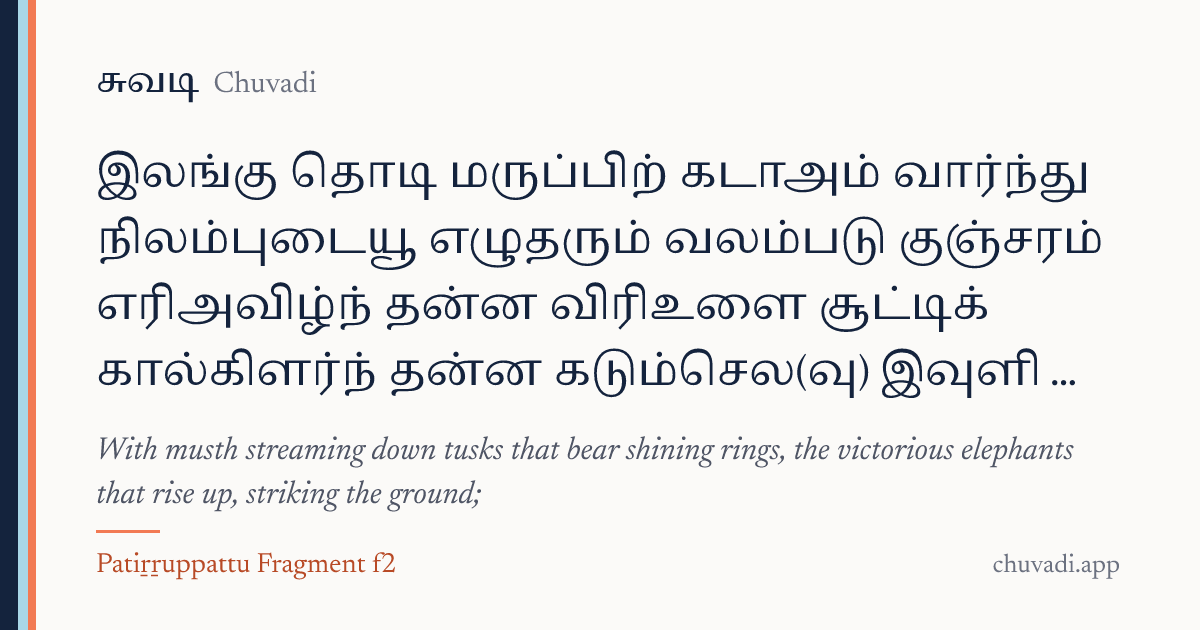
- With musth streaming down tusks that bear shining rings,
- the victorious elephants that rise up, striking the ground;
- crowned with spreading plumes like fire unfolding,
- horses of fierce speed, like the wind rising up;
- rows of banners at the king's battlefront, unmingled, with the strong,
- looking like butchers' work, rising up mightily;
- tall chariots decked with lines, that roar like waterfalls:
- these have longed for the battlefield; the drums, struck on their faces,
- make the quarters that rise up swiftly resound with clamour,
- and the right-whorled conch blares with the horn of throbbing sound;
- the land with its tall walls and rows of battlements,
- its guarded thorny woods and deep moat,
- its hard fortress raised high and its strong defences,
- losing all desire at heart, slackening and leaving its firm stand,
- so that kings who do not yield tremble:
- truly good is the march that has swelled up here.
What the poem says
This fragment of a lost decade describes the Chera king's army setting out against an enemy fort. The poet, who is not known, speaks to or about the king. Elephants dripping musth with rings on their tusks, fast horses with plumes like flames, and tall chariots that roar like waterfalls all long for battle. The drums are struck, the sky echoes in every direction, and the conch and the horn sound together.
The second half turns to the enemy. Their land has tall walls with battlements, a protecting belt of thorny wood and a deep moat, but the people lose heart, their firmness breaks, and kings who would not submit tremble. The poem ends by praising the march itself: truly good is this campaign that has swelled up here. This is the theme of the king going out against his enemies, a common subject of puṟam poetry.
The order of the Tamil is unusual: the elephants, horses and chariots in lines 1 to 7 are the subjects of the verb in line 8, they have longed for. Lines 5 and 6 are obscure and the text may be damaged; the reading of the king's battlefront, unmingled rows of banners, and work like a butcher's is uncertain. The word read here as butchers' work may refer to the gory look of the warriors or the elephants. No colophon name survives.