



புறநானூறு Invocation
பாடல் · The poem
Tap a word to see where else it occurs.
பொருள் · Meaning in TamilAI
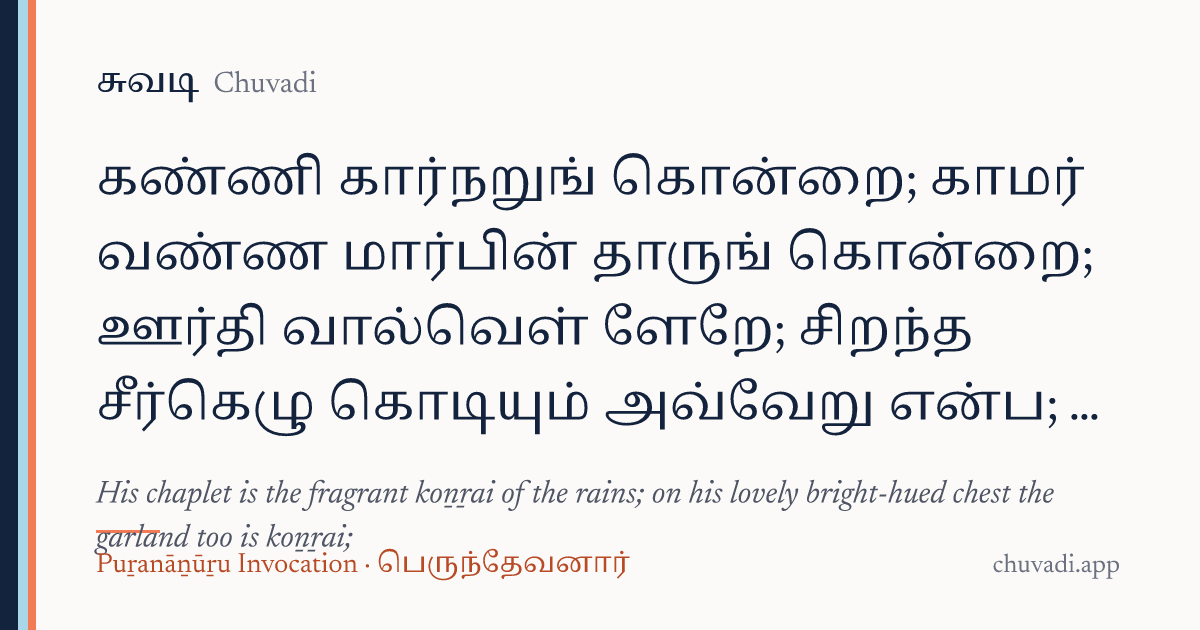
கார்காலத்தில் மலரும் மணமுள்ள கொன்றையே அவன் தலையில் சூடும் கண்ணி; அழகிய நிறமுடைய அவன் மார்பில் அணியும் மாலையும் கொன்றையே. அவன் ஏறிச் செல்லும் ஊர்தி தூய வெண்மையான காளை; சிறப்புமிக்க அவன் கொடியிலும் அதே காளைதான் என்று சொல்வர். கறைபடிந்த கழுத்தும் அவனுக்கு ஓர் அணியாக அமைந்துள்ளது; அந்தக் கறையை வேதம் ஓதும் அந்தணர்களும் போற்றிப் பாடுவர். பெண்ணின் உருவம் அவனுடைய ஒரு பகுதியாக உள்ளது; அந்த உருவத்தைத் தன்னுள்ளே அடக்கி மறைத்துக் கொள்ளவும் அவன் செய்வான். பிறைச் சந்திரன் அவன் நெற்றிக்கு அழகாக அமைந்துள்ளது; அந்தப் பிறையைப் பதினெட்டுக் கணத்தினரும் போற்றுவர். இவை எல்லாம், எல்லா உயிர்களுக்கும் காவலாக விளங்குபவனும், நீர் வற்றுவதை அறியாத கமண்டலத்தை உடையவனும், தொங்கும் சடையால் பொலிவு பெற்றவனுமாகிய அரிய தவத்தோனுக்கே உரியவை.
இது நூலின் தொடக்கத்தில் உள்ள கடவுள் வாழ்த்து; புறப்பாடல் அன்று, ஆகவே திணையும் துறையும் இல்லை. பாடியவர் பெருந்தேவனார்; பாடப்பட்டவன் இறைவன். இறைவனின் பெயர் சொல்லப்படவில்லை; ஆனால் கொன்றை மாலை, காளை ஊர்தி, கறைபடிந்த கழுத்து, பெண் ஒரு பாகம், பிறை, சடை ஆகியவை சிவபெருமானைக் காட்டுகின்றன. பெண்ணுருவைத் தன்னுள் அடக்கி மறைப்பான் என்ற வரிகளின் கருத்து உறுதியாகத் தெளிவாக இல்லை.
ஆங்கிலம் · English translationAI
Translation
- His chaplet is the fragrant koṉṟai of the rains; on his lovely
- bright-hued chest the garland too is koṉṟai;
- his mount is the pure white bull; his eminent
- and glorious banner too is that bull, they say;
- a stained throat is an ornament he wears; that stain
- is also hymned by brahmins who recite the Veda;
- a woman's form has become one part of him; that form
- he may also hide, holding it within himself;
- the crescent has become the beauty of his brow; that crescent
- is also praised by the eighteen hosts;
- to him who is a refuge for all living things,
- who bears a water-pot that never knows a lack of water,
- the one of hard penance, splendid with his hanging matted hair.
What the poem says
Puṟanāṉūṟu opens, like the other anthologies, with an invocation (kaṭavuḷ vāḻttu) credited to Peruntēvaṉār. It is a prayer, not a puṟam poem, so it has no tiṇai or turai. The god is never named, but every attribute points to Śiva: the koṉṟai flowers of the rainy season in his chaplet and garland, the white bull as both mount and banner, the dark stain on his throat, the woman who forms one half of his body, the crescent on his brow, the ascetic's water-pot and long matted hair.
The poem is built in pairs. Each attribute is stated, then picked up again with 'that' (ak-kaṟai, av-uru, ap-piṟai) and given a second clause: the stain is also praised by Vedic brahmins, the crescent is also extolled by the eighteen hosts of celestial beings. The grammar holds everything in suspense until the last line, a dative: all these belong 'to him of hard penance'.
The phrase 'they say' (eṉpa) in line 4 presents the bull banner as received knowledge. Lines 7–8 are not fully clear: the god's female half is said to be something he can also conceal within himself, and the exact sense of this hiding is uncertain.