



புறநானூறு 2
பாடல் · The poem
Tap a word to see where else it occurs.
பொருள் · Meaning in TamilAI
செறிந்த மண்ணால் ஆன நிலம், அந்த நிலத்தைத் தாங்கி நிற்கும் வானம், வானத்தைத் தடவிச் செல்லும் காற்று, காற்றால் எழுந்து பெருகும் தீ, தீக்கு மாறான நீர் என்னும் ஐம்பெரும் பூதங்களின் இயல்பைப் போல, உன்னை மதியாதவரையும் பொறுக்கும் பொறுமையும், அகன்ற சூழ்ச்சியும், வலிமையும், பகைவரை அழிக்கும் ஆற்றலும், அருளும் உடையவனே! உன் கடலில் தோன்றிய கதிரவன் மீண்டும் வெண்மையான அலைகள் கொண்ட உன் மேற்குக் கடலிலேயே மூழ்கும்; அத்தகைய வளமான ஊர்கள் நிறைந்த நல்ல நாட்டின் தலைவனே! வானத்தையே எல்லையாகக் கொண்டவனே! பெருமானே! அசையும் பிடரி மயிருடைய குதிரைகளைக் கொண்ட ஐவரோடு சினந்து, நிலத்தைக் கைப்பற்றிக்கொண்டு, பொன்னிறத் தும்பைப் பூச் சூடிய நூற்றுவரும் போரிட்டுக் களத்தில் மடியும் வரை, பெருஞ்சோற்று உணவை அளவில்லாமல் வழங்கியவனே! பால் புளித்தாலும், பகல் இருண்டாலும், நான்கு வேதங்களின் நெறி மாறினாலும், மாறாத சுற்றத்தாரோடு நீ நெடுந்தொலைவு முழுமையாகப் புகழுடன் விளங்கி, நடுக்கம் இல்லாமல் நிலைத்து வாழ்வாயாக! மாலையில் அந்தணர்கள் அரிய கடமையாகச் செய்யும் முத்தீயின் ஒளியில் சிறிய தலையும் பெரிய கண்களும் உடைய பெண்மான்கள் உறங்கும் சாரல்களைக் கொண்ட, பொன்னிறச் சிகரங்களையுடைய இமயமலையும் பொதியமலையும் போல நீ நிலைத்து நிற்பாயாக!
பாடாண் திணை, அதாவது ஒருவனின் புகழ், கொடை, வீரம் முதலியவற்றைப் போற்றுவது. துறை செவியறிவுறூஉ, அதாவது அரசனுக்கு அவன் செவியில் படும்படி அறிவுரை கூறுவது; வாழ்த்தியல் என்றும் கொள்ளலாம். பாடியவர் முரஞ்சியூர் முடிநாகராயர்; பாடப்பட்டவன் சேரமான் பெருஞ்சோற்று உதியன் சேரலாதன். ஐவர், நூற்றுவர் என்பவை பாண்டவரையும் கௌரவரையும் குறிப்பதாகவும், அந்தப் போரில் இவன் படைகளுக்கு உணவளித்தான் என்றும் மரபு சொல்கிறது; பாடல் அவன் அளவின்றி உணவு கொடுத்தான் என்பதை மட்டுமே சொல்கிறது.
ஆங்கிலம் · English translationAI
Translation
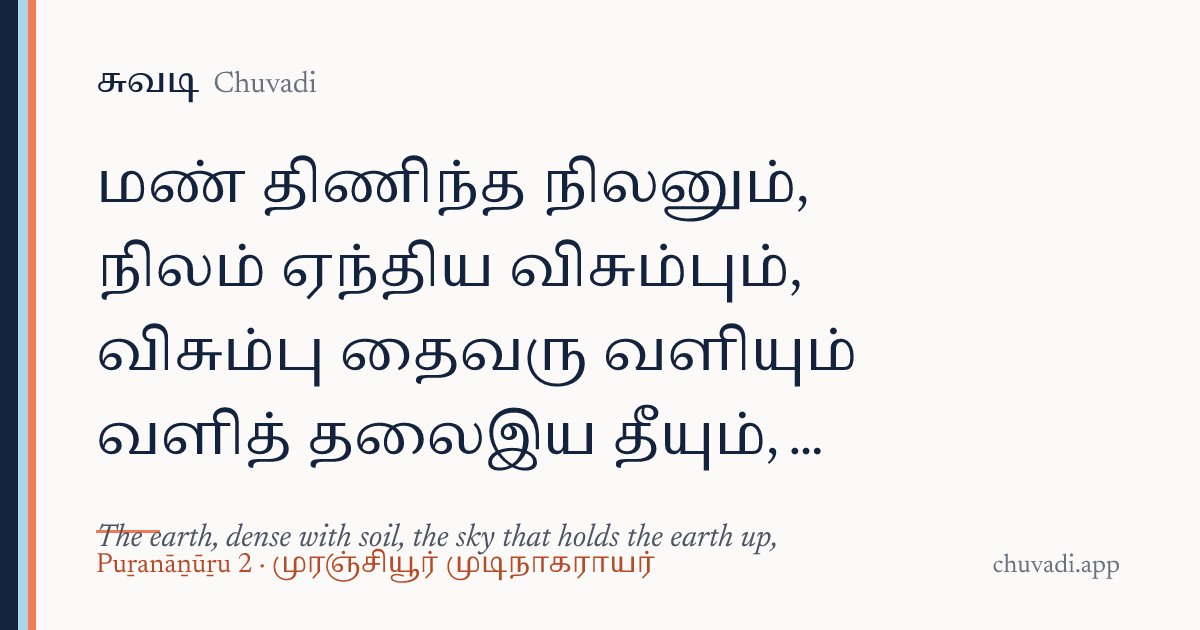
- The earth, dense with soil,
- the sky that holds the earth up,
- the wind that strokes the sky,
- the fire that the wind stirs up,
- the water that stands against fire — thus,
- like the nature of the five great elements,
- you have patience with those who do not honour you, breadth of counsel,
- strength, destroying force and grace!
- Where the sun, born in your sea, sinks again into your
- western sea of white-crested breakers to bathe —
- lord of a good country of thriving settlements!
- You whose bound is the sky! You, great one,
- when, raging against the Five with their horses of tossing manes,
- having seized the land, wearing golden tumpai flowers,
- the ten times ten fought until they fell on the field,
- you gave great food in plenty, without limit!
- Even if milk turns sour, even if daylight darkens,
- even if the way of the four Vedas swerves,
- with your kin who never swerve, shining far and in fullness,
- may you stand unshaken! Like, on their slopes,
- the small-headed, large-eyed doe of the deer,
- where brahmins at dusk perform their exacting rites,
- sleeping by the lamp of the three fires —
- the Himālaya with golden peaks, and Potiyam!
What the poem says
Murañciyūr Muṭinākarāyar addresses the Cēra king Peruñcōṟṟu Utiyaṉ Cēralātaṉ. The poem is pāṭāṇ, praise of a patron, and the turai is ceviyaṟivuṟūu, words of counsel spoken into the king's ear, with vāḻttiyal, blessing, given as an alternative; it closes in exactly such a blessing.
It opens with a chain of the five elements, each linked to the next (earth, the sky that bears it, the wind that touches the sky, the fire the wind feeds, the water that opposes fire), and then says the king has qualities as vast and various: forbearance, deep counsel, strength, the power to destroy, and grace. His country is so wide that the sun rises out of his sea and sets again in his own western sea, and he is hailed as one whose only border is the sky.
Lines 13–16 speak of the Five with tossing-maned horses and the ten times ten who fought until they fell, wearing golden tumpai, the flower of battle, while the king gave food without limit. Tradition reads this as the Pāṇḍavas and the hundred Kauravas, and holds that the king fed the armies in that war, which is how his title 'of the great food' is explained; the poem itself says only that he gave food unstintingly while they fought.
The blessing asks him to stand firm even if milk turns sour and day goes dark, like the Himālaya and Potiyam, where deer sleep in the glow of the brahmins' three evening fires.