



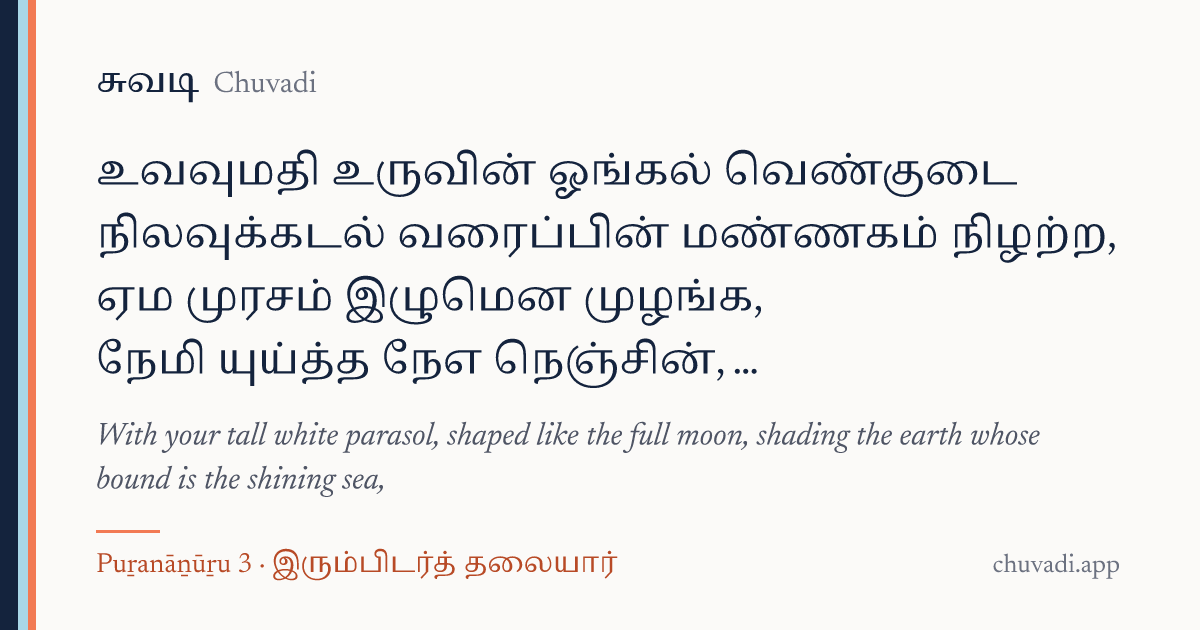
புறநானூறு 3
பாடல் · The poem
Tap a word to see where else it occurs.
பொருள் · Meaning in TamilAI
முழுநிலவைப் போன்ற உன் உயர்ந்த வெண்கொற்றக்குடை ஒளிரும் கடலை எல்லையாகக் கொண்ட நிலம் முழுவதற்கும் நிழல் தர, காவல் முரசு ஆழ்ந்து முழங்க, ஆட்சிச் சக்கரத்தைச் செலுத்திய அன்பு நெஞ்சமும் ஓயாத கொடையும் உடைய கவுரியர் மரபில் வந்தவனே! குற்றமற்ற கற்பும் சிறந்த அணிகலன்களும் உடையவளின் கணவனே! பொன்னால் ஆன நெற்றிப்பட்டம் அணிந்த புள்ளிகள் கொண்ட நெற்றியும், நெருங்க முடியாத வலிமையும், மணக்கும் மதநீரும் உடையதும், தந்தங்களையே படைக்கருவியாகக் கொண்டு கோட்டைக் கதவுகளை மோதுவதும், இருபக்கமும் கயிற்றால் கட்டிய கவிழ்ந்த மணிகளை உடையதுமான பெரிய கையுடைய யானையின் பெரிய பிடரியில் அமர்ந்து, மருந்தில்லாத கூற்றுவனின் கொடிய தொழிலுக்குச் சற்றும் குறையாமல் போர் செய்யும், வலிய கையும் ஒளிரும் வாளும் கொண்ட பெரும்புகழ் வழுதியே! நிலமே இடம் பெயர்ந்தாலும் உன் சொல் மாறாதிருக்கட்டும்! பொன் கழல் அணிந்த காலும், புலர்ந்த சந்தனம் பூசிய அகன்ற மார்பும் உடையவனே! ஊர்கள் இல்லாததும், தாங்க முடியாததும், நீர் இல்லாததும், நீண்ட வழிகளை உடையதுமான நிலத்தில், மறைவான காவல் இடங்களில் இருந்து கையால் கண்ணை மறைத்து உற்றுநோக்கி, குறி தவறாத கொடிய வீரர்கள் அம்பு எய்வர்; அதனால் விழுந்தவர்களின் மேல் குவித்த புதிய கல்குவியல்கள் மேல், அழகிய சிறகும் வளைந்த அலகும் உடைய பருந்து அமர்ந்து வருந்திக் கரையும்; உன்ன மரங்கள் நிற்கும், நெருங்க முடியாத அந்தக் கிளைவழிகளைக் கடந்து உன்னைக் காணும் ஆசையால் இரவலர்கள் வருவார்கள். அவர்கள் வாய்விட்டுச் சொல்லும் முன்பே முகக் குறிப்பால் அதை உணர்ந்து அவர்களின் வறுமையைப் போக்குவதே உண்மையான வலிமை.
பாடாண் திணை; துறை செவியறிவுறூஉ, அதாவது அரசனுக்கு அறிவுரை கூறுவது; வாழ்த்தியல் என்றும் கொள்ளலாம். பாடியவர் இரும்பிடர்த் தலையார்; பாடப்பட்டவன் பாண்டியன் கருங்கை ஒள்வாள் பெரும்பெயர் வழுதி. 'எயிரு படையாக' என்பதில் உள்ள 'எயிரு' என்பதை 'எயிறு', அதாவது தந்தம் என்று கொண்டோம்; இத்தொடரின் பொருள் சற்று ஐயத்துக்கு உரியது.
ஆங்கிலம் · English translationAI
Translation
- With your tall white parasol, shaped like the full moon,
- shading the earth whose bound is the shining sea,
- your drum of protection booming deep,
- you of loving heart who drove the wheel of rule,
- of unceasing gifts, scion of the Kauriyar!
- Husband of the lady with fine jewels and flawless chastity!
- On the elephant whose spotted, adorned brow bears a golden plate,
- whose musth is fragrant, whose might is hard to approach,
- whose tusks are its weapons, which batters fortress doors,
- with upturned bells bound by ropes at its sides —
- seated on the great neck of that big-trunked elephant,
- never falling short of the hard work of Death, for which there is no cure,
- strong-handed Vaḻuti of the shining sword and great name!
- Even if the earth should shift, let your word not shift!
- You with golden anklets on your feet, with sandal paste drying
- on your chest, broad from side to side!
- Through tracts without villages, hard to endure,
- without water, of long stretches,
- where from hidden lookouts, with hand-shaded gaze,
- hard-eyed men who never miss their straight aim
- loose arrows, and on the fresh stone-heaps of those who fell
- the kite with trim wings and hooked beak sits and cries,
- at forking paths with uṉṉam trees, hard to approach,
- suppliants will come out of longing for you! To sense that
- beforehand, from their faces, and their
- want to end — that is strength.
What the poem says
Here the Pāṇṭiya king Karuṅkai Oḷvāḷ Perumpeyar Vaḻuti ('Vaḻuti of the strong hand, the shining sword and the great name') is praised and counselled by Irumpiṭart Talaiyār. The tiṇai is pāṭāṇ, praise of a patron; the turai is ceviyaṟivuṟūu, advice spoken to the king, or vāḻttiyal, blessing. The poet's name matches the phrase 'irum piṭart talai', the great neck of the elephant, in line 11, which suggests he was named from this poem.
The first half piles up royal emblems: a white parasol like the full moon shading the whole earth, the drum of protection, descent from the Kauriyar, a chaste queen, and the war elephant with golden forehead-plate and bells, on whose neck the king sits doing work as deadly as Death itself. At the centre stands the one direct command: even if the earth moves, let your word not move.
The second half turns to the road suppliants must travel to reach him: a waterless wasteland where bowmen lie in wait, where those they kill lie under fresh heaps of stones and a kite sits crying over them by the uṉṉam trees. The point of this harsh picture comes in the last lines: the king's true strength is to read the need in their faces before they speak, and to end their poverty.
The printed 'eyiru' in line 9 is taken as eyiṟu, tusk; the line is a little uncertain.