



புறநானூறு 4
பாடல் · The poem
Tap a word to see where else it occurs.
பொருள் · Meaning in TamilAI
வெற்றி தந்த வாள்கள் குருதிக் கறை படிந்து செவ்வானத்தின் அழகைப் போல் விளங்குகின்றன. போர்க்களத்தைக் கைப்பற்றிய கால்கள், கழல்கள் தேய்ந்து, கொல்லும் காளையின் கொம்புகளைப் போல் இருக்கின்றன. கேடயங்கள் அடிபட்டு, அம்புகள் நெருக்கமாகத் தைத்து, இடம் விட்டு அகலாத இலக்குகளைப் போல் உள்ளன. குதிரைகள், வீரன் காலால் தட்டிச் செலுத்தும் குறிப்பால் வழி காட்டப்பட்டு, கடிவாளம் உராய்ந்து சிவந்த வாயுடன், இரையின் கழுத்தைக் கவ்விய புலியைப் போல் இருக்கின்றன. யானைகள் கோட்டைக் கதவுகளை மோதிச் சிவந்து, உராய்ந்து, முனை மழுங்கிய வெண்தந்தங்களுடன் உயிரை உண்ணும் கூற்றுவனைப் போல் இருக்கின்றன. நீயோ, அசையும் பிடரி மயிருடன் பாய்ந்து செல்லும் குதிரைகள் பூட்டிய பொன்தேரின் மேல் பொலிவுடன் தோன்றி, கரிய பெருங்கடலிலிருந்து மேலெழுந்து வரும் செங்கதிரவனின் அழகைக் கொண்டிருக்கிறாய். நீ இத்தகையவனாக இருப்பதால், தாய் பால் ஊட்டாத குழந்தையைப் போல, உன்னைச் சினமூட்டியவர்களின் நாடு ஓயாமல் கதறுகிறது.
வஞ்சித் திணை, அதாவது பகைவர் நாட்டின் மீது படையெடுத்துச் செல்வதைப் பாடுவது. துறை கொற்ற வள்ளை, அதாவது அரசனின் வெற்றியைப் போற்றிப் பகைவர் நாடு அடைந்த அழிவைச் சொல்வது. பாடியவர் பரணர்; பாடப்பட்டவன் சோழன் உருவப் பஃறேர் இளஞ்சேட் சென்னி. 'தாயில் தூவாக் குழவி' என்பதைத் தாய் இல்லாததால் உணவூட்டப்படாத குழந்தை என்றும் கொள்ளலாம்.
ஆங்கிலம் · English translationAI
Translation
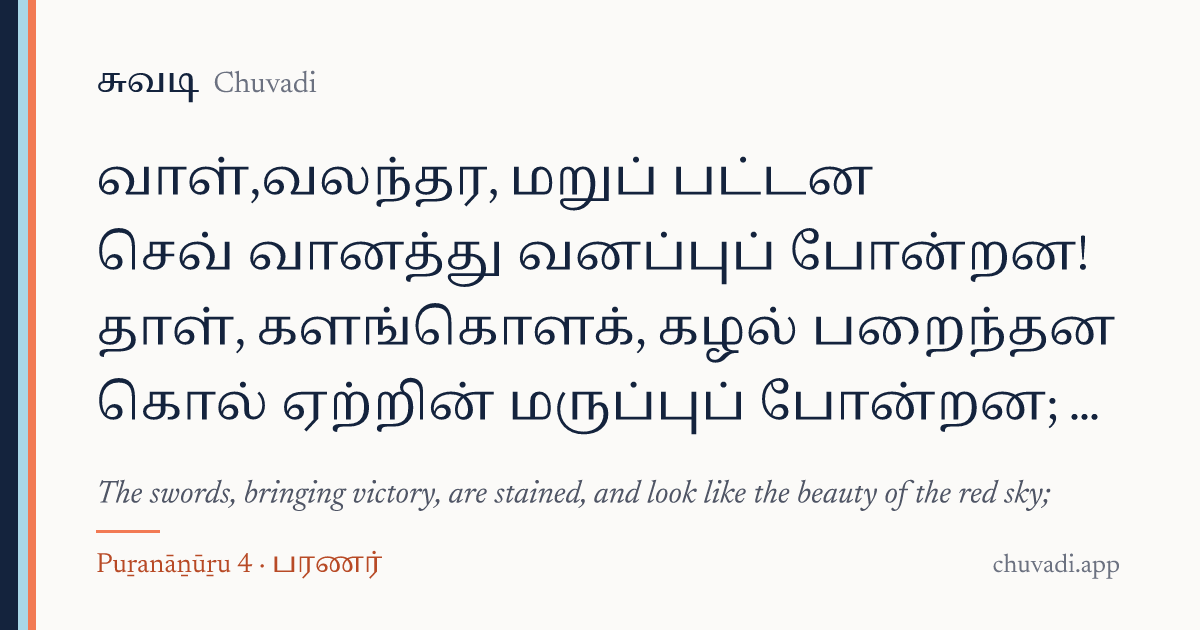
- The swords, bringing victory, are stained,
- and look like the beauty of the red sky;
- the legs that held the field, their anklets worn away,
- look like the horns of a killing bull;
- the shields, battered and thick with arrows,
- look like targets that never leave their place;
- the horses, as the rider's striking foot shows them the way,
- with red mouths chafed by the bit,
- look like tigers that have seized a neck;
- the elephants, battering gates, reddened, scraping,
- with white tusks whose points are blunted,
- look like Death who devours lives;
- and you, with your galloping horses of tossing manes,
- showing your splendour on your golden chariot,
- rising up out of the dark great sea,
- have the beauty of the red sun!
- Because you are such,
- like an infant its mother has not fed,
- the land of those who angered you cries without end.
What the poem says
Paraṇar sings of the Cōḻa king Uruvap Paḵṟēr Iḷañcēṭ Ceṉṉi. The tiṇai is vañci, the theme of marching out against an enemy land, and the turai is koṟṟa vaḷḷai, which praises the king's victory by describing the ruin it brings to his foes.
The poem is a gallery of the army after battle, each part given its own simile. Bloodied swords are like the red evening sky; legs whose anklets have been rubbed away are like the horns of a goring bull; shields so stuck with arrows look like fixed targets; horses with bit-torn red mouths are like tigers that have seized a neck; elephants whose tusks are blunted from smashing gates are like Death itself. The king on his golden chariot crowns the series: he is like the red sun climbing out of the sea.
The last three lines turn from glory to its cost. Because he is like this, the country of those who provoked him wails without ceasing, like a baby that its mother has not fed. 'tāyil tūvāk kuḻavi' can also be read as a child with no mother to feed it; either way it is a child crying from hunger.