



புறநானூறு 5
பாடல் · The poem
Tap a word to see where else it occurs.
பொருள் · Meaning in TamilAI
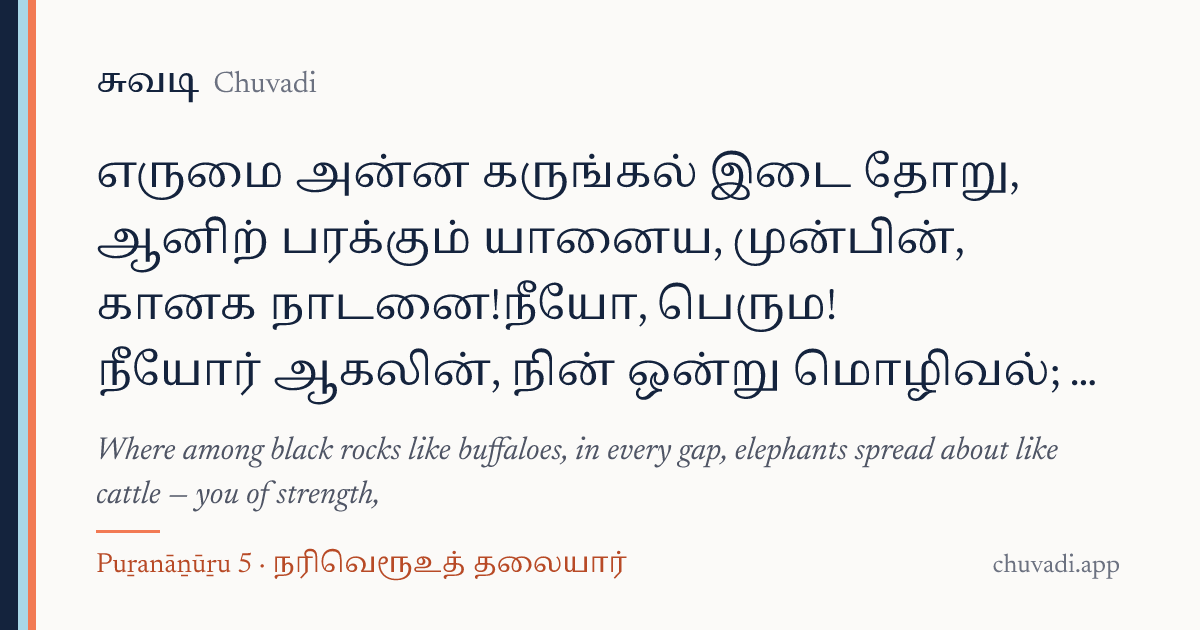
எருமைகளைப் போன்ற கரிய பாறைகளின் இடைதோறும் பசுக்களைப் போல யானைகள் பரந்து திரியும், வலிமை உடையவனே! நீ காடுகள் நிறைந்த நாட்டின் தலைவன்! பெருமானே! நீ அத்தகைய பெருமை உடையவனாக இருப்பதால் உனக்கு ஒன்று சொல்கிறேன்: அருளையும் அன்பையும் கைவிட்டு, நீங்காத நரகத்தைத் தேடிக் கொள்பவர்களோடு சேராமல், குழந்தையைக் கவனமாகப் பேணி வளர்ப்பவர்களைப் போல உன் நாட்டைக் காத்துப் பேணுவாயாக! அப்படிப்பட்ட காவல் மிக இனிமையானது; அது பெறுவதற்கும் அரியது.
பாடாண் திணை; துறை செவியறிவுறூஉ, அதாவது அரசனுக்கு அறிவுரை கூறுவது; உலக உண்மையைக் கூறும் பொருண்மொழிக் காஞ்சி என்றும் கொள்ளலாம். பாடியவர் நரிவெரூஉத் தலையார்; பாடப்பட்டவன் சேரமான் கருவூரேறிய ஒள்வாட் கோப்பெருஞ் சேரல். பதிப்பில் துறை 'வெவியறிவுறூஉ' என்று அச்சாகியுள்ளது; இது 'செவியறிவுறூஉ' என்பதன் அச்சுப்பிழை. இறுதி வரியில் உள்ள 'அளிதோ' என்ற சொல்லுக்கு இரங்கத்தக்கது என்றும் பொருள் உண்டு; அதனால் அவ்வரியின் பொருள் உறுதியாகத் தெரியவில்லை.
ஆங்கிலம் · English translationAI
Translation
- Where among black rocks like buffaloes, in every gap,
- elephants spread about like cattle — you of strength,
- you are lord of a forest country! You, great one,
- since you are such a one, I will tell you one thing:
- not joining with those who cast off grace and love
- and take on a hell that never leaves them, guard
- your realm as those who tend an infant would, and cherish it!
- It is a tender thing indeed; it is hard to come by.
What the poem says
A short poem of counsel by Nariverūut Talaiyār to the Cēra king Karuvūr ēṟiya Oḷvāḷ Kōpperuñ Cēral, 'who climbed into Karuvūr'. The tiṇai is pāṭāṇ, praise of a patron, and the turai is ceviyaṟivuṟūu, advice addressed to the king, with poruṇmoḻik kāñci, a statement of general truth, as an alternative. The edition prints the turai as 'veviyaṟivuṟūu', a clear misprint for ceviyaṟivuṟūu.
The opening sketches the king's hill country with one quiet image: wild elephants roaming among black boulders as cattle roam among buffaloes. Then the poet comes to his single piece of advice. The king should not join those who throw away compassion and love and earn a hell from which there is no release; he should protect his land the way one takes care of a small child.
The last line is compact and its reference is not certain. It most likely means that such caring rule is something tender and precious, and rare to attain; 'aḷitu' can also mean 'pitiable', which would give a different shade.