



புறநானூறு 6
பாடல் · The poem
Tap a word to see where else it occurs.
பொருள் · Meaning in TamilAI
வடக்கே பனி படர்ந்த நீண்ட மலைக்கு வடக்கிலும், தெற்கே அச்சம் தரும் குமரிக்குத் தெற்கிலும், கிழக்கே கரையை மோதும் ஆழ்கடலுக்குக் கிழக்கிலும், மேற்கே பழமையான பெருங்கடலுக்கு மேற்கிலும், கீழே மூன்று அடுக்குகளாக முறைப்படி அமைந்த அடித்தளத்தின் மேல் உயர்ந்து நிற்கும் நீர்ப்பரப்புக்குக் கீழும், மேலே பசுக்கள் வாழும் உலகத்திலும் ஓயாமல் உன் தோற்றமும் புகழும் பரவி நிற்கட்டும். நுட்பமாக அளக்கும் துலாக்கோலைப் போல நீ ஒரு பக்கமாகச் சாயாதிருப்பாயாக! உன் இயல்பு மேலும் சிறப்பதாக! உன் முயற்சிகளை எதிர்த்த பகைவர் நாட்டில் கடல்போன்ற உன் படை புகுந்து பாய, அடர்ந்த புள்ளிகளும் சிறிய கண்களும் உடைய யானைகளைத் திறமையாகச் செலுத்தி, பசுமையான வயல்கள் சூழ்ந்த அரிய கோட்டைகள் பலவற்றைக் கைப்பற்றி, அக்கோட்டைகளில் எடுத்த வேலைப்பாடு மிக்க நல்ல அணிகலன்களைப் பரிசில் நாடி வருவோர்க்கு அவரவர் தகுதிக்கேற்ப வழங்கினாய். ஆனால் முனிவர்கள் போற்றும் முக்கண் இறைவனின் கோயிலை வலம் வரும்போது உன் குடை தாழ்வதாக! பெருமானே, நான்மறை உணர்ந்த சிறந்த முனிவர்கள் வாழ்த்தக் கை உயர்த்தும்போது அவர்கள் முன் உன் தலை வணங்குவதாக! இறைவனே, பகைவர் நாடுகளை எரிக்கும் புகை வீசுவதால் மட்டுமே உன் மாலை வாடுவதாக! தூய அணிகலன் அணிந்த மகளிர் ஊடல் கொண்ட ஒளிமுகத்தோடு எதிர்வரும்போது உன் சினம் தணிவதாக! இவ்வாறு எல்லா வெற்றிகளையும் வென்று அவற்றை உள்ளத்தில் அடக்கி வைத்திருக்கும், குறையாத கொடையும் சிறந்த பெருமையும் உடைய குடுமியே! குளிர்ந்த கதிர்களையுடைய நிலவைப் போலவும், சுட்டெரிக்கும் ஒளிக்கதிர்களையுடைய கதிரவனைப் போலவும், பெருமானே, நீ இந்த நிலத்தில் நிலைத்து வாழ்வாயாக!
பாடாண் திணை; துறை செவியறிவுறூஉ, அதாவது அரசனுக்கு அறிவுரை கூறுவது; வாழ்த்தியல் என்றும் கொள்ளலாம். பாடியவர் காரிகிழார்; பாடப்பட்டவன் பாண்டியன் பல்யாகசாலை முதுகுடுமிப் பெருவழுதி. கீழுலகையும் மேலுலகையும் சொல்லும் வரிகளின் நுட்பமான பொருள் உறுதியாகத் தெரியவில்லை. பதிப்பில் உள்ள 'வாடாஅது', 'பொளவத்தின்', 'ஞமன்ன்' என்பவற்றை 'வடாஅது', 'பௌவத்தின்', 'ஞமன்' என்று திருத்திக் கொண்டோம்.
ஆங்கிலம் · English translationAI
Translation
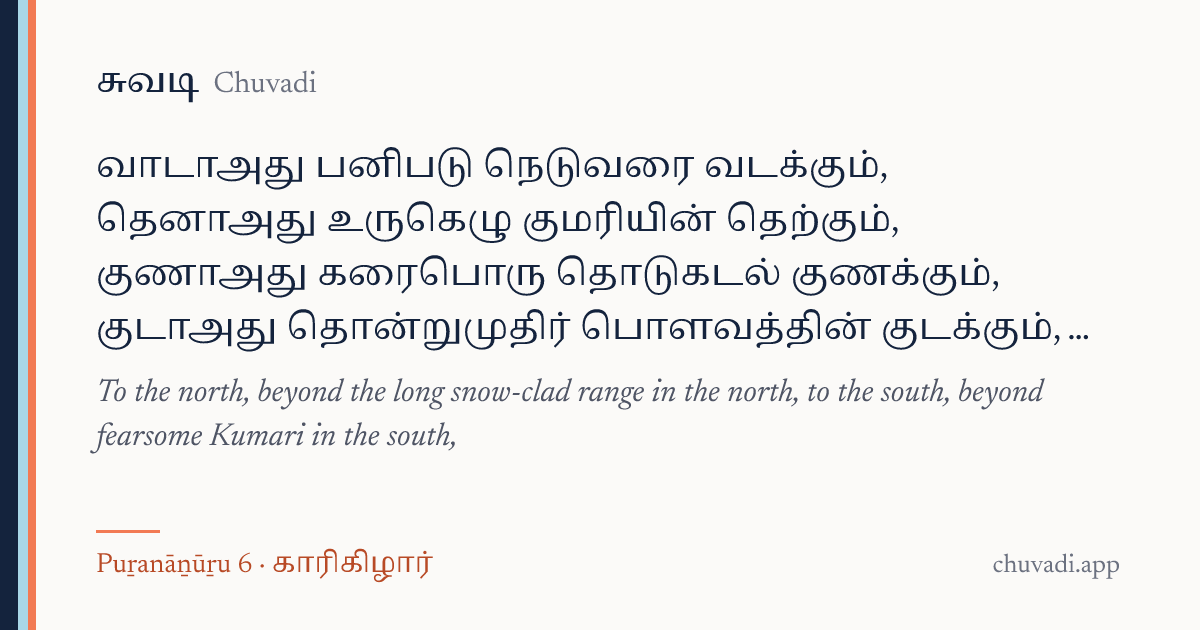
- To the north, beyond the long snow-clad range in the north,
- to the south, beyond fearsome Kumari in the south,
- to the east, beyond the deep sea that beats the shore in the east,
- to the west, beyond the ancient ocean in the west,
- below, beneath the first foundation stacked in three joined layers
- with its rising mass of waters, and above,
- in the world where the cows abide — unceasing,
- becoming form and fame, of spreading glory,
- like the weigher with his discerning beam, to one side
- may you never lean! May your ways excel!
- In the land of foes who stood against your undertakings,
- as your sea-like army plunged in and surged, and your dense-spotted
- small-eyed elephants you drove on with skill,
- you took many strong forts ringed by green fields,
- and the finely wrought treasures seized in those forts
- you gave, each by his worth, to men who seek gifts;
- yet may your parasol bow low — for the sages'
- Three-Eyed Lord, as you walk round his temple!
- Let your head bend, great one, before the eminent
- sages of the four Vedas, as they raise their hands!
- Let your chaplet wither, lord, since of your foes
- the burning lands send their reeking smoke against it!
- Let your anger pass, though, when the white-jewelled
- women turn their bright, sulking faces to you!
- So, having won every victory and held it within you,
- Kuṭumi of unflagging gifts and excellent worth!
- Like the moon of cool rays, and like the scorching
- sun of bright rays,
- may you endure, great one, upon the earth!
What the poem says
Kārikiḻār sings to the Pāṇṭiya king Palyākacālai Mutukuṭumip Peruvaḻuti, 'Peruvaḻuti of the many sacrificial halls'. The tiṇai is pāṭāṇ, praise of a patron; the turai is ceviyaṟivuṟūu, counsel to the king, or vāḻttiyal, blessing.
The first ten lines measure his fame against the whole cosmos: beyond the snowy mountains in the north, beyond Kumari in the south, beyond the eastern and the western seas, down below the waters resting on a three-layered foundation and up into 'the world where the cows abide'. Across all of it the poet asks one thing: that the king stay level, like a balance that does not tip to one side. The cosmology of lines 5–7 is compressed and its details are uncertain, and 'ñamaṉ' in line 9 is taken as the weigher or balance; the edition's spelling 'ñamaṉṉ' has a doubled final letter, apparently a slip.
After praising his conquests and his generosity with the spoils, the poem turns to a series of graceful wishes about where the king should yield: let his parasol dip when he circles the shrine of the three-eyed god, let his head bow to Vedic sages, let his garland wither only from the smoke of burning enemy lands, let his anger melt before the sulking faces of women. It ends by wishing him to last like the moon and the sun.
The edition prints 'vāṭāatu' in line 1 and 'poḷavattiṉ' in line 4; these are read as vaṭāatu, 'to the north', and pauvattiṉ, 'of the ocean'.