



புறநானூறு 7
பாடல் · The poem
Tap a word to see where else it occurs.
பொருள் · Meaning in TamilAI
யானையைச் செலுத்தும் கால்களும், கழல் உராய்ந்த அழகிய அடிகளும், அம்பு எய்து போரிட்டுக் கவிந்து வாரி வழங்கும் வள்ளல் கையும், கண்ணைக் கூசச் செய்யும் ஒளியுடைய அழகிய வில்லும், குதிரைகளைத் தடுத்து நிறுத்திய அகன்ற மார்பும், கேடயப் படையைப் பின்வாங்கச் செய்த பெரும் வலிமையும் உடையவனே! நீ பகலையும் இரவையும் கணக்கிடாமல், பகைவரின் ஊர்கள் எரியும் ஒளியிலும், அங்கு எழும் அழுகுரல் ஆரவாரத்திலும் கொள்ளையையே விரும்புகிறாய். ஆகவே, நன்கு செய்த தேரையுடைய வளவனே, குளிர்ந்த வெள்ளம் பரவி ஆரவாரம் எழும்போது மண்ணைக் கொண்டு அடைக்காமல் மீன்களைக் கொண்டே உடைப்பை அடைக்கும் அளவு வளமும் பயனும் மிக்க ஊர்களைக் கொண்ட பிறருடைய அகன்ற நாடுகளில் உள்ள நல்லவை எல்லாம் இல்லாமல் போகும்.
வஞ்சித் திணை, அதாவது பகைவர் நாட்டின் மேல் படையெடுத்துச் செல்வதைப் பாடுவது. துறை கொற்ற வள்ளை, அதாவது அரசனின் வெற்றியையும் பகைவர் நாட்டின் அழிவையும் சொல்வது; வளமான பகை நாட்டைக் கொள்ளையிடும் மழபுல வஞ்சி என்றும் கொள்ளலாம். பாடியவர் கருங்குழல் ஆதனார்; பாடப்பட்டவன் சோழன் கரிகாற் பெருவளத்தான். 'மா மறுத்த' என்பதற்குக் குதிரைகளைத் தடுத்த என்றும் குற்றமற்ற என்றும் பொருள் கொள்ளலாம்; பொருள் உறுதியாகத் தெரியவில்லை.
ஆங்கிலம் · English translationAI
Translation
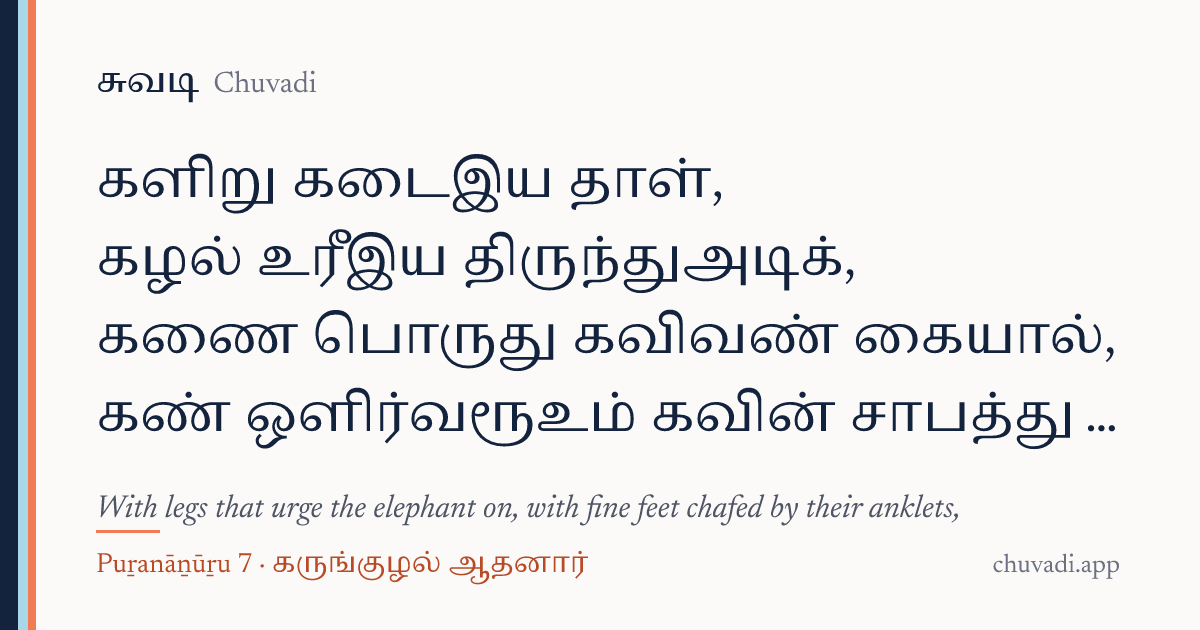
- With legs that urge the elephant on,
- with fine feet chafed by their anklets,
- with a generous cupped hand that has fought with arrows,
- with a lovely bow whose gleam dazzles the eye,
- with a broad chest that turned back horses,
- with mighty strength that drove back shields,
- counting neither day nor night, in your foes'
- towns burning bright, amid the uproar of wailing cries,
- you delight in plunder; and so all good things
- will be gone, Vaḷava of the well-made chariot,
- where, when the cool flood spreads with a clamour, they refuse earth
- and dam it with fish — those thriving,
- rich and shining settlements, the wide lands of others!
What the poem says
Karuṅkuḻal Ātaṉār addresses the Cōḻa king Karikāṟ Peruvaḷattāṉ, called here Vaḷava. The tiṇai is vañci, marching against an enemy country; the turai is koṟṟa vaḷḷai, praise of victory that dwells on the enemy's ruin, or maḻapula vañci, the plundering of a rich enemy land.
The first six lines build a portrait of the king out of his body and his weapons: legs that drive the war elephant, feet rubbed by heroic anklets, a hand that both fights with arrows and gives freely, a shining bow, a broad chest and a strength that sends shield-bearers back. Line 5 'mā maṟutta' is taken as 'turned back horses'; it could also mean 'free of blemish', and the sense is not certain.
The poem then says, with a tone that may hold some reproach, that he loves plunder by day and night amid the glare and wailing of burning towns. Therefore the good things of other kingdoms will be lost. The closing picture shows what those kingdoms were: lands so rich that when the flood breaks through, people stop the breach with the abundant fish instead of with earth.