



புறநானூறு 8
பாடல் · The poem
Tap a word to see where else it occurs.
பொருள் · Meaning in TamilAI
உலகைக் காக்கும் அரசர்கள் அவன் சொல்லைப் பணிந்து நடக்கவும், செல்வத்தை விரும்பி, நிலம் பலருக்கும் பொது என்ற சொல்லைப் பொறுக்காமலும், தன் நாடு சிறியது என்று எண்ணும் ஊக்கம் அவனைத் தூண்டவும், தளராத உள்ளமும் அளவில்லாத கொடையும் கொண்டு, பகைவரைக் கடந்து அழிக்கும் படையை உடைய சேரலாதனுக்கு, விரைந்து செல்லும் கதிரவனே, நீ எப்படி நிகராவாய்? நீ குறிப்பிட்ட நேரத்துக்குள் அடங்குகிறாய்; முதுகு காட்டிப் போய்விடுகிறாய்; மாறி மாறித் திரும்பி வருகிறாய்; மலைக்குப் பின்னால் மறைந்து ஒளிந்து கொள்கிறாய்; அகன்ற கரிய வானத்தில் மட்டுமே, உன் பல கதிர்களையும் விரித்துப் பகலில் மட்டுமே ஒளிர்கிறாய்.
பாடாண் திணை; துறை இயன்மொழி, அதாவது பாடப்படுவோனின் இயல்பைச் சொல்லிப் புகழ்வது; அவனைச் சிறந்த பொருளோடு ஒப்பிடும் பூவை நிலை என்றும் கொள்ளலாம். பாடியவர் கபிலர்; பாடப்பட்டவன் சேரமான் கடுங்கோ வாழியாதன், அவனே செல்வக் கடுங்கோ வாழியாதன் என்றும் குறிப்பு சொல்கிறது. கதிரவனை நோக்கிப் பேசுவது போல அமைந்த இப்பாடலில், கதிரவனின் ஒவ்வொரு குறையும் அரசனின் சிறப்பை மறைமுகமாகக் காட்டுகிறது.
ஆங்கிலம் · English translationAI
Translation
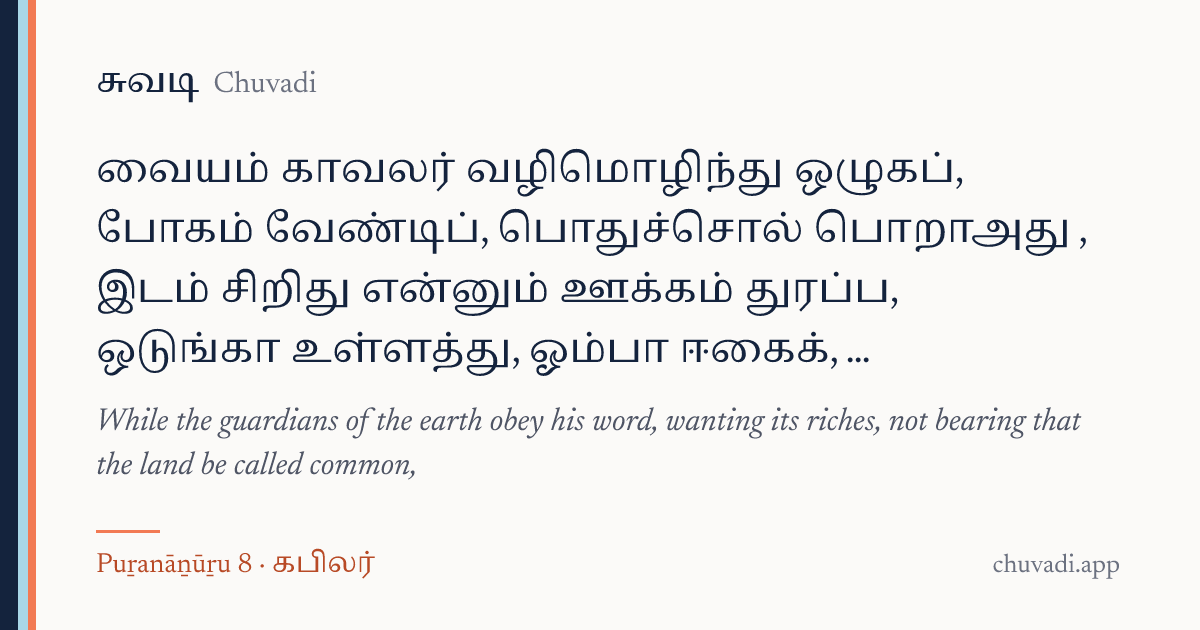
- While the guardians of the earth obey his word,
- wanting its riches, not bearing that the land be called common,
- driven by a zeal that tells him his realm is small,
- with unshrinking heart and unsparing gifts —
- Cēralātaṉ, whose army overruns and kills:
- how could you be his equal, you swift-moving orb?
- You are bound by the hours; you turn your back and go;
- you come again by turns; you hide behind the hills;
- and only in the wide dark sky
- do you shine by day, spreading your many rays.
What the poem says
Kapilar praises the Cēra king Kaṭuṅkō Vāḻiyātaṉ, also known as Celvak Kaṭuṅkō Vāḻiyātaṉ according to the colophon, here called Cēralātaṉ. The tiṇai is pāṭāṇ, praise of a patron; the turai is iyaṉmoḻi, a statement of the patron's character, or pūvai nilai, likening the king to something divine or glorious.
The poem is spoken to the sun. After four lines on the king (other rulers follow his word, he will not tolerate any claim that the land is shared, his ambition finds his realm too small, his heart never shrinks and his giving is unguarded) the poet turns and asks the sun how it could ever compare with him.
The answer is a list of the sun's shortcomings, each a quiet contrast with the king: the sun keeps to fixed times, turns its back and leaves, comes back only in turn, hides behind mountains, and shines only by day and only in the sky. 'puṟakkoṭuttu iṟatti' means 'you turn your back and pass', and the same words could suggest fleeing, which a king never does.