



புறநானூறு 9
பாடல் · The poem
Tap a word to see where else it occurs.
பொருள் · Meaning in TamilAI
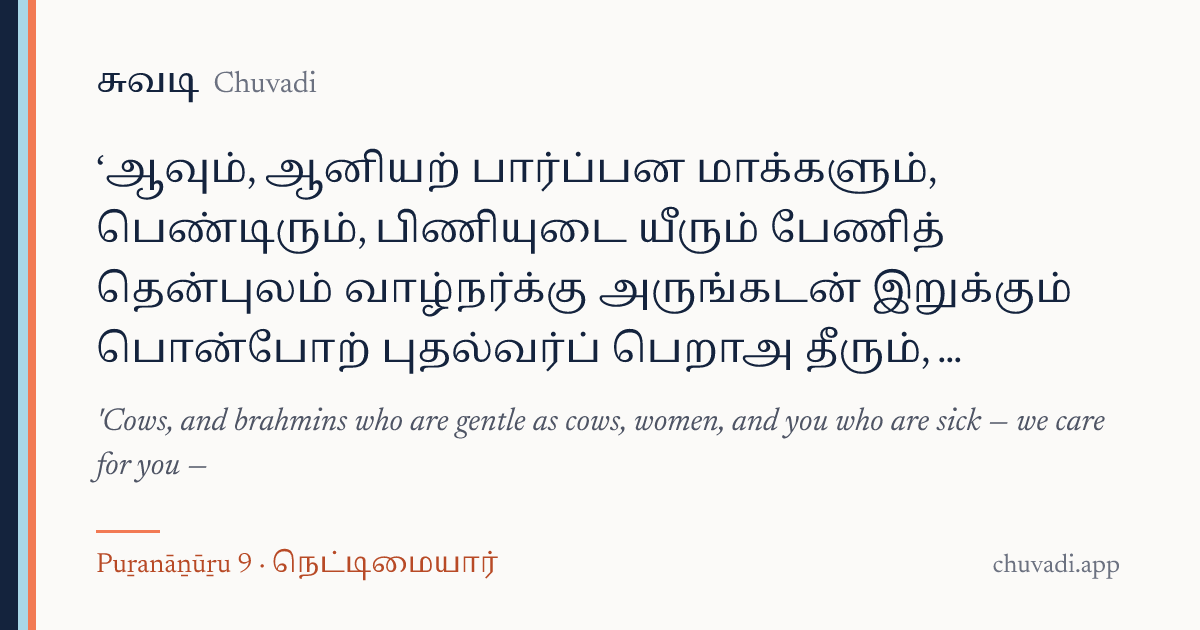
'பசுக்களே, பசுவைப் போன்ற இயல்புடைய அந்தணர்களே, பெண்களே, நோயாளிகளே, தென்திசையில் வாழும் முன்னோர்களுக்குச் செய்ய வேண்டிய அரிய கடன்களைச் செய்யும் பொன் போன்ற மகன்களை இன்னும் பெறாதவர்களே, உங்களைக் காக்க விரும்புகிறோம்; விரைவில் எங்கள் அம்புகளை எய்யப் போகிறோம்; நீங்கள் உங்கள் பாதுகாப்பான இடங்களுக்குச் செல்லுங்கள்' என்று அறவழியை அறிவிப்பது அவனுடைய கொள்கை. வீரத்தோடு கொல்லும் யானைகளின் மேல் கட்டிய கொடிகள் வானத்தையே நிழல் செய்யும். அத்தகைய எங்கள் அரசனாகிய குடுமியே, நீ வாழ்வாயாக! அவர்கள் அரசனாகிய, வயிரியர் என்னும் கலைஞர்களுக்குச் சிறந்த செம்பொன்னை வழங்கிய, கடல் விழாக் கொண்டாடிய நெடியோனுக்குரிய நல்ல நீரையுடைய பஃறுளி ஆற்றின் மணலைக் காட்டிலும் பல நாட்கள் நீ வாழ்வாயாக!
பாடாண் திணை; துறை இயன்மொழி, அதாவது அரசனின் இயல்பைச் சொல்லிப் புகழ்வது. பாடியவர் நெட்டிமையார்; பாடப்பட்டவன் பாண்டியன் பல்யாகசாலை முதுகுடுமிப் பெருவழுதி. 'தம் கோ' என்று சொல்லப்படும் நெடியோன் பாண்டியர் குடியின் முன்னோனாக இருக்கலாம்; ஆனால் பாடல் அதை வெளிப்படையாகச் சொல்லவில்லை. பதிப்பில் உள்ள 'நுன்அரண்' என்பதை 'நும் அரண்' என்று கொண்டோம்.
ஆங்கிலம் · English translationAI
Translation
- 'Cows, and brahmins who are gentle as cows,
- women, and you who are sick — we care for you —
- and you who, to pay the hard dues to the dwellers of the south,
- have not yet had sons as precious as gold:
- we shall loose our arrows swiftly; go to your shelters!' — so
- proclaiming the way of dharma is his resolve; in valour
- the banners on his killer elephants' backs shade the sky —
- our lord, long live Kuṭumi! More days than, of their own king
- who gave fine red gold to the vayiriyar,
- Neṭiyōṉ who held the festival of the sea,
- the sands of the Paḵṟuḷi of good waters, may you have!
What the poem says
Neṭṭimaiyār praises the Pāṇṭiya Palyākacālai Mutukuṭumip Peruvaḻuti, called Kuṭumi. The tiṇai is pāṭāṇ, praise of a patron; the turai is iyaṉmoḻi, a statement of the king's nature.
The poem opens with the king's warning before battle, given in his own words. Cows, brahmins 'who are like cows', women, the sick, and men who have not yet fathered sons to perform the rites for the ancestors, 'those who dwell in the southern land', are told to take refuge before the arrows fly. This is presented as his settled resolve: to declare the righteous way even in war. Then comes his martial side, with banners on the war elephants shading the sky.
The blessing at the end wishes him more days than the grains of sand in the Paḵṟuḷi river. That river is said to belong to Neṭiyōṉ, 'their king', who gave fine gold to the vayiriyar (a class of musicians and performers) and held a festival of the sea; the phrase most likely refers to a forebear of the Pāṇṭiya line, though the poem does not say so outright.
In line 5 the edition prints 'nuṉ araṇ'; it is read as num araṇ, 'your shelters'.