



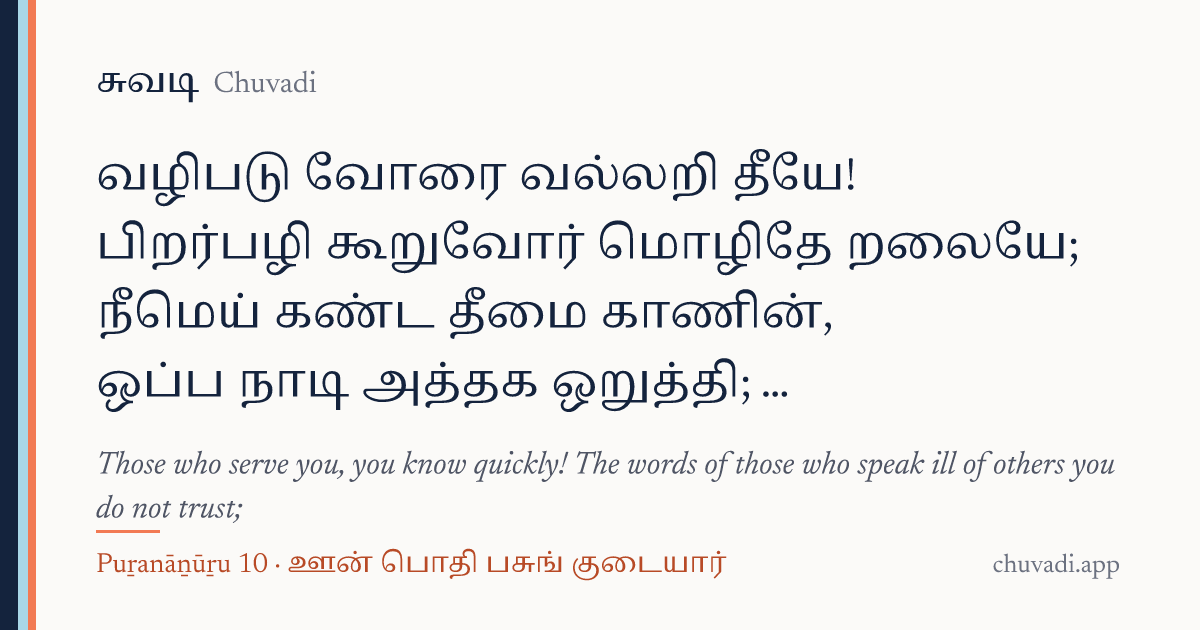
புறநானூறு 10
பாடல் · The poem
Tap a word to see where else it occurs.
பொருள் · Meaning in TamilAI
உன்னை வழிபட்டுப் பணிபவர்களை நீ விரைவில் அறிந்து கொள்கிறாய்! பிறரைப் பழித்துப் பேசுபவர்களின் சொற்களை நீ நம்புவதில்லை. ஒருவருடைய தீமையை நீயே உண்மை என்று கண்டால், நடுநிலையோடு ஆராய்ந்து அதற்குத் தக்கபடி தண்டிக்கிறாய். அவர்கள் வந்து உன் அடியில் பணிந்து உன் முன் நின்றால், முன்பைவிட மிகுதியாகத் தண்டனையையும் குறைக்கிறாய். அமுதம் போலச் சமைத்த, மணமுள்ள தாளிதம் கொண்ட உணவை ஓயாமல் வருபவர்களுக்கெல்லாம் அளவின்றி வழங்கும் பழியற்ற வாழ்க்கை உடையவனே! மகளிர் தழுவுவதைத் தவிர, வீரர்கள் தாக்குவதற்கு இடம் தராத, சிலை மாலை அணிந்த மார்பை உடையவனே! செய்த பின் வருந்தாத செயல்களையும், தொலைவு வரை விளங்கும் புகழையும் உடைய, நெய்தல் நிலக் கடற்கரைச் சோலையின் நெடியோனே! உன்னை அடைய வந்தோம்; உன்னைப் பலவாறு புகழ்ந்து பாடுவோம்!
பாடாண் திணை; துறை இயன்மொழி, அதாவது அரசனின் இயல்பைச் சொல்லிப் புகழ்வது. பாடியவர் ஊன் பொதி பசுங் குடையார்; பாடப்பட்டவன் சோழன் நெய்தலங் கானல் இளஞ்சேட் சென்னி. 'சிலைத் தார்' என்பதன் பொருள் உறுதியாகத் தெரியவில்லை. பதிப்பில் உள்ள 'நெய்தருங் கானல்' என்பதை அரசனின் பெயரில் வரும் 'நெய்தலங் கானல்' என்று கொண்டோம்.
ஆங்கிலம் · English translationAI
Translation
- Those who serve you, you know quickly!
- The words of those who speak ill of others you do not trust;
- if you see a wrong that you have found to be true,
- you weigh it fairly and punish as it deserves;
- if they come and bow at your feet and stand before you,
- you soften even the penalty, more than you did of old;
- with food cooked like nectar, fragrant with seasoning, unending,
- you lead a blameless life, giving without limit to all who come;
- except for the onslaught of women, the onslaught
- of warriors has left it — you of the cilai-garlanded chest!
- Of deeds done without regret, of fame that shines afar,
- tall one of the Neytal seashore grove!
- We have come to reach you; we will praise you in many ways!
What the poem says
Ūṉ Potī Pacuṅ Kuṭaiyār sings to the Cōḻa king Neytalaṅ Kāṉal Iḷañcēṭ Ceṉṉi. The tiṇai is pāṭāṇ, praise of a patron, and the turai is iyaṉmoḻi, a description of his character; here that character is mostly about justice.
The king recognises his loyal followers at once and does not believe slanderers. When a wrong is proven he weighs it and punishes in proportion, but if the offender comes and falls at his feet he lightens the sentence. Line 6 adds 'more than of old', which may mean he is more lenient now than before, or that he has grown greater than before; the sense is open.
His household is generous, with endlessly cooked fragrant food for all comers. Lines 9–10 play on 'malaittal', which means both attacking and garlanding or wearing: only women's embraces reach his chest, since no warrior's attack can. The meaning of 'cilai' in his garland is not certain.
In line 12 the edition prints 'neytaruṅ kāṉal', which reads as 'the shore that yields ghee'; it is taken as a slip for Neytalaṅ kāṉal, the shore named in the king's title. The poet closes by saying that he and his company have come to him and will sing his praise.