



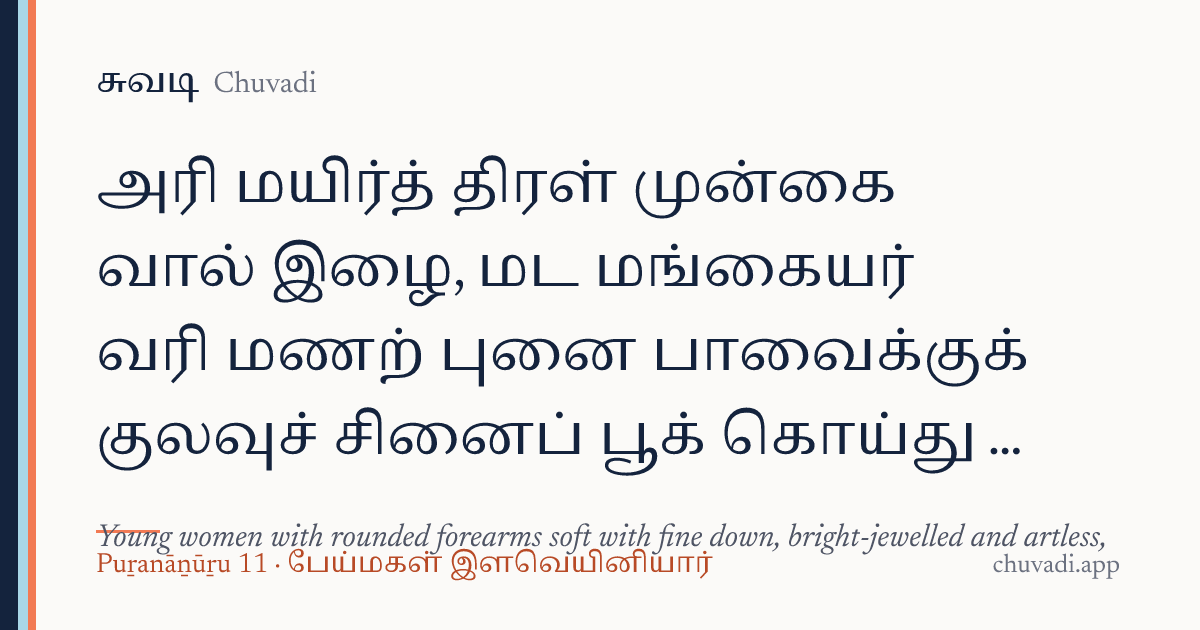
புறநானூறு 11
பாடல் · The poem
Tap a word to see where else it occurs.
பொருள் · Meaning in TamilAI
மெல்லிய மயிர் படர்ந்த திரண்ட முன்கைகளையும் தூய அணிகலன்களையும் உடைய இளம் பெண்கள், வரிவரியாக அமைந்த மணலில் செய்த பாவைகளுக்காக, வளைந்த கிளைகளில் இருந்து பூக்களைப் பறித்துக்கொண்டு, குளிர்ந்த பொருநை ஆற்றின் நீரில் பாய்ந்து விளையாடுவர். வானளாவிய புகழும் வெற்றியும் உடைய அந்த வஞ்சி நகரத்தின், பாடப்படத் தகுந்த வெற்றி வேந்தன், கொடிய கோட்டைகளைக் கடந்து, வலிமையுடைய பகைவர்களைப் புறமுதுகு காட்டி ஓடச் செய்தான். அவ்வாறு பகைவரைப் புறங்கண்ட வலிய வேந்தனின் வீரத்தைப் பாடிய பாடினியும், அழகிய சிறந்த கழஞ்சு எடையுள்ள பொன்னால் செய்த சிறப்பான அணிகலன்களைப் பெற்றாள். அணிகலன் பெற்ற அந்தப் பாடினியோடு வந்த, குரலும் தாளமும் இணைந்த இசையில் வல்ல பாணனும் அவ்வாறே, ஒளிரும் நெருப்பில் உருக்கிச் செய்த பொற்றாமரையை வெள்ளி நாரில் தொடுத்த பூவாகப் பெற்றான்.
பாடாண் திணை; துறை பரிசில் கடாநிலை, அதாவது பரிசில் பெறுவதைப் பற்றிப் பாடுவது; பிறர் பெற்ற பரிசில்களைச் சொல்லித் தனக்குரியதை நினைவூட்டுகிறார். பாடியவர் பேய்மகள் இளவெயினியார்; பாடப்பட்டவன் சேரமான் பாலை பாடிய பெருங்கடுங்கோ. பதிப்பில் உள்ள 'புறம் பொற்ற' என்பதை 'புறம் பெற்ற' என்று கொண்டோம்.
ஆங்கிலம் · English translationAI
Translation
- Young women with rounded forearms soft with fine down,
- bright-jewelled and artless,
- for the dolls they shape from the rippled sand
- pluck flowers from the curving boughs
- and leap into the cool waters of the Porunai —
- in Vañci of sky-touching fame and victory,
- the triumphant king, worthy of song,
- overcame the fiery forts
- and won the backs of his strong foes;
- the singing woman who sang the valour
- of the mighty king who won those backs
- received, of fine kaḻañcu weight and beauty,
- splendid jewels!
- And for the singer who received the jewels,
- her bard, skilled in songs where voice and measure meet, he too —
- so it went —
- a lotus wrought in bright flame
- on threads of silver received as his flower!
What the poem says
Pēymakaḷ Iḷaveyiṉiyār, a woman poet, sings of the Cēra king Pālai Pāṭiya Peruṅkaṭuṅkō, 'Peruṅkaṭuṅkō who sang of pālai'. The tiṇai is pāṭāṇ, praise of a patron, and the turai is paricil kaṭānilai, a poem bearing on the gifts a poet hopes for; here she lists the gifts that others have received, a way of reminding the king what is due.
The opening places us in Vañci, the Cēra city, on the banks of the Porunai, where young girls make sand dolls, pick flowers to deck them, and jump into the cool river. The rest is a chain in which each line picks up the last: the king won the backs of his enemies, that is, made them flee; the woman singer (pāṭiṉi) who sang his valour won heavy gold jewels; and the bard who partners her, skilled in melody and rhythm, won a golden lotus, 'wrought in bright flame', strung on silver thread. The golden lotus is the bard's customary prize in these poems.
The edition prints 'puṟam poṟṟa' in line 10; it is read as puṟam peṟṟa, 'who won the backs', matching line 9. Line 14 is a little loose in grammar: 'for the singer' seems to mean the bard who belongs with her.