



புறநானூறு 105
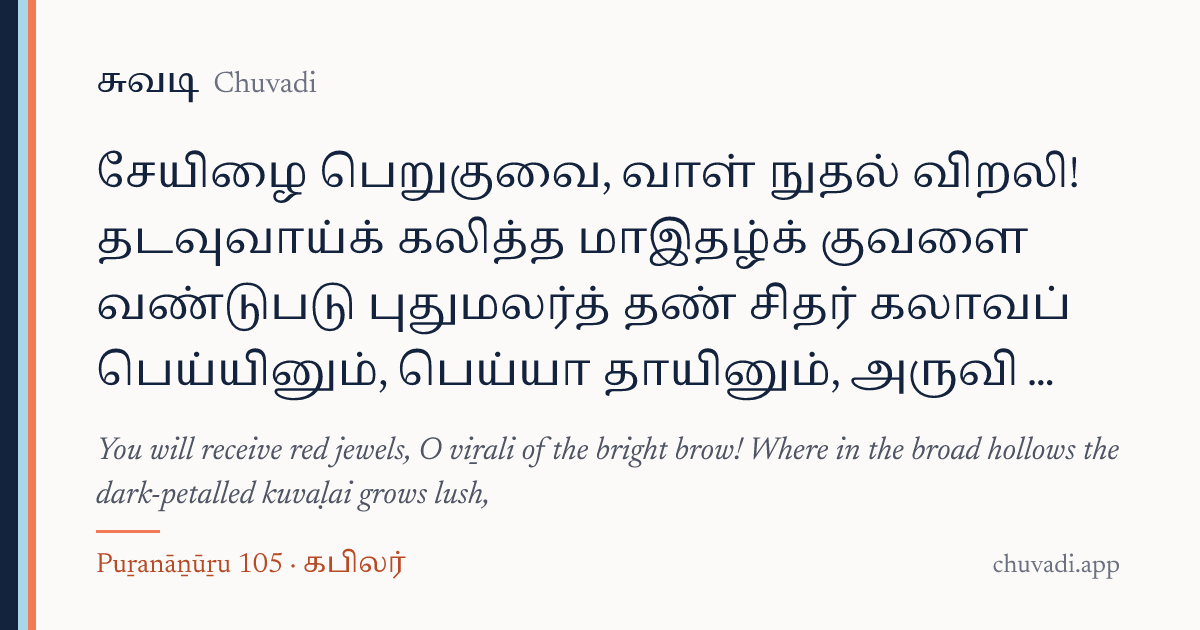
பாடல் · The poem
Tap a word to see where else it occurs.
பொருள் · Meaning in TamilAI
ஒளிரும் நெற்றியுடைய விறலியே! நீ சிவந்த அணிகலன்களைப் பெறுவாய். அகன்ற பள்ளங்களில் செழித்து வளர்ந்த கரிய இதழ்களையுடைய குவளையின், வண்டுகள் மொய்க்கும் புதிய மலர்களோடு குளிர்ந்த நீர்த்துளிகள் கலக்க, மழை பெய்தாலும் பெய்யாவிட்டாலும், கொள் விதைக்க உழுத அகன்ற வயல்களின் ஓரமாக ஓடும் வாய்க்கால்களில் விளையாடும்படி, கயிற்றேணிகள் கட்டிய உயர்ந்த மலையின் ஒவ்வொரு சிகரத்திலிருந்தும் அருவி இறங்கி வருகிறது. அந்த நீரைவிட இனியது பாரி வேளின் மென்மையான பண்பு; நீ அவனிடம் பாடிக்கொண்டு சென்றால் அதைக் காண்பாய்.
இது பாடாண் திணை; துறை விறலியாற்றுப்படை. பாடியவர் கபிலர்; பாடப்பட்டோன் வேள் பாரி. 'சாயல்' என்ற சொல் மென்மையையும் இனிய பண்பையும் குறிக்கும். 'உழைகால்' என்பதன் பொருள் உறுதியாகத் தெரியவில்லை; வயலோர வாய்க்கால் எனக் கொண்டோம்; 'உழை' என்பது ஒருவகை மானையும் குறிக்கும்.
ஆங்கிலம் · English translationAI
Translation
- You will receive red jewels, O viṟali of the bright brow!
- Where in the broad hollows the dark-petalled kuvaḷai grows lush,
- its new flowers full of bees mingling with the cool spray,
- whether it rains or does not rain, the waterfall
- plays in the runnels by the broad fields ploughed for horse-gram,
- coming down every peak of the tall mountain with its rope ladders:
- sweeter even than that water is the gentle grace
- of Vēḷ Pāri, if you go to him singing.
What the poem says
This is the first of a run of poems by Kapilar on the chieftain Vēḷ Pāri, whose hill, Paṟampu, is named in puram.108 and 109. The tiṇai is pāṭāṇ, praise of a patron, and the turai viṟali āṟṟuppaṭai is a guiding poem addressed to a viṟali, a woman singer and dancer.
The poem opens with a promise: you will receive fine red jewels. The rest is a single long comparison describing Pāri's hills. In the wide pools grow dark-petalled blue water-lilies, their new flowers crowded with bees and sprinkled with cool spray. Whether it rains or not, the waterfalls never fail, coming down every peak of the high mountain, where rope ladders are used to climb, and running in streams past the fields where horse-gram is grown. Pāri's gentleness, sāyal, is sweeter than that water.
The word sāyal suggests softness and grace of manner and is more often used of women; applied to a chieftain, it praises his gracious kindness rather than his strength.
Line 5 is not entirely clear: uḻaikāl is taken as 'runnels beside the fields'; uḻai can also mean a kind of deer, which would give 'where the deer graze'.