



புறநானூறு 112
பாடல் · The poem
Tap a word to see where else it occurs.
பொருள் · Meaning in TamilAI
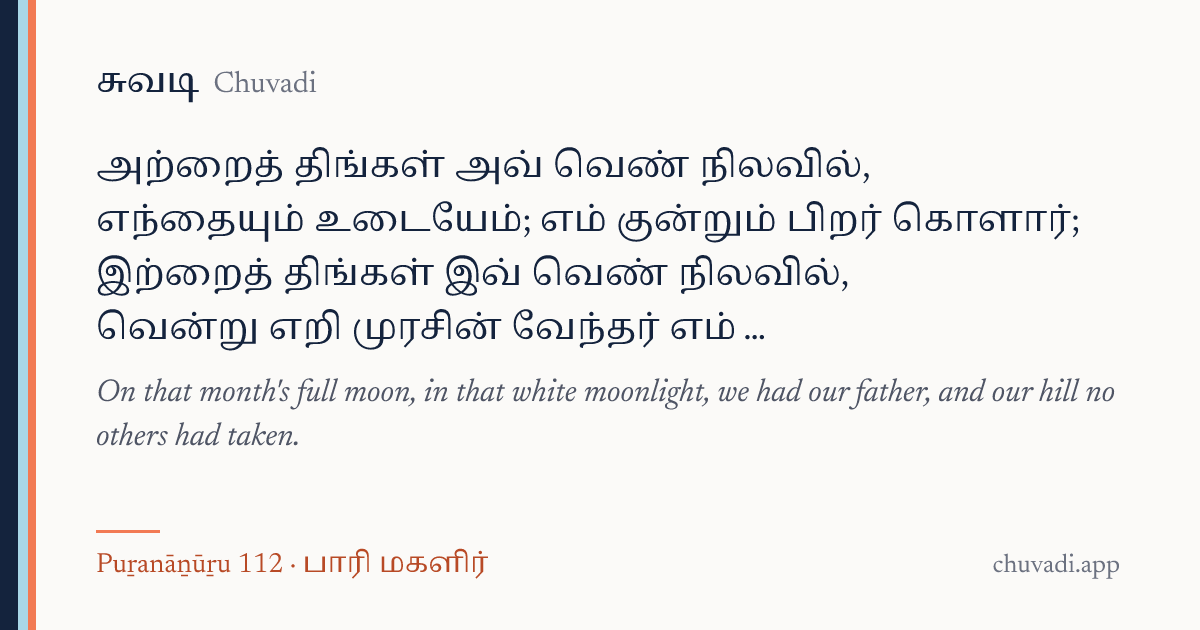
அந்த மாதத்தின் அந்த வெண்ணிலவு நாளில் எங்களுக்குத் தந்தை இருந்தார்; எங்கள் மலையையும் பிறர் கைப்பற்றவில்லை. இந்த மாதத்தின் இந்த வெண்ணிலவு நாளில், வெற்றி முழங்கும் முரசுகளை உடைய வேந்தர்கள் எங்கள் மலையைக் கைப்பற்றிக் கொண்டனர்; நாங்களோ தந்தையை இழந்து நிற்கிறோம்.
இது பொதுவியல் திணை; துறை கையறுநிலை, அதாவது அன்புக்குரியவரை இழந்து செய்வதறியாது வருந்தும் நிலை. பாடியவர் பாரியின் மகளிர். ஒரே நிலவை இரண்டு முறை சொல்லி, மாறாத இயற்கைக்கு நடுவே தங்கள் வாழ்வு முழுதும் மாறிவிட்டதைக் காட்டுகின்றனர். பாரி எப்படி இறந்தான் என்பதைப் பாடல் சொல்லவில்லை.
ஆங்கிலம் · English translationAI
Translation
- On that month's full moon, in that white moonlight,
- we had our father, and our hill no others had taken.
- On this month's full moon, in this white moonlight,
- the kings with drums that sound for victory have taken our
- hill, and we have no father.
What the poem says
This brief lament is attributed to the daughters of Pāri. They compare two full moons: a month ago they had their father and their hill was their own; now, under the same white moonlight, the kings have taken the hill and their father is gone.
The tiṇai is potuviyal, the general class of puṟam poems, and the turai is kaiyaṟunilai, the state of helpless grief after the death of a patron or loved one. No patron is named, since the poem is spoken by the bereaved themselves.
The whole effect comes from the repetition. Lines 1 and 3 are almost identical, changing only 'that' to 'this', and the second half turns each of the earlier statements upside down: having a father becomes having none, a hill no one takes becomes a hill taken. The moonlight, unchanged, makes the change in their lives all the starker. The poem does not say how Pāri died; it records only the loss.