



புறநானூறு 113
பாடல் · The poem
Tap a word to see where else it occurs.
பொருள் · Meaning in TamilAI
பெரும் புகழ் உடைய பறம்பு மலையே! முன்பு கள் நிறைந்த சாடிகளின் வாய் திறக்கப்பட்டன; கரிய ஆட்டுக்கடாக்கள் வீழ்த்தப்பட்டன; சமைத்துச் சமைத்தும் குறையாத கொழுமையான துவையும் இறைச்சியும் கலந்த சோறு, விரும்பியவர்க்கு விரும்பியபடி வழங்கப்பட்டது. இப்படிப் பெரும் செல்வம் நிறைந்து நீ எங்களோடு நட்பாக இருந்தாய். இப்போதோ பாரி இறந்துவிட்டதால், கலங்கி, செய்வதறியாமல், நீர் வழியும் கண்களோடு உன்னை வணங்கி வாழ்த்தி நாங்கள் செல்கிறோம். திரண்ட முன்கையில் சிறிய வளையல்களை அணிந்த இப்பெண்களின் மணமுள்ள கரிய கூந்தலுக்கு உரிமையாளரான கணவர்களைத் தேடிச் செல்கிறோம். நீ வாழ்க!
பொதுவியல் திணை, கையறுநிலைத் துறை. பாடியவர் கபிலர். பாரி இறந்த பின் அவன் மகளிரோடு பறம்பு மலையை விட்டுப் பிரியும்போது மலையை நோக்கிப் பாடியது. பாரியின் மகளிரைக் கபிலர் பாதுகாத்தார் என்பது மரபு; பாடல் சொல்வது அவர்களுக்கு மணமகனைத் தேடிச் செல்வதை மட்டுமே.
ஆங்கிலம் · English translationAI
Translation
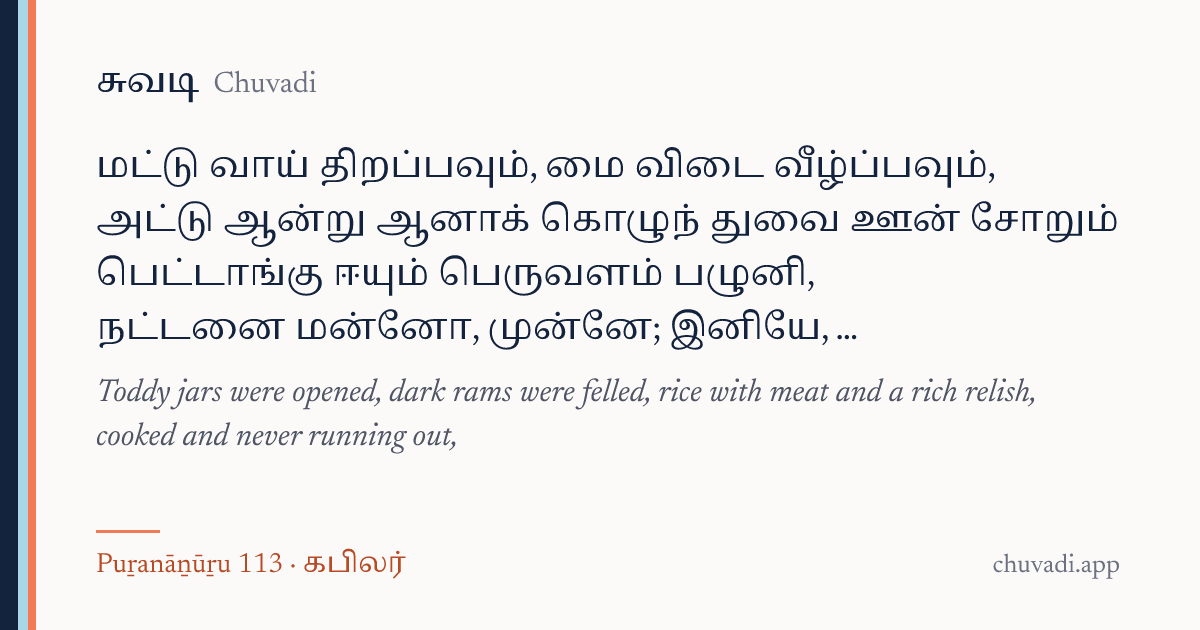
- Toddy jars were opened, dark rams were felled,
- rice with meat and a rich relish, cooked and never running out,
- was given as each one wished — ripening such great plenty
- you were our friend, in former days; but now,
- Pāri having died, shaken and helpless,
- with streaming eyes, bowing to you, praising you,
- we go away — long may you live, Paṟampu of great name! —
- to seek, for the girls with small bangles on their smooth round forearms,
- husbands to be lords of their fragrant dark hair.
What the poem says
Kapilar takes leave of Paṟampu after Pāri's death. He addresses the hill itself as a friend: in the past it gave toddy, the meat of rams and endless rice and relish to all who came, but now its lord is dead, and the poet, weeping, bows to it and departs. He is going in search of husbands for Pāri's daughters, the girls with small bangles.
This is potuviyal, the general class, with the turai kaiyaṟunilai, helpless grief after a patron's death. No patron is named in the metadata, but the poem names Pāri.
The final two lines are compressed: kiḻavar, 'owners, lords', of the girls' fragrant hair means the men who would marry them. Tradition says Kapilar took Pāri's daughters into his care after their father's death, and this poem fits that tradition, but the poem itself says only that he is going to seek bridegrooms for them. The blessing in line 7, 'long may you live', wished on a hill whose lord is gone, gives the farewell its sadness.