



புறநானூறு 125
பாடல் · The poem
Tap a word to see where else it occurs.
பொருள் · Meaning in TamilAI
என் தலைவனே! பருத்தி நூற்கும் பெண்ணின் நூலைப் போல மெல்லியதாக அரிந்து, நெருப்பின் சூடு தணியும் வரை வாட்டிய, கொழுப்பு மினுங்கும் இறைச்சித் துண்டுகளைப் பெரிய கிண்ணங்களோடு முறைமுறையாகப் பகிர்ந்து உண்போம். பகைவரின் வலிமையை அழித்த வல்லவனே! உன்னைக் காணவே வந்தேன். உன் மகிழ்ச்சி மன்றத்தில், உழுது களைத்த வலிய எருது வைக்கோலைத் தின்பது போல, நீ கள்ளை நல்ல அமுதமாக விரும்பிப் பருகுகிறாய். மலை போன்ற யானைகளைப் பின்வாங்கச் செய்து, எதிர்த்துக் கொன்று வென்றவனும் 'எங்களை வெல்லச் செய்தவன் இவனே' என்று உன்னைப் பற்றியே சொல்கிறான். 'வீரக்கழல் அணிந்த சிவந்த அடிகளால் நிலத்தைப் பற்றி விரைந்து வந்து போரைத் தாங்கிய வலிய வேலை உடைய மலையன் இல்லாவிட்டால், அந்தப் போரில் வெல்வது எங்களுக்கு எளிதாக இருந்திருக்கும்' என்று தோற்றவனும் 'எங்களை அழித்தவன் அவனே' என்று உன்னைப் பற்றியே சொல்கிறான். பெருமானே! பெரிய மழைமேகங்கள் தங்கும் உயர்ந்த மலையை உடைய, சிறப்புக்குத் தகுதியான சேயே! உன்னைத் துணையாகப் பெற்றவர்களுக்கு நீ ஒருவனே எல்லாமுமாக ஆனாய்.
வாகைத் திணை, அதாவது வெற்றியைப் புகழ்வது; துறை அரச வாகை, அரசனின் சிறப்பைச் சொல்வது. பாடியவர் வடமவண்ணக்கண் பெருஞ்சாத்தனார்; பாடப்பட்டவன் தேர்வண் மலையன். எந்த வேந்தர்கள் போரிட்டனர் என்பதைப் பாடல் சொல்லவில்லை. உழுத எருது வைக்கோல் தின்னும் உவமையின் கருத்து உறுதியாகத் தெரியவில்லை.
ஆங்கிலம் · English translationAI
Translation
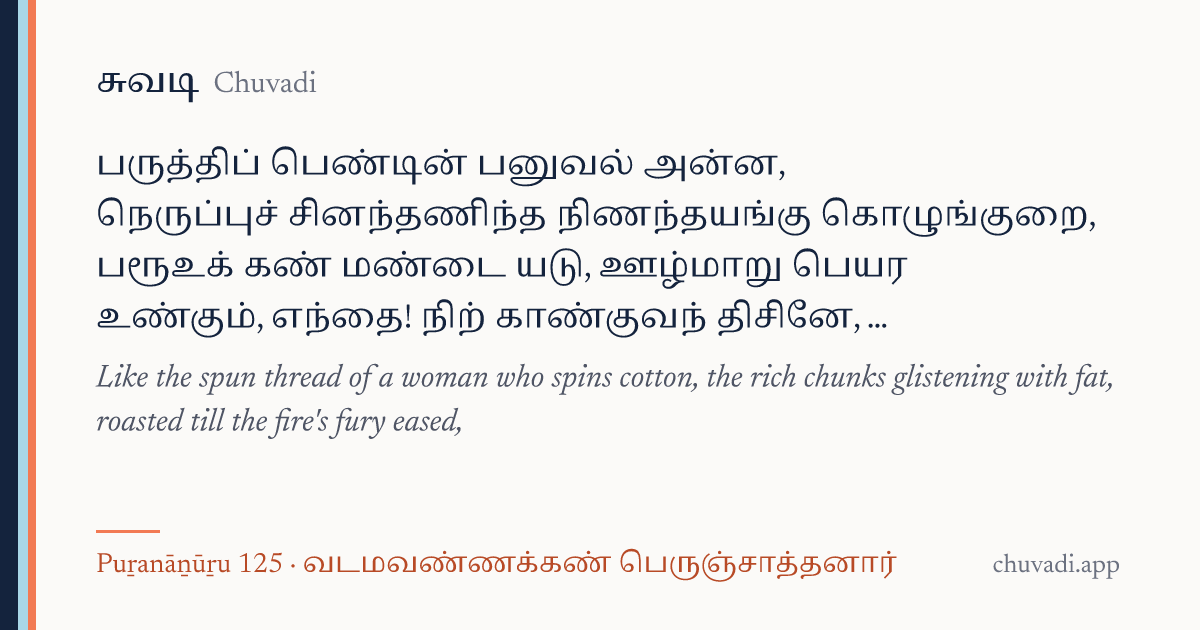
- Like the spun thread of a woman who spins cotton,
- the rich chunks glistening with fat, roasted till the fire's fury eased,
- with big-bodied bowls, passing them round in turn,
- we shall eat, my lord! I have come to see you,
- O mighty man who broke the strength of those who were not friends!
- In your hall of joy,
- as the sturdy bullock that has ploughed eats straw,
- so you, taking it for fine nectar, relish your toddy.
- Making elephants like hills turn back,
- the one who overcame, killed and won speaks of you too,
- saying, 'He is the one who made us win';
- 'With his red feet bright with anklets seizing the ground,
- he came swiftly and held the battle;
- had it not been for Malaiyaṉ of the strong spear,
- winning that good fight would have been easy for us,' says
- the one who lost, and he too speaks of you,
- saying, 'He is the one who destroyed us.'
- You alone became that; great one! For the great rain clouds
- a resting place is your high mountain;
- O Cēy of fitting splendour! — to those who have you.
What the poem says
Vaṭamavaṇṇakkaṇ Peruñcāttaṉār sings to Malaiyaṉ, 'giver of chariots'. He begins with the feast he hopes for: fat-glistening roasted meat, cut fine as cotton thread, shared round in great bowls. He has come to see the chieftain, and he notes how Malaiyaṉ, like a ploughing ox that eats only straw after its labour, takes his toddy with relish as if it were nectar.
Then the main praise. After a battle both sides speak of Malaiyaṉ. The winner says, 'He made us win.' The loser says, 'Had it not been for Malaiyaṉ, rushing in with anklets on his feet to hold the fight, we would easily have won — he destroyed us.' So for those who have him on their side he alone is decisive.
The tiṇai is vākai, victory, with the turai aracavākai, the excellence of a ruler. The poem does not say which kings fought or which side Malaiyaṉ joined; it only shows his worth in the words of both. Cēy, 'the red one', is a name of Murukaṉ used as praise. The ox simile in lines 7–8 is compressed and its point is not certain: it may stress that he takes little for himself after great labour.