



புறநானூறு 126
பாடல் · The poem
Tap a word to see where else it occurs.
பொருள் · Meaning in TamilAI
பகைவரின் யானைகளின் நெற்றிப் பட்டத்துப் பொன்னைக் கொண்டு, பாணர்களின் தலைகள் பொலியும்படி வாடாத பொற்றாமரைகளைச் செய்து சூட்டிய, சிறந்த புகழும் பின்வாங்காத உறுதியும் உடைய வலியவனின் வழித்தோன்றலே! நாங்கள் வல்லமை உடையவர்கள் அல்லர்; ஆயினும் விரைவாக உன்னிடம் சொல்ல வேண்டியதைச் சொல்கிறோம். இரவு உறங்கிக் கிடப்பது போன்ற அடர்ந்த இருள் தொங்கும் சோலைகளும், பறை போல ஒலிக்கும் அருவிகளும் உடைய முள்ளூரில், அழிக்க முடியாத மரபில் வந்த வீரர்களாகிய உன் சுற்றத்தோடு நீ பொலியும்படி, உலகில் பரந்து வாழும் மக்கள் எல்லாருள்ளும் அறிவில் குற்றமற்ற அந்தணப் புலவன் ஒருவன், இனி இரந்து வருவோருக்கு இடமே இல்லாதபடி உன் புகழ் நிலைக்கும்படி பாடிவிட்டான். சினம் மிக்க படையை உடைய வானவன் மேற்குக் கடலில் பொன் கொண்டு வரும் கப்பல்களைச் செலுத்திய வழியில் பிற கலங்கள் செல்ல முடியாதது போல, நாங்களும் அந்த நிலையில் இருக்கிறோம். ஆனாலும் வறுமை துரத்த, களைப்போடு வந்து, உன் கொடையைப் பற்றிக்கொண்டோம். கூரிய பற்களை உடைய பாம்பைத் தாக்கும் இடியைப் போல முரசுகள் எழுந்து முழங்க, பெருமை மிக்க யானைகளோடு வேந்தர்கள் போர்க்களத்தில் வீழ, கடுமையான போர் சிதையும்படி தாக்கி, நெருங்காத பகைவரை நன்றாகத் தடுத்து நிற்கும், பனைமரத் தோட்டங்கள் நிறைந்த நாட்டின் தலைவனே!
பாடாண் திணை; துறை பரிசில், அதாவது பரிசில் வேண்டிப் பாடுவது. பாடியவர் மாறோக்கத்து நப்பசலையார்; பாடப்பட்டவன் மலையமான் திருமுடிக்காரி. பெயர் சொல்லப்படாத அந்தணப் புலவர் கபிலர் என்பது மரபு. 'வானவன்' சேர மன்னனின் பட்டப்பெயர். ஐந்தாம் அடியில் 'வல்ல்ஞ்ம்' என்பது 'வல்லேம்' என்பதன் பிழை; பதின்மூன்றாம் அடியில் 'நிறக' என்பதும் பிழையாகத் தெரிகிறது; ஆறு முதல் ஒன்பது வரையிலான அடிகளின் பொருள் உறுதியாகத் தெரியவில்லை.
ஆங்கிலம் · English translationAI
Translation
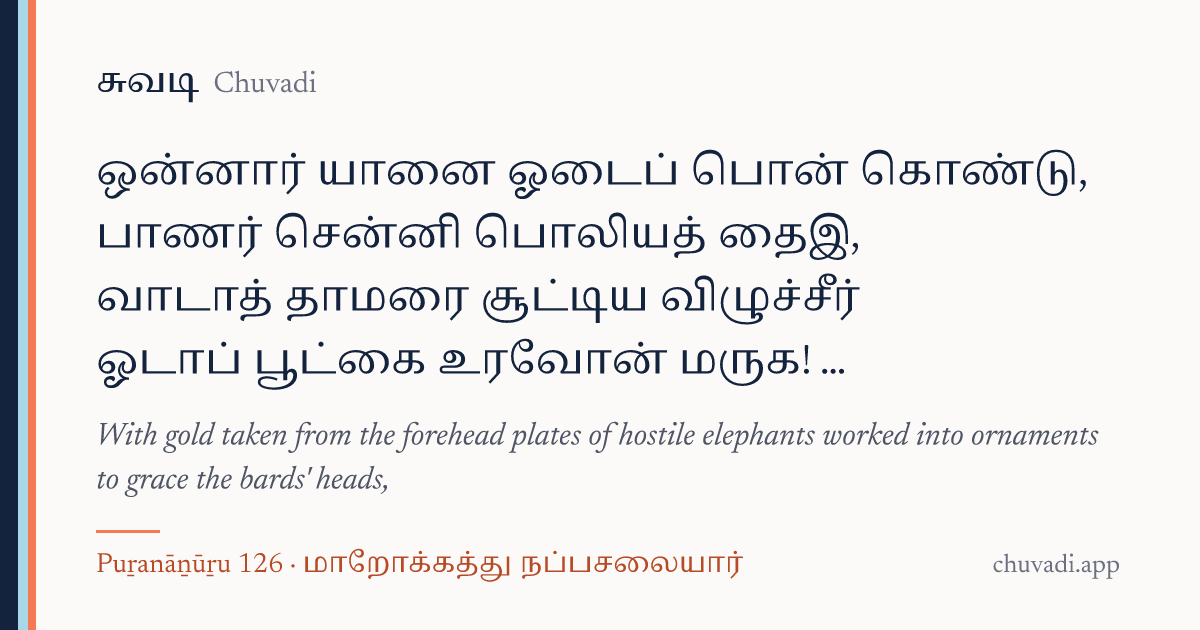
- With gold taken from the forehead plates of hostile elephants
- worked into ornaments to grace the bards' heads,
- you who crowned them with unfading lotuses — of noble renown,
- descendant of the strong one whose resolve never turned to flight!
- Though we are not skilled, if in haste
- we speak before you — in groves of hanging darkness
- thick as night lying down in sleep,
- with waterfalls sounding like drums, in Muḷḷūr — the warriors
- of a line none can crush, your kin, so that they flourish with you,
- among all the people spread across the earth
- a brahmin whose mind was free of stain
- sang, so that there is no room now for those who go begging,
- spreading your fame till it filled the world; after that,
- on the western sea, where the Vāṉavaṉ with fierce armies
- sailed his ships that bring gold, on that course
- no other vessel can go; we are like that.
- Yet, driven on by want, coming weary, to your
- generosity we have bound ourselves; — with sharp-fanged
- snake-striking thunder, the drums rising and sounding,
- kings with their noble elephants left fallen on the field,
- you strike so that the hard battle is broken, and well
- you hold back the foes who will not come near,
- lord of the land with groves of palmyra!
What the poem says
Māṟōkkattu Nappacalaiyār addresses Malaiyamāṉ Tirumuṭikkāri in a poem of gift-seeking. The poem opens with the patron's ancestry: his forebear made golden lotuses for the bards' heads from the gold of enemy elephants' forehead plates. Then comes a modest confession. A brahmin poet of unstained mind has already sung Kāri's praise so fully that there is no room left for other singers, just as no other boat can sail the western sea on the route where the Vāṉavaṉ's gold-laden ships have gone. Still, driven by poverty, the poet has come and attached herself to his generosity.
The tiṇai is pāṭāṇ, praise of a patron, and the turai paricil, a poem that asks for a gift. The poem ends with the patron as warrior, his drums roaring like thunder that strikes a snake, enemy kings and elephants fallen on the field, and him as 'lord of the land of palmyra groves'.
The brahmin poet is not named in the poem; tradition takes him to be Kapilar, who sang Kāri in the poems just before this one. Vāṉavaṉ is a title of the Cēra king, whose ships are pictured on the western sea. The edition prints vallñm in line 5, a misprint for vallēm, 'we are skilled', and niṟaka in line 13, which should be niṟpa or niṟka, 'to stand, endure'. Lines 6–9 are syntactically difficult and the translation is tentative there.