



புறநானூறு 127
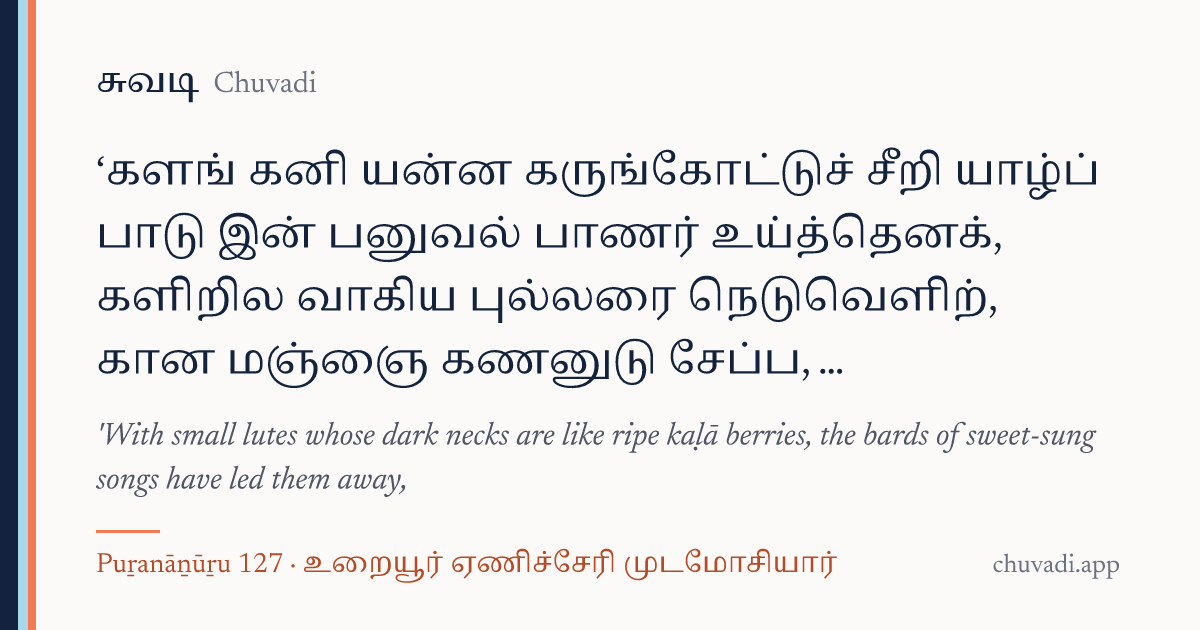
பாடல் · The poem
Tap a word to see where else it occurs.
பொருள் · Meaning in TamilAI
'இலந்தைப் பழம் போலக் கறுத்த தண்டை உடைய சிறிய யாழோடு, இனிமையாகப் பாடும் பாடல்களை உடைய பாணர்கள் யானைகளையெல்லாம் பரிசிலாகப் பெற்று ஓட்டிச் சென்றுவிட்டதால், யானைகள் இல்லாமல் அடிப்பகுதி தேய்ந்த நெடிய கட்டுத்தறிகளில் காட்டு மயில்கள் தம் கூட்டத்தோடு தங்குகின்றன; பிறருக்குக் கொடுக்க முடியாத அணிகளை மட்டும் அணிந்த மகளிரோடு ஆயின் அரண்மனை வறுமைப்பட்டுவிட்டது' என்று சொல்கிறார்கள். ஆனாலும், சுவைக்கு இனிய தாளிதம் செய்த உணவைப் பிறருக்குக் கொடுக்காமல் தம் வயிற்றை மட்டும் நிரப்பி, சொல்லத் தகுந்த உயர்ந்த புகழை இழந்த, முரசுகளை உடைய செல்வர்களின் மாளிகையைப் போன்றது அன்று அது.
பாடாண் திணை. துறை கடைநிலை, அதாவது பரிசிலன் தலைவனின் வாயிலில் நிற்பது; ஆனால் அந்தச் சூழல் பாடலில் இல்லை. பாடியவர் உறையூர் ஏணிச்சேரி முடமோசியார்; பாடப்பட்டவன் ஆய் அண்டிரன். கொடுக்க முடியாத அணி என்பது மங்கல அணியைக் குறிக்கலாம். நான்காம் அடியில் 'கணனுடு' என்பது 'கணனொடு' என்பதன் அச்சுப் பிழை.
ஆங்கிலம் · English translationAI
Translation
- 'With small lutes whose dark necks are like ripe kaḷā berries,
- the bards of sweet-sung songs have led them away,
- so at the tall tethering posts, worn at the base and empty of elephants,
- the forest peacocks settle with their flocks;
- with its women wearing only the ornaments that cannot be given,
- it has grown poor,' they say, the house of Āy.
- Yet the rice with tempering, sweet to the taste,
- that others eat without giving to anyone, filling their own bellies,
- losing the high fame that is worth speaking of —
- it is not like the cities of those rich men with drums.
What the poem says
Uṟaiyūr Ēṇiccēri Muṭamōciyār praises Āy Aṇṭiraṉ, the chieftain of the Potiyil hills, by repeating what people say about his palace. 'It has grown poor,' they say: the bards have led away all his elephants, so peacocks now perch at the empty tethering posts, and the women of the house wear only those ornaments that may not be given away. But, says the poet, it is not like the mansions of rich men who eat their fine food alone and so lose all claim to fame.
The tiṇai is pāṭāṇ, praise of a patron. The turai is given as kaṭainilai, 'standing at the gate', a theme where a suppliant waits at a patron's door; the poem does not show that situation, so the label fits loosely at best.
The 'ornaments hard to give' are taken to be the auspicious ornaments a married woman keeps, such as the marriage token; everything else has been given away. The image of forest peacocks settling where elephants once stood is both beautiful and pointed: Āy's poverty is the proof of his generosity. In line 4 the edition's kaṇaṉuṭu should be read kaṇaṉoṭu, 'with the flock'.