



புறநானூறு 13
பாடல் · The poem
Tap a word to see where else it occurs.
பொருள் · Meaning in TamilAI
'இவன் யார்?' என்று நீ கேட்பாயானால், சொல்கிறேன்: புலியின் நிறம் கொண்ட கவசத்தின் அழகிய புள்ளிகள் சிதையும்படியும், எய்த அம்புகள் கிழித்த பெருமிதம் மிக்க அழகிய மார்போடும், கூற்றுவனைப் போன்ற யானையின் மேல் அமர்ந்திருப்பவன் இவன். அந்த யானை, கடலில் செல்லும் மரக்கலத்தைப் போலவும், பல விண்மீன்களின் நடுவே உள்ள நிலவைப் போலவும், சுறாமீன் கூட்டத்தைப் போல வாள் வீரர்கள் சூழ்ந்து மொய்க்க, பழகிய பாகர்களையும் அறியாமல் மதம் கொண்டு ஓடுகிறது. இவன் துன்பம் இல்லாமல் நலமாகத் திரும்பிச் செல்வானாக! குளங்களில் வாழும் மயில்கள் உதிர்த்த தோகைகளை வயலில் உழவர்கள் தங்கள் நெற்கதிர்க் கட்டுகளோடு சேர்த்துக் கட்டும், கொழுத்த மீன்களும் நன்கு முதிர்ந்த கள்ளும் நிறைந்த, சிறந்த நீரை வேலியாகக் கொண்ட நாட்டின் தலைவன் இவன்.
பாடாண் திணை; துறை வாழ்த்தியல், அதாவது பாடப்படுவோனை வாழ்த்துவது. பாடியவர் உறையூர் ஏணிச்சேரி முடமோசியார்; பாடப்பட்டவன் சோழன் முடித்தலைக் கோப்பெருநற்கிள்ளி. அரசனின் யானை மதம் கொண்டு அவனைப் பகைவர் நாட்டுக்குள் கொண்டு சென்றபோது, அதைக் கண்ட மற்றோர் அரசனுக்குச் சொல்லியது இது என்று மரபு சொல்கிறது; பாடல் அதை வெளிப்படையாகச் சொல்லவில்லை.
ஆங்கிலம் · English translationAI
Translation
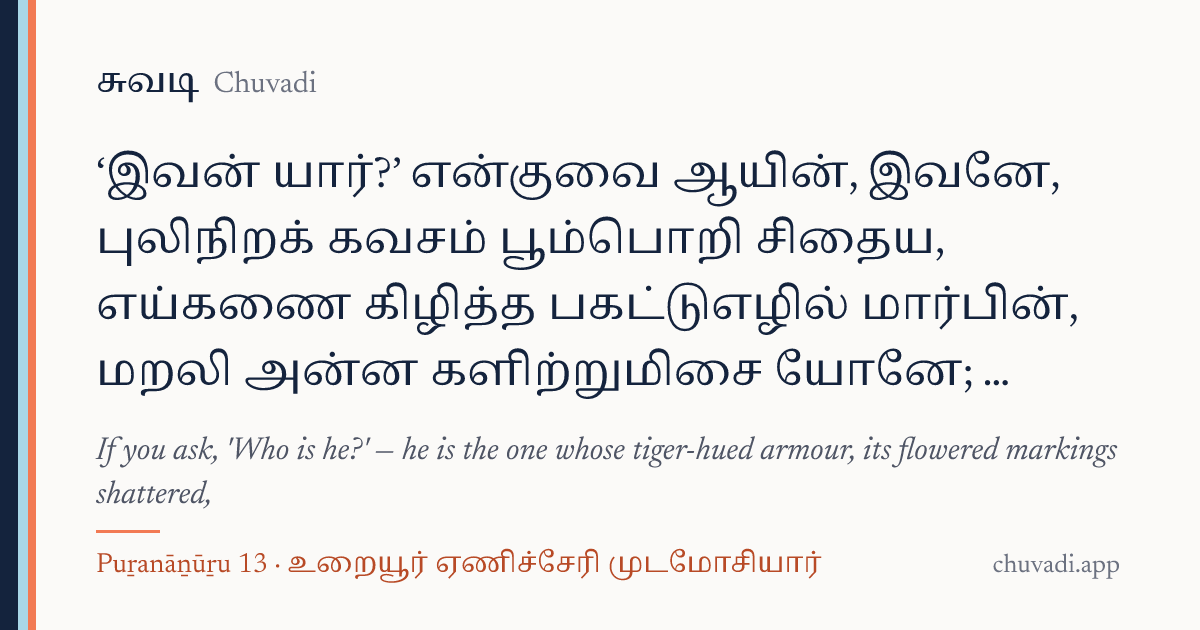
- If you ask, 'Who is he?' — he is the one
- whose tiger-hued armour, its flowered markings shattered,
- and whose chest of proud beauty the shot arrows have torn,
- sits on an elephant like Death;
- the elephant, like a ship that sails the sea,
- like the moon amid many stars,
- with sword-bearers swarming like a school of sharks,
- not knowing its familiar keepers, has run into a frenzy;
- may he come back free from harm, ah!
- Where peacocks of the ponds shed feathers that
- the ploughmen of the fields gather up with their sheaves,
- with fat fish, with ripened toddy,
- of a land fenced by great waters he is lord!
What the poem says
Uṟaiyūr Ēṇiccēri Muṭamōciyār sings of the Cōḻa king Muṭittalaik Kōpperunaṟkiḷḷi. The tiṇai is pāṭāṇ, praise of a patron, and the turai is vāḻttiyal, blessing; the blessing is the prayer in line 9 that he return unharmed.
The poem is spoken to someone watching who asks who the man on the elephant is. The poet answers with a picture of a king in danger: his tiger-striped armour is torn, arrows have cut his chest, and his elephant, no longer recognising its handlers, has gone wild and plunges on through a crowd of swordsmen, like a ship at sea, like the moon among the stars, while the soldiers swarm around like sharks. Tradition says that the king's elephant carried him into the territory of another king, to whom these words were spoken; the poem itself shows only the runaway elephant and the poet's anxious hope.
The last lines describe the land he rules, a well-watered Cōḻa countryside where farmers bundle fallen peacock feathers with their sheaves of grain and there is plenty of fish and toddy.