



புறநானூறு 14
பாடல் · The poem
Tap a word to see where else it occurs.
பொருள் · Meaning in TamilAI
பெருமானே! கொடிய பார்வையுடைய கொல்லும் யானைகளைக் கொண்டு காவலுடைய கோட்டைக் கணைய மரங்களை முறித்தும், பொன் வேலைப்பாடு செய்த அழகிய அங்குசத்தால் அவற்றை வலிமையோடு முன்னே செலுத்திப் போரைத் தாங்கியும், நிலத்தைத் தோண்டிய ஆழமான அகழியின் அகன்ற நீர்ப்பரப்பைத் தாண்டப் பாய நினைக்கும் உயர்ந்த நடையுடைய குதிரைகளைக் கட்டுப்படுத்தியும், அம்பறாத்தூணியைக் கட்டிய முதுகோடு தேரின் மேல் நின்று வில்லின் வலிய நாண் தழும்பு உண்டாக்கும் அளவு அம்பு எய்தும், பரிசில் நாடி வருவோர்க்கு அரிய அணிகலன்களை வழங்கியும் வந்ததால், முழங்கால் வரை நீண்ட உன் பெரிய கைகள் வலியவையாக உள்ளன. ஆனால் உன்னைப் பாடுவோரின் கைகளோ, புலால் நாற்றம் வீசும் பசிய இறைச்சித் துண்டுகளைப் பூ மணம் வரும்படி புகையில் வாட்டியதையும், துவைத்த இறைச்சியையும், கறியையும் சோற்றையும் உண்டு வருந்தும் தொழிலைத் தவிர வேறு தொழில் அறியாதவை; ஆகவே அவை மிகவும் மென்மையானவை. நல்ல மகளிருக்கு இனிய வருத்தம் தரும் மார்பும், பகைவர்களுக்கு முன் பெரிய நிலத்தைப் போன்ற தாங்கும் வலிமையும் உடைய, போரில் சிறந்த சேயே!
பாடாண் திணை; துறை இயன்மொழி, அதாவது அரசனின் இயல்பைச் சொல்லிப் புகழ்வது. பாடியவர் கபிலர்; பாடப்பட்டவன் சேரமான் செல்வக் கடுங்கோ வாழியாதன். அரசனின் கரடுமுரடான கைகளையும் புலவரின் மென்மையான கைகளையும் நகைச்சுவையோடு ஒப்பிடுகிறார். 'சேய்' என்பது முருகனின் பெயர்; இளையோன் என்றும் பொருள் உண்டு.
ஆங்கிலம் · English translationAI
Translation
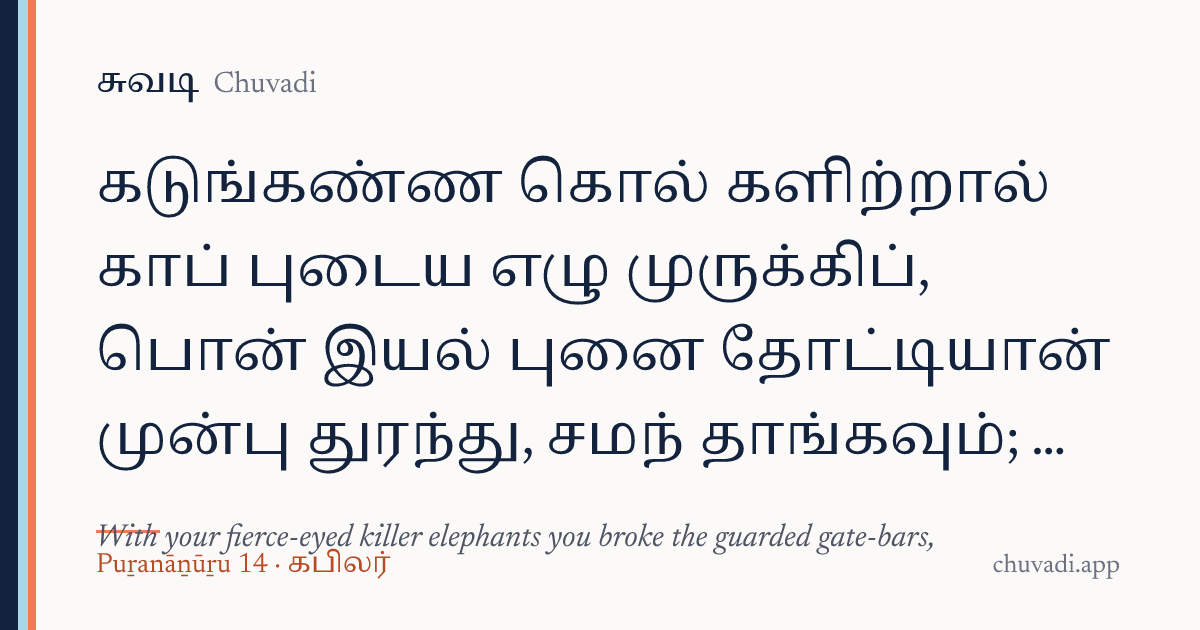
- With your fierce-eyed killer elephants
- you broke the guarded gate-bars,
- and with the gold-worked, finished goad
- drove them on in strength, bearing the brunt of battle;
- at the deep moat dug into the earth,
- aiming to leap its wide stretch of water,
- you held in your high-stepping horses;
- with the quiver fastened at your back, on your chariot
- you plied the bow's strong string until it left its scars;
- and you gave rare treasures to gift-seekers — lord,
- so your great hands that reach to your knees are hard.
- Fresh chunks with the reek of raw flesh,
- smoked till they smell of flowers, pounded meat,
- curry and rice: besides the toil of eating these
- they know no other work, and so they are very
- soft, great one, they are — you whose chest to fine women
- is a sweet torment, and to your foes
- has a strength like the vast earth,
- Cēy, mighty in war! — the hands of those who sing you.
What the poem says
Kapilar speaks to the Cēra king Celvak Kaṭuṅkō Vāḻiyātaṉ. The tiṇai is pāṭāṇ, praise of a patron, and the turai is iyaṉmoḻi, a statement of his character. The situation implied is a contrast between the king's hands and the poet's: the poem answers as if the softness of the poet's hands had been remarked on.
The first half explains why the king's hands are hard. They have goaded war elephants into smashing gate-bars, reined in horses at the edge of a moat, drawn the bowstring until it scarred them, and given away rare treasures. The second half, with gentle humour, explains why the hands of those who sing for him are soft: they have done no work except eat, meat freshly cut and smoked, pounded meat, curry and rice, all of it the king's hospitality.
The closing address praises his chest as 'a sweet torment' to women and as enduring as the earth against enemies. He is called Cēy, 'the red one', a name of Murukaṉ, the war god, and also a word for a young man; both senses may be present. The main clause of the poem, 'the hands of those who sing you are soft', is spread over lines 15–19, with the subject arriving only at the very end.