



புறநானூறு 15
பாடல் · The poem
Tap a word to see where else it occurs.
பொருள் · Meaning in TamilAI
உன் விரைந்த தேர்கள் சென்று குழியாக்கிய தெருக்களில் வெண்மையான வாயுடைய கழுதைகளின் இழிந்த கூட்டத்தைப் பூட்டி உழுது, பகைவர்களின் அகன்ற நாட்டிலுள்ள நல்ல கோட்டைகளைப் பாழாக்கினாய். பறவைக் கூட்டங்கள் ஒலிக்கும் புகழ்மிக்க விளைந்த வயல்களில், வெண்மையான பிடரி மயிருடைய செருக்குள்ள குதிரைகளின் வளைந்த குளம்புகள் துள்ளும்படி பகைவர் நாட்டில் தேர்களைச் செலுத்தினாய். அசையும் நடையும், பருத்த கழுத்தும், அகன்ற அடிகளும், சினப் பார்வையும், ஒளிரும் தந்தங்களும் உடைய யானைகளை அவர்களின் காவலுடைய குளங்களில் படிய வைத்தாய். நீ அத்தகைய சினம் உடையவன். ஆகவே, பெருமானே, ஒளிரும் பொன் பதித்த அழகிய கேடயங்களையும் நிழல் விழும் நீண்ட வேல்களையும் ஏந்திக்கொண்டு, உன்னுடைய ஒளிரும் படைக்கலன்களையுடைய கடுமையான முன்னணிப் படையை எதிர்கொள்ளும் ஆசையோடு வந்து, அந்த ஆசை தோற்றுப் பின்வாங்கிப் பழியோடு வாழ்ந்தவர்கள் பலரோ? அல்லது, குற்றமற்ற நல்ல நூல்களாகிய நான்கு வேதங்களின்படி, அரிய சிறப்புடைய பெரும் படையல்களோடு நெய் நிறைந்த ஆகுதி பொங்கும்படி, அழியாச் சிறப்புடைய பல வேள்விகளைச் செய்து முடித்து, வேள்வித் தூண் நட்ட அகன்ற களங்கள் பலவோ? இவற்றுள் எவை மிகுதி? வாரால் இறுக்கிக் கட்டிய, மண் பூசிய முழவின் தாளத்துக்கு ஏற்பப் பாடினி பாடும் வஞ்சிப் பாட்டுக்குத் தகுந்த வலிமை உடையவனே, உன்னுடையவற்றுள் எவை மிகுதி?
பாடாண் திணை; துறை இயன்மொழி, அதாவது அரசனின் இயல்பைச் சொல்லிப் புகழ்வது. பாடியவர் கபிலர் என்றும், பாடப்பட்டவன் சேரமான் செல்வக் கடுங்கோ வாழியாதன் என்றும் பதிப்புக் குறிப்பு சொல்கிறது. தோற்ற பகைவர்களும் செய்த வேள்விகளும் எண்ணற்றவை என்பதே கேள்வியாக அமைந்த இப்பாடலின் கருத்து.
ஆங்கிலம் · English translationAI
Translation
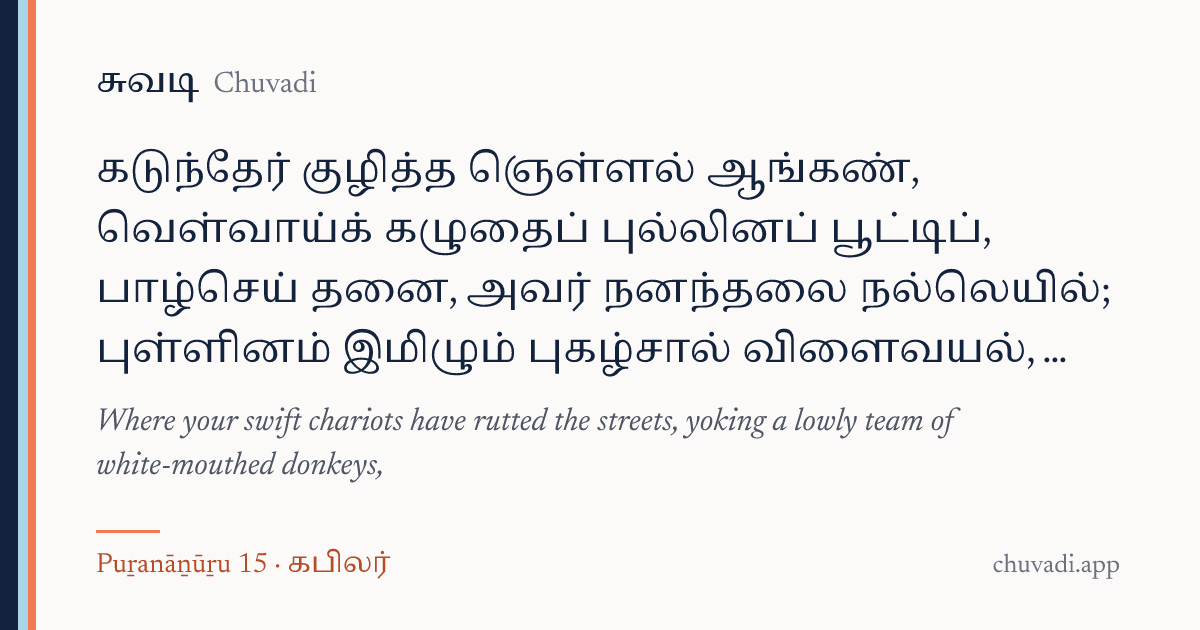
- Where your swift chariots have rutted the streets,
- yoking a lowly team of white-mouthed donkeys,
- you laid waste the good forts of their broad lands;
- in famed fields of ripe grain loud with flocks of birds,
- with the curved hooves of white-plumed spirited horses leaping,
- you drove your chariots through the country of your foes;
- with elephants of swaying gait and massive necks,
- broad feet and fierce glare,
- and gleaming tusks, you made them
- plunge into their guarded pools;
- you are of such fury; and so,
- bearing fine shields set with shining gold
- and long spears that cast their shadows, to take your foes'
- bright-weaponed, fierce vanguard head-on,
- those who came full of desire, their desire turned back,
- and lived on in disgrace — are they many? Or, of the flawless
- good texts, the four Vedas,
- with rare and glorious great offerings,
- ghee-rich oblations blazing up, the many fine
- sacrifices of undying glory completed,
- the wide grounds where you planted sacrificial posts — are they many?
- Which are more, great one? Tightened with straps,
- laced and bound, the clay-smeared drum,
- to which the singing woman sings her vañci song,
- you whose might is worth her seeking — which, of yours?
What the poem says
The metadata gives Kapilar as poet and the Cēra Celvak Kaṭuṅkō Vāḻiyātaṉ as patron. The tiṇai is pāṭāṇ, praise of a patron, and the turai is iyaṉmoḻi, a statement of his nature.
The first eleven lines describe the treatment of enemy country in three stark images: the streets of their forts, already rutted by his chariots, are ploughed with teams of donkeys, a sign of utter ruin; his chariots are driven through their rich fields of grain; his elephants are made to wallow in their guarded tanks.
Then the poet asks a question instead of making a statement. Which are more numerous: the enemies who came eagerly to fight, saw their hopes thrown back and lived on in shame, or the broad grounds where he completed great Vedic sacrifices, with ghee poured into the fire, and set up the yūpa posts? The question itself is the praise: both are beyond counting. The final lines address him as one whose strength deserves the vañci songs sung by the pāṭiṉi to the beat of a clay-smeared, strap-tightened drum.
The line-by-line English keeps the long suspended syntax of lines 12–16; the question 'are they many?' governs everything from line 12 on.