



புறநானூறு 16
பாடல் · The poem
Tap a word to see where else it occurs.
பொருள் · Meaning in TamilAI
செயலில் சிறந்த விரைந்து செல்லும் குதிரைகளோடு, மழை மேகம் போன்ற கரிய கேடயங்களைப் பரப்பி, போர்முனை சிதையும்படி முன்னே சென்று, பகைவர்களின் விளைந்த வயல்களைக் கைப்பற்றி உண்டு, அவர்களுடைய வீடுகளின் மரங்களை விறகாக்கி, காவலுடைய நீர்த்துறைகளில் உன் யானைகளை நீராட்டினாய். பொழுது சாயும்போது நீ மூட்டிய தீயின் ஒளி, மறையும் கதிரவனின் செவ்வானம் போலத் தோன்றுகிறது. நிலம் அழியும்படி தங்கும் எல்லையற்ற படையும், துணை வேண்டாத போர் வெற்றியும், புலால் நாறும் வாளும், புலர்ந்த சந்தனமும், முருகனைப் போன்ற சினமும் உடைய அச்சம் தரும் தலைவனே! பின்னிப் படர்ந்த வள்ளைக் கொடியும், மலர்ந்த ஆம்பலும், குளிர்ந்த பகன்றையும், பாகலும் நிறைந்து, கரும்பைத் தவிர வேறு காட்டையே அறியாத பெரிய குளிர்ந்த மருத நிலம் பாழாகும்படி, காவலுடைய நல்ல நாட்டை ஒளிரும் தீக்கு இரையாக்கினாய். பெருமானே, அச்சம் தரும் நல்ல போரைச் செய்ய உன் யானைகள் ஒன்றுசேர்ந்து போரிட்டன!
வஞ்சித் திணை, அதாவது பகைவர் நாட்டின் மேல் படையெடுத்துச் செல்வதைப் பாடுவது. துறை மழபுல வஞ்சி, அதாவது வளமான பகை நாட்டைக் கொள்ளையிட்டு எரிப்பதைச் சொல்வது. பாடியவர் பாண்டரங் கண்ணனார்; பாடப்பட்டவன் சோழன் இராசசூயம் வேட்ட பெருநற்கிள்ளி. 'சுனிப் பாகல்' என்பதில் உள்ள 'சுனி' என்ற சொல்லின் பொருள் உறுதியாகத் தெரியவில்லை.
ஆங்கிலம் · English translationAI
Translation
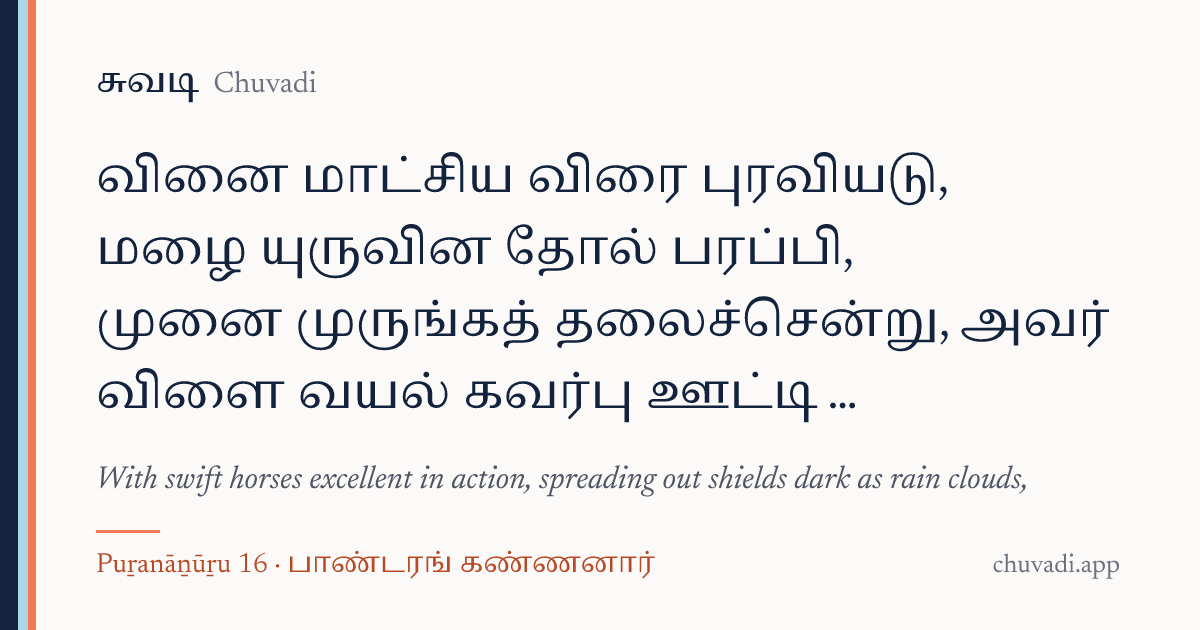
- With swift horses excellent in action,
- spreading out shields dark as rain clouds,
- you went at the head so the battle line was crushed, and their
- ripened fields you seized and fed on,
- made firewood of the beams of their houses,
- bathed your elephants in the water of their guarded fords;
- the glare of the burning fires you set at day's end
- shows like the red glow of the setting sun;
- lord with a boundless army that camps till the land is ruined,
- winning battles with no need of allies,
- with a sword that reeks of flesh, with drying sandal paste,
- with the fury of Murukaṉ, a lord to be feared!
- Tangled vaḷḷai, blossoming water lilies,
- cool pakaṉṟai, and pākal,
- knowing no forest but sugarcane,
- the great cool farmland, so that it lay in ruins,
- that protected, good country you fed to the bright fire;
- as they waged good and fearsome war,
- all together they fought, great one, your elephants!
What the poem says
Pāṇṭaraṅ Kaṇṇaṉār sings to the Cōḻa king Perunaṟkiḷḷi, 'who performed the rājasūya sacrifice'. The tiṇai is vañci, the march against an enemy land; the turai is maḻapula vañci, the plunder and burning of a rich enemy country, and the poem fits it closely.
It narrates the campaign in a single breathless sentence: horses and shields go forward, the enemy line breaks, their ripe fields are seized and eaten, their house-beams become firewood, the king's elephants bathe in their guarded bathing-places, and the fires lit at nightfall glow like sunset. The king is praised as needing no allies and as fierce as Murukaṉ.
The second half sets the loss against the beauty of what was destroyed: a cool, well-watered tract of vaḷḷai creepers, water lilies, pakaṉṟai and pākal, where the only 'forest' was sugarcane. This land the king has fed to the fire, while his elephants fought together in a great battle.
The printed 'cuṉip pākal' in line 14 is unclear; 'cuṉi' may be a slip, and only pākal is rendered.