



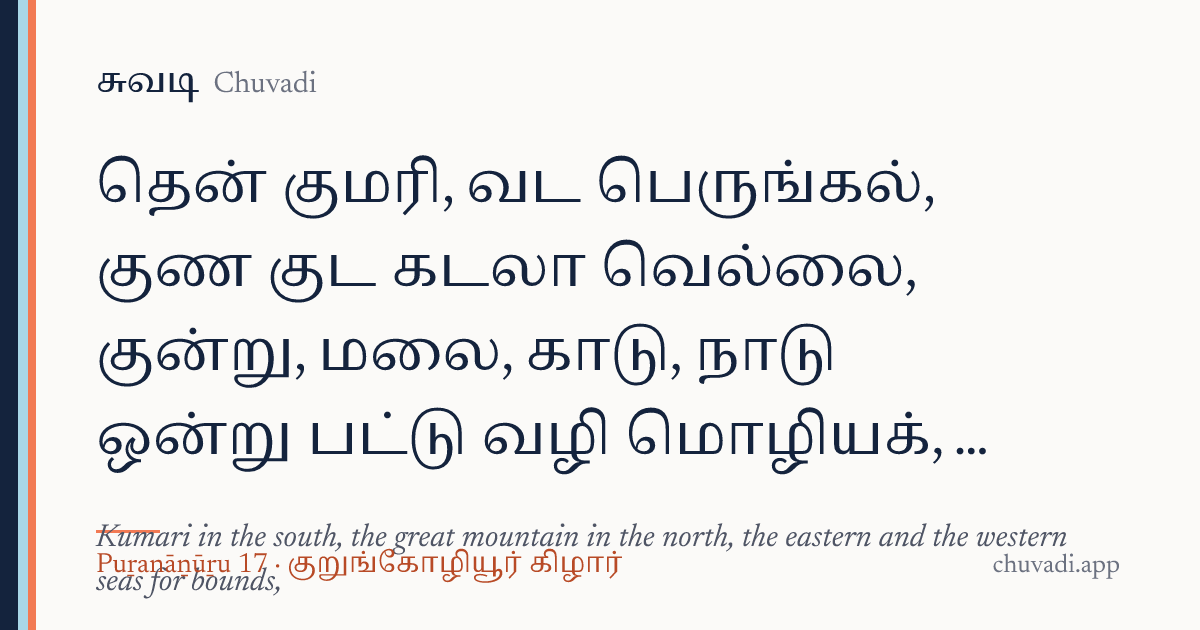
புறநானூறு 17
பாடல் · The poem
Tap a word to see where else it occurs.
பொருள் · Meaning in TamilAI
தெற்கே குமரியும், வடக்கே பெரிய மலையும், கிழக்கிலும் மேற்கிலும் கடல்களும் எல்லையாக அமைய, அதற்குள் உள்ள குன்றுகள், மலைகள், காடுகள், நாடுகள் எல்லாம் ஒன்றுபட்டு அவர்கள் சொல்லுக்குப் பணிந்து நடக்க, கொடுமையை நீக்கி, செங்கோலைச் செம்மைப்படுத்தி, தமக்கு உரிய வரியை மட்டும் பெற்று, நடுநிலையோடு ஆட்சி செய்து, ஒளிவீசும் ஆட்சிச் சக்கரம் இனிதாக உருள முழு நிலத்தையும் ஆண்ட முன்னோர்களின் மரபைக் காப்பவனே! குலைகளால் தாழ்ந்த தாழை மரங்களும், அகன்ற வயல்களும், மலையாகிய வேலியும், நிலவு போல ஒளிரும் மணல் பரந்த கடற்கரைச் சோலைகளும், தெளிந்த உப்பங்கழியின் மேல் ஒளிரும் மலர்களும் உடைய குளிர்ந்த தொண்டி நகர மக்களின் வீரனே! பெரிய குழியின் மேல் மூடியிருந்த மறைப்பைக் கவனிக்காமல், ஆழமான குழியில் அகப்பட்ட, பெருமையும் பெருவலிமையும் உடைய, முற்றிய தந்தமுள்ள கொல்லும் யானை, குழியின் கரை சரியும்படி அதை அழித்து வெளியேறித் தன் கூட்டம் மகிழும்படி அதனோடு சேர்வது போல, அரிய வலிமையுடைய நீ, நீ அகப்பட்ட பெரிய துன்பத்திலிருந்து பலரும் மகிழும்படி வெளியேறி, உன் அகன்ற முன்னோர் நாட்டில் பலர் நடுவே புகழப்பட்டாய். அதனால், 'நாம் முன்பு பெற்றிருந்த உயர்ந்த நிலத்தையும், இழந்த சிறந்த செல்வங்களையும், இவன் உள்ளம் மகிழ்ந்தால் மீண்டும் பெறலாம்' என்றும், 'கொடி உயர்ந்த உயர்ந்த மதில்களையும், வலிய காவலையும், அகன்ற அரணையும் இனி நாம் இழந்து நிற்போம்; இவன் நம்மைப் பெரிதும் சினந்து பார்த்தான்' என்றும் சொல்லிக்கொண்டு பிற அரசர்கள் உனக்குப் பணி செய்யத் தொடங்குகின்றனர். அத்தகைய உன் ஆற்றலையும் புகழையும் போற்றி, பெருமானே, உன்னைக் காண வந்தேன்! மழைமேகம் போலத் தோன்றும் திரண்ட பல கேடயங்களும், மலைபோலத் தேனீக்கள் கூடு கட்டும் பெரிய பல யானைகளும், பகைவர் அஞ்சும்படி பெருகி, கடல் போல மழைநீரை நோக்கி எழும் படையும், நஞ்சு நிறைந்த பற்களுடைய பாம்புகளின் தலை நடுங்கும்படி ஓயாமல் இடிபோல முழங்கும் முரசும், அளவற்ற கொடையும் உடைய குடவர் கோவே!
வாகைத் திணை, அதாவது வெற்றியையும் சிறப்பையும் பாடுவது; துறை அரசவாகை, அதாவது அரசனின் சிறப்பைச் சொல்வது; இயன்மொழி என்றும் கொள்ளலாம். பாடியவர் குறுங்கோழியூர் கிழார்; பாடப்பட்டவன் சேரமான் யானைக்கண்சேய் மாந்தரஞ்சேரல் இரும்பொறை. அரசன் அகப்பட்ட துன்பம் என்ன என்று பாடல் சொல்லவில்லை; அவன் சிறைப்பட்டு மீண்டான் என்று மரபு சொல்கிறது.
ஆங்கிலம் · English translationAI
Translation
- Kumari in the south, the great mountain in the north,
- the eastern and the western seas for bounds,
- hills, mountains, forests and countries
- united in obeying their word;
- they curbed cruelty, set the sceptre right,
- took their rightful share, kept even-handed justice,
- and with their bright wheel rolling smoothly on
- ruled the whole — you who guard their line!
- Where the tāḻai with heavy clusters bows low,
- with broad fields and mountains for hedges,
- wide seashore groves of moon-bright sand,
- and bright flowers above the clear backwaters —
- slaying warrior of the people of cool Toṇṭi!
- Not heeding the cover laid over the great pit,
- caught in a deep pit,
- the proud one of mighty strength,
- the killer elephant with full-grown tusks
- breaks down the pit till its sides give way
- and joins its herd to their delight — just so,
- you of rare strength, who had fallen into
- great distress — to the joy of many,
- came out another way, and in your wide inheritance
- were praised on high amid many; and so,
- 'The high land that once was ours
- and the precious treasures that have gone
- we may regain, if we can win his heart,' saying,
- and, 'The ramparts with raised banners and tall walls,
- the strong defences and the wide fortress,
- we shall now lose and be left bereft; he
- has looked on us in great anger,' saying,
- other kings begin to serve you; your
- strength and your fame I praise,
- and I have come to see you, great one! You of massed
- many shields that look like rain clouds, of mountain-like
- great elephants on which the bees build hives,
- of an army that swells till foes tremble, that like the sea
- rises toward the rain, of drums that, unceasing,
- make the heads of snakes with venom-filled fangs shudder,
- booming like thunder,
- king of the Kuṭavar, of boundless gifts!
What the poem says
Kuṟuṅkōḻiyūr Kiḻār addresses the Cēra king Yāṉaikkaṇcēy Māntarañcēral Irumpoṟai, here 'king of the Kuṭavar', the people of the west. The tiṇai is vākai, victory, and the turai is aracavākai, the excellence of a king, or iyaṉmoḻi, a statement of his nature.
The poem first places him in a line of ancestors who ruled the whole land from Kumari to the northern mountain and between the two seas, ruling justly and taking only their due share. It then names his own country: groves of tāḻai, wide fields, sandy shores and the port of Toṇṭi.
The heart of the poem is an extended simile. A tusker that falls into a covered pit-trap does not stay there: it breaks the walls down and climbs out, to the joy of its herd. In the same way the king, of great strength, came out of the 'great trouble' he had fallen into and was acclaimed again in his inheritance. The poem does not say what that trouble was; tradition holds that he had been taken captive and escaped. On his return, defeated kings say they might win back their land if he is kindly disposed, others fear losing their forts to his anger, and all begin to serve him.
The poet ends by saying he has come to see this for himself, and closes with a sweep of praise: clouds of shields, elephants like mountains with bees nesting on them, an army like the sea rising to the rain, and drums whose thunder makes even snakes tremble.