



புறநானூறு 18
பாடல் · The poem
Tap a word to see where else it occurs.
பொருள் · Meaning in TamilAI
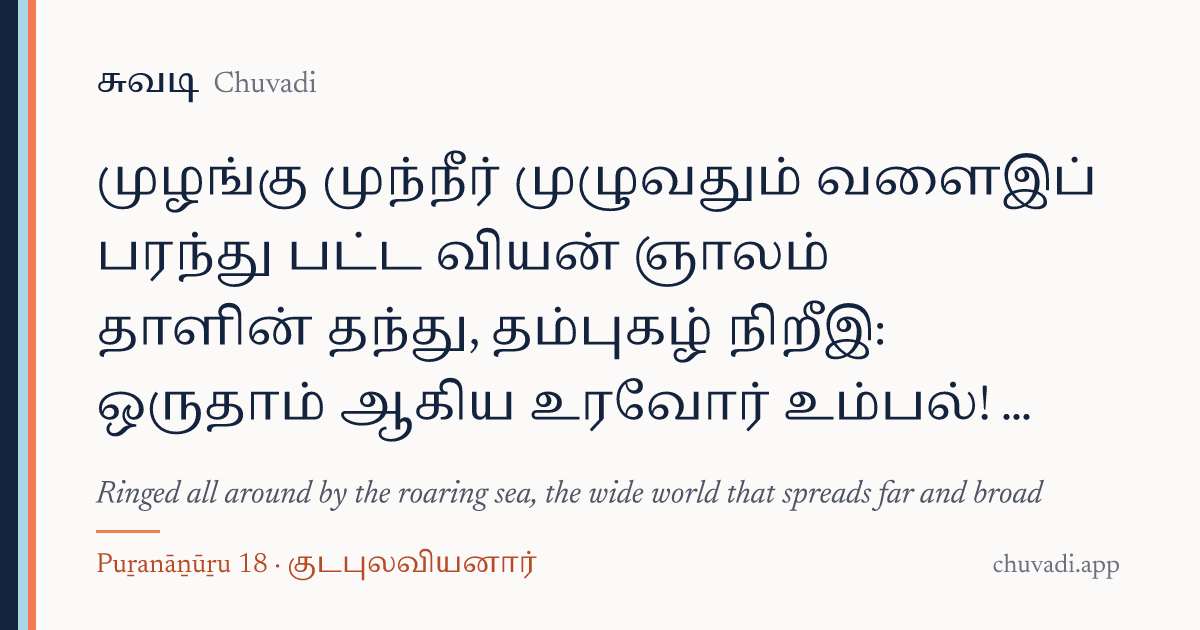
முழங்கும் கடல் முழுவதும் சூழ்ந்த, பரந்து விரிந்த அகன்ற உலகைத் தங்கள் முயற்சியால் கைப்பற்றி, தங்கள் புகழை நிலைநிறுத்தித் தாமே தனி அரசர்களாக விளங்கிய வலியோரின் வழித்தோன்றலே! ஒன்று, பத்து என்று அடுக்கிக் கோடியையும் கடந்து நிற்கும் எண்ணைப் போல உன் வாழ்நாள் பெருகுவதாக! நீரை நோக்கித் தாழ்ந்த குட்டையான காஞ்சி மரத்தின் பூக்களைக் கூட்டமான வாளை மீன்கள் கவ்வும்; மெல்லிய ஆரல் மீனும், பருத்த வரால் மீனும், நிறமுள்ள கெடிற்று மீனும் நிறைந்த ஆழமான அகழியும், வானமே அஞ்சும் உயர்ந்த நீண்ட மதிலும் கொண்ட வளமான பழைய நகரத்தின் வலிய வேந்தனே! நீ செல்லப்போகும் மறுமை உலகத்தில் செல்வம் வேண்டினாலும், உலகை ஆளும் அரசர்களின் தோள்வலியை அழித்து நீ ஒருவனே தனி அரசனாக வேண்டினாலும், சிறந்த நல்ல புகழை நிலைநிறுத்த வேண்டினாலும், அதற்குத் தகுந்த வழியைச் சொல்கிறேன், செல்வம் மிகுந்தவனே, கேள்! நீர் இல்லாமல் வாழ முடியாத உடம்புகளுக்கெல்லாம் உணவு கொடுத்தவர்களே உயிர் கொடுத்தவர்கள். உணவால் ஆன இந்த உடம்பு உணவையே முதலாகக் கொண்டது. உணவு என்பது நிலமும் நீரும் சேர்ந்ததே. ஆகவே நீரையும் நிலத்தையும் ஒன்று சேர்த்தவர்களே இவ்வுலகில் உடம்பையும் உயிரையும் படைத்தவர்கள். விதைத்துவிட்டு மழையை எதிர்பார்த்து வானத்தையே நோக்கியிருக்கும் புன்செய் நிலம், எவ்வளவு அகன்று பரந்திருந்தாலும், அதை ஆளும் அரசனின் முயற்சிக்குச் சிறிதும் உதவாது. ஆகவே, கொல்லும் போரையுடைய செழியனே, இதை இகழாமல், நிலம் பள்ளமாக உள்ள இடங்களில் நீர்நிலைகள் பெருகும்படி விரைவில் அணை கட்டுவாயாக! நீரைத் தடுத்து அணை கட்டியவர்களே இவ்வுலகில் நிலைத்து நின்றவர்கள்; அப்படிச் செய்யாதவர்கள் இவ்வுலகில் நிலைக்காதவர்கள்.
பொதுவியல் திணை, அதாவது ஒரு திணைக்குள் அடங்காத பொதுவான பாடல். துறை முதுமொழிக் காஞ்சி, அதாவது வாழ்க்கைக்குரிய பழைய அறிவுரையைச் சொல்வது; பொருண்மொழிக் காஞ்சி என்றும் பாடம் உண்டு. பாடியவர் குடபுலவியனார்; பாடப்பட்டவன் பாண்டியன் நெடுஞ்செழியன். இறுதி இரண்டு வரிகள் 'தட்டல்', 'தள்ளல்' என்ற சொற்களில் சிலேடையாக அமைந்துள்ளன; இறுதி வரியின் நுட்பமான பொருள் உறுதியாகத் தெரியவில்லை.
ஆங்கிலம் · English translationAI
Translation
- Ringed all around by the roaring sea,
- the wide world that spreads far and broad
- they won by their own effort, set up their fame,
- and stood alone as its rulers — scion of those mighty ones!
- Beyond the crores reached by stacking one upon ten,
- may the span of your life be that great!
- Of the short kāñci bowed down to the water
- the shoaling vāḷai fish snap at the flowers;
- slender āral, fat varāl
- and bright-hued keṭiṟu fill the deep moat;
- tall, long-built walls the sky itself fears;
- mighty king of the rich ancient city!
- If you want wealth in the world you will go to,
- if you want, crushing the strength of the arms of the world's rulers,
- to be the one and only, if you want your eminent
- good fame to stand — then of what is fitting for that
- listen now, you of abundance!
- For all bodies that cannot endure without water,
- those who gave food gave life;
- the body made of food has food as its beginning;
- and what is called food is land together with water;
- those who brought water and land together, here
- have created bodies and lives;
- poor land that is sown and then watches the sky, though its wide
- tracts be settled, to the lord who holds and rules it
- gives no help in his endeavours; therefore,
- Ceḻiya of slaughtering battles, do not scorn this; quickly,
- where the land dips, so that the waters gather and grow,
- those who dam it, mark you, have held firm here;
- those who fail to dam it have here failed to hold.
What the poem says
Kuṭapulaviyaṉār speaks to the Pāṇṭiya king Neṭuñceḻiyaṉ. The tiṇai is potuviyal, the general class for poems that do not fit a single theme; the turai is mutumoḻik kāñci, the wisdom of the ancients on the impermanence and right conduct of life, with poruṇmoḻik kāñci given as a variant reading.
After praising his ancestors, who won the whole sea-girt world by their own effort, and wishing him a life longer than any number reached by multiplying tens up to crores and beyond, the poet describes his ancient city: a deep moat teeming with vāḷai, āral, varāl and keṭiṟu fish under the drooping kāñci trees, and walls so high the sky fears them.
Then comes the counsel. Whether the king wants wealth in the next world, sole rule over all kings, or lasting fame, here is what he must do. Bodies cannot live without water; food is what makes the body; food is land joined with water; so whoever brings land and water together creates both body and life. Dry land that depends only on rain does nothing for the king, however wide it is. He should therefore, without delay, build reservoirs wherever the ground dips.
The last two lines play on 'taṭṭal', to dam or to hold fast: those who dam water truly hold their place in this world, and those who do not have no hold here. The second line's word 'taḷḷātōr' is part of this wordplay, and its exact sense is not certain.