



புறநானூறு 19
பாடல் · The poem
Tap a word to see where else it occurs.
பொருள் · Meaning in TamilAI
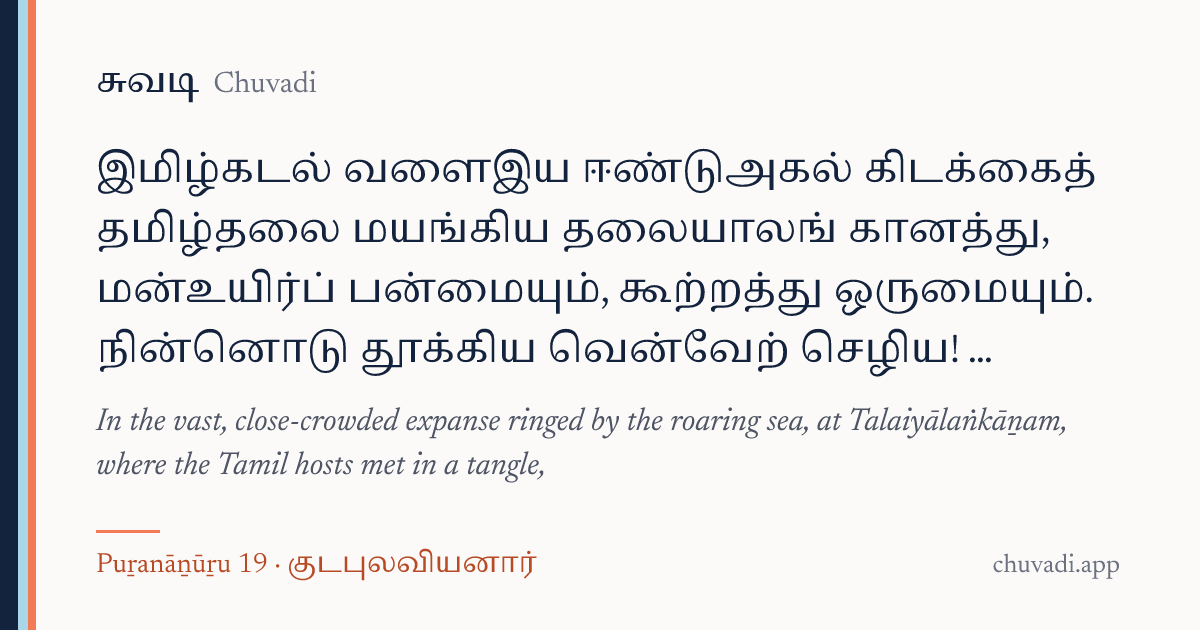
முழங்கும் கடல் சூழ்ந்த, நெருங்கிய அகன்ற இந்த நிலத்தில், தமிழ்ப் படைகள் ஒன்றோடொன்று கலந்து மோதிய தலையாலங்கானத்தில், நிலைத்த உயிர்களின் பன்மையையும் கூற்றுவனின் ஒருமையையும் உன்னோடு வைத்து நிறுத்துப் பார்த்த, வெற்றி வேலையுடைய செழியனே! 'பெரும் புலியை வேட்டையாடும் வேடன் பொறியின் நுட்பம் அறிந்து அமைத்த பெரிய கல்லாலான பொறியைப் போன்றது இது' என்று எண்ணியும், விருப்பத்தோடு நான் அதைத் தழுவவில்லையா? மயங்கி மலையில் வந்து தங்கும் குருவிக் கூட்டம் போல அம்புகள் சென்று தைத்த, ஆழமான புண்களையுடைய யானைகளின் துளையுள்ள பெரிய கைகள் வாயோடு அறுபட்டு, கலப்பையைப் போல நிலத்தில் புரண்டன. அவற்றை வெட்டிக் களத்தில் வீழ்த்திய, உயர்த்திய வாளை வலக்கையில் ஏந்திய, மென்மயிர்த் தலையுடைய எங்கள் மகன்கள் தம் தந்தையோடு கிடக்கின்றனர். 'நம் குடிக்கும் இத்தகைய வீரம் உண்டோ?' என்று பழைய வீரக்குடிப் பெண்கள் மனம் உருகி அழ, அதைக் கண்டு கூற்றுவனும் நாணிக் கண்ணை விலக்கிக்கொண்ட அச்சம் தரும் போர்க்களத்தில், எழுவருடைய சிறந்த வலிமையை வென்றவனே! நான் தழுவியது, கழுவி ஒளிரும் மாலை அணிந்த உன் மார்பைத்தானோ?
வாகைத் திணை, அதாவது வெற்றியைப் பாடுவது; துறை அரசவாகை, அதாவது அரசனின் சிறப்பைச் சொல்வது. பாடியவர் குடபுலவியனார்; பாடப்பட்டவன் பாண்டியன் தலையாலங்கானத்துச் செருவென்ற நெடுஞ்செழியன். எழுவர் யார் என்று பாடல் பெயர் சொல்லவில்லை. கல்பொறி உவமையின் நுட்பமும், 'எந்தை' என்பது யாரைக் குறிக்கிறது என்பதும் உறுதியாகத் தெரியவில்லை.
ஆங்கிலம் · English translationAI
Translation
- In the vast, close-crowded expanse ringed by the roaring sea,
- at Talaiyālaṅkāṉam, where the Tamil hosts met in a tangle,
- the multitude of living beings and the single might of Death
- you weighed against yourself, Ceḻiya of the conquering spear!
- 'Like the great stone trap that a hunter of mighty tigers,
- knowing its trigger, has set, it is,' I thought, and with longing
- did I not embrace it, I myself? Dazed,
- like a flock of sparrows that have settled on a hill,
- arrows went in and lodged; the elephants with gaping wounds,
- their hollow great trunks severed with their mouths,
- rolled on the ground like ploughs;
- those who hacked and laid them on the field, raised swords in their right hands,
- lying with their father, are our sons with downy heads;
- 'Is there such valour too among us?' saying,
- the women of the old houses wept, moved; ashamed,
- Death turned its eyes away on that fearful field —
- you who overcame the proud might of the Seven! Was it your
- chest, clasped by its gleaming, polished garland?
What the poem says
Kuṭapulaviyaṉār praises the Pāṇṭiya Neṭuñceḻiyaṉ, 'who won the battle of Talaiyālaṅkāṉam'. The tiṇai is vākai, victory, and the turai is aracavākai, the excellence of a king.
The battle is named in line 2 as the place 'where Tamil met Tamil in confusion', and the poet says the king set himself on the scale against the countless lives of the battlefield and the single power of Death. At the end he is hailed as the one who overcame 'the Seven', that is, seven opposing kings; the poem does not name them.
The poet then recalls embracing the king's chest, which he thought of as deadly as the heavy stone trap a tiger-hunter sets. Everything from line 7 to line 17 describes the field where that chest proved itself: arrows settling into the elephants like sparrows on a hill, elephant trunks cut off and rolling on the ground like ploughs, the young sons of warrior families lying dead beside their father with swords still raised, the women of those old houses weeping with pride and grief, and Death itself looking away in shame. The poem ends on a question: was that the chest I held?
The whole poem is one long sentence, and some links are uncertain, especially the force of the stone-trap simile in lines 5–6 and who exactly is meant by 'our father' in line 13.