



புறநானூறு 20
பாடல் · The poem
Tap a word to see where else it occurs.
பொருள் · Meaning in TamilAI
பெருங்கடலின் ஆழத்தையும், அகன்ற உலகத்தின் பரப்பையும், காற்று வீசும் திசைகளையும், வெறுமையாக நிற்கும் வானத்தையும் அளந்து அறிந்தாலும், உன் அறிவையும் அன்பையும் பெரிய கண்ணோட்டத்தையும் அளந்து அறிய முடியாது. உன் ஆட்சியின் நிழலில் வாழ்பவர்கள் சோறு சமைக்கும் நெருப்பின் சூட்டையும், செங்கதிரவனின் வெயிலையும் தவிர வேறு சுடுதலை அறியார். வானவில்லைத் தவிரக் கொலை செய்யும் வில்லை அறியார். கலப்பையைத் தவிர வேறு படைக்கருவியை அறியார். திறமையுள்ள வீரர்களோடு சென்று பகைவர்களை அழித்துப் பிறருடைய மண்ணை உண்ணும் தலைவன் நீ; ஆனால் உன் நாட்டு மண்ணைச் சூல்கொண்ட மகளிர் விருப்பத்தால் உண்பதைத் தவிரப் பகைவர்கள் உண்ண முடியாது; அவ்வளவு அரிய மண் உன்னுடையது. அம்புகள் உறங்கும் காவலுடைய அரணும், அறம் உறங்கும் செங்கோலும் உடையவன் நீ. புதிய பறவைகள் வந்தாலும், பழைய பறவைகள் போனாலும், நடுக்கம் அறியாத பாதுகாப்பை உடையவன் நீ. நீ இத்தகையவனாக இருப்பதால், உலகில் உள்ள உயிர்கள் எல்லாம் உனக்கு ஏதும் தீங்கு வருமோ என்று அஞ்சுகின்றன.
வாகைத் திணை, அதாவது வெற்றியையும் சிறப்பையும் பாடுவது; துறை அரசவாகை, அதாவது அரசனின் சிறப்பைச் சொல்வது. பாடியவர் குறுங்கோழியூர் கிழார்; பாடப்பட்டவன் சேரமான் யானைக்கட்சேய் மாந்தரஞ் சேரல் இரும்பொறை. இறுதி வரிக்கு உயிர்கள் எல்லாம் உன்னைக் கண்டு அஞ்சுகின்றன என்றும் பொருள் கொள்ள இடம் உண்டு.
ஆங்கிலம் · English translationAI
Translation
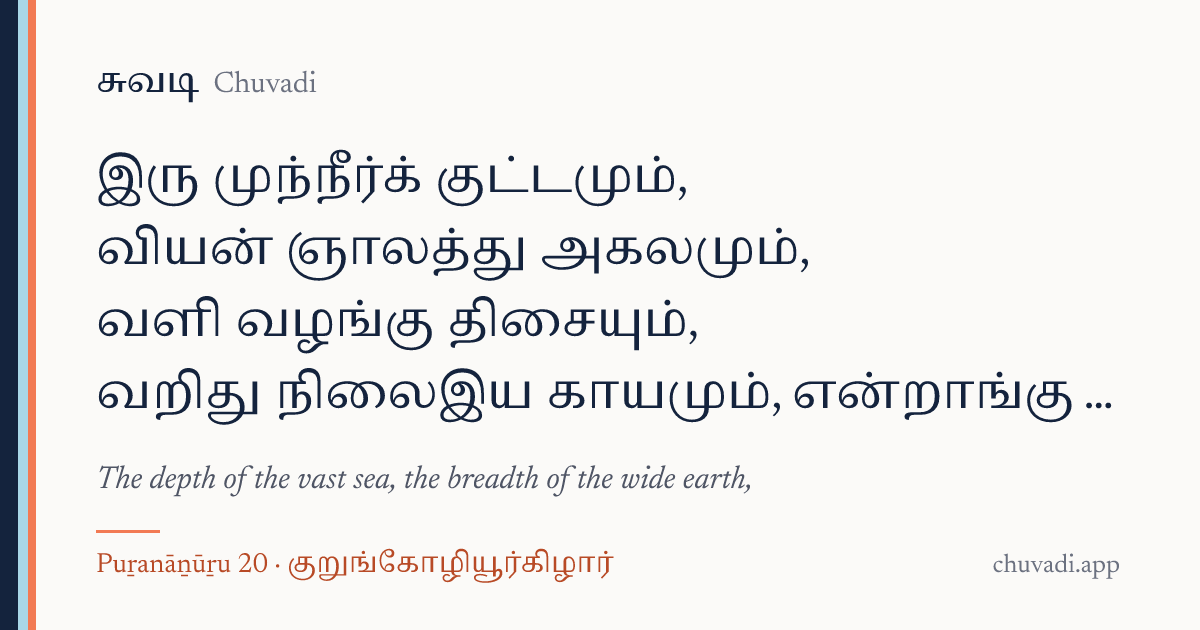
- The depth of the vast sea,
- the breadth of the wide earth,
- the directions where the wind moves,
- the sky that stands empty — thus,
- even if one measured these and knew them, you are beyond measuring:
- your wisdom, your kindness, your great graciousness;
- except for the fire that cooks the rice
- and the heat of the red sun,
- they know no other scorching, those who live in your shade;
- they know no bow but the rainbow, no bow that kills;
- they know no weapon but the plough;
- with warriors who know their craft, wearing your foes down, you are
- the lord who devours others' land; but of your country
- the soil, unless pregnant women eat it from craving,
- no enemy eats — so hard to win is your soil;
- with your guarded fortress where the arrows sleep,
- yours is a just sceptre where dharma sleeps;
- even if new birds come, even if old birds leave,
- your sure protection knows no alarm;
- because you are such,
- all living beings fear for you.
What the poem says
Kuṟuṅkōḻiyūr Kiḻār sings again to the Cēra king Yāṉaikkaṭcēy Māntarañcēral Irumpoṟai. The tiṇai is vākai, victory, and the turai is aracavākai, the excellence of a king.
The poem opens by saying that even if someone could measure the depth of the sea, the breadth of the earth, the paths of the wind and the empty sky, the king's wisdom, kindness and graciousness could not be measured. Then it describes the peace of his own people: the only heat they know is the cooking fire and the sun, the only bow the rainbow, the only weapon the plough.
A striking contrast follows. The king 'eats' other people's land, but no enemy ever eats the soil of his: the only people who eat it are pregnant women with a craving for earth, a familiar image in Tamil poetry. His fortress is so secure that arrows lie idle, 'sleeping', and under his rule dharma too can sleep in peace. Even the comings and goings of omen birds cause no alarm.
The last line, 'all living beings fear for you', is most naturally taken as anxiety on his behalf, since a ruler so precious must be kept from harm; the words could also mean simply that all beings fear him, and that reading cannot be ruled out.