



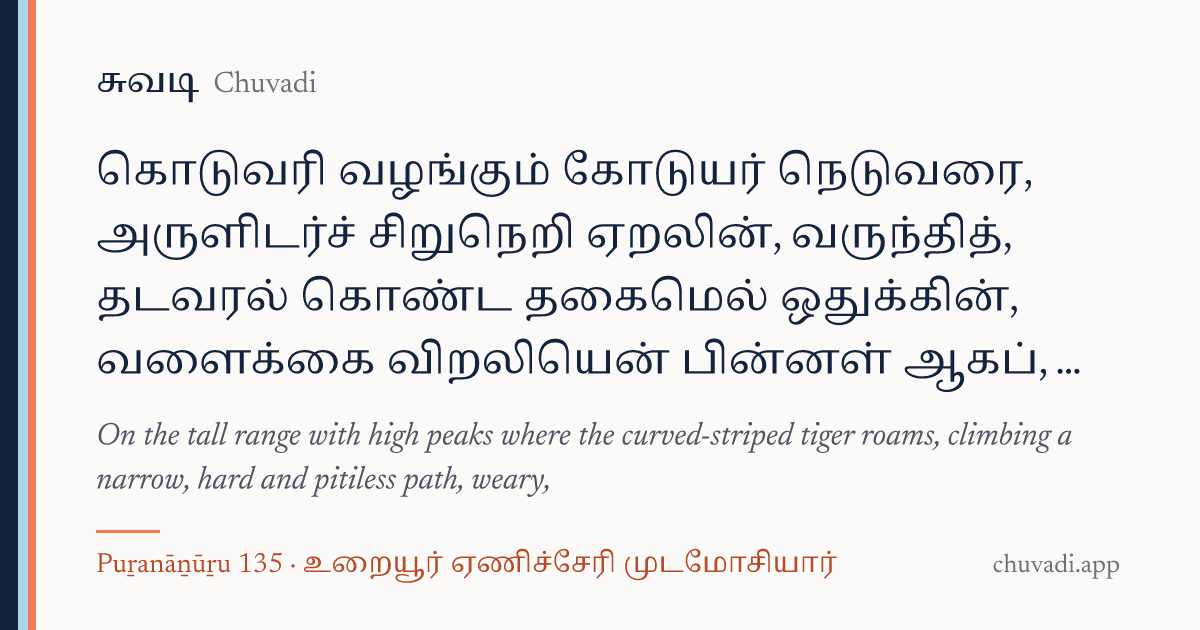
புறநானூறு 135
பாடல் · The poem
Tap a word to see where else it occurs.
பொருள் · Meaning in TamilAI
வளைந்த வரிகளை உடைய புலி உலவும் உயர்ந்த சிகரங்களை உடைய நீண்ட மலையில், கடுமையான குறுகிய வழியில் ஏறியதால் வருந்தி, தடவித் தடவி அடியெடுத்து வைக்கும் அழகிய மெல்லிய நடையோடு, வளையல் அணிந்த கைகளை உடைய விறலி என் பின்னால் வர, பொன்னை இழுத்து நீட்டியது போன்ற முறுக்கிய நரம்புகளை உடைய, படுமலைப் பண் அமைந்த, பயன் மிக்க சிறிய யாழை, தளரும் உள்ளத்தோடு ஒரு பக்கமாக அணைத்துக் கொண்டு, தாளம் பயின்ற பாடல்கள் ஊர் ஊராக ஒலிக்க, புகழ் நிறைந்த சிறப்புடைய உன் நல்ல பெயரை நினைத்து வந்தேன், என் தலைவனே! மன்றத்தில் கூடும் பரிசிலர்களைக் கண்டால் எப்போதும் கன்றுகளோடு கரிய அடிகளை உடைய யானைகளைக் கூட்டம் கூட்டமாக அனுப்பி வைக்கும் மலைநாட்டுத் தலைவனே! பெருமை மிக்க வேள் ஆயே! நான் வேண்டுவது யானைகள் அல்ல; குதிரைகள் அல்ல; ஒளிரும் அணிகள் பூண்ட குதிரைகள் பூட்டிய தேர்களும் அல்ல. பாணரும் பாடுநரும் பரிசிலரும் அவற்றைத் தமக்கு உரியவை என்று பற்றிக்கொள்வார்களானால், எதையும் 'எனது' என்று பற்றத் தெரியாத உன் வளமான செல்வத்தோடு அப்படியே ஆகட்டும்; உன் வாழ்நாள் நீள்வதாக! உன்னைக் காண வேண்டும் என்பதே என் விருப்பத்தின் அளவு. பகைவரின் கடும் பகையைக் கடந்த வலிமையும், எல்லாரும் உயர்த்திப் பேசும் நாடும் உடைய தலைவனே!
பாடாண் திணை, பரிசில் துறை; ஆனால் இங்கே புலவர் வேண்டும் பரிசில், ஆயைக் காண்பது மட்டுமே. பாடியவர் உறையூர் ஏணிச்சேரி முடமோசியார்; பாடப்பட்டவன் ஆய் அண்டிரன். 'அருளிடர்', 'புலம்பெயர்ந்து', 'பொதுமீக் கூற்றம்' ஆகிய சொற்களின் பொருள் உறுதியாகத் தெரியவில்லை. படுமலை என்பது ஒரு பண்ணின் பெயர்.
ஆங்கிலம் · English translationAI
Translation
- On the tall range with high peaks where the curved-striped tiger roams,
- climbing a narrow, hard and pitiless path, weary,
- with gentle, graceful steps that feel their way,
- the viṟali with bangled arms walking behind me,
- with strings twisted tight like drawn-out gold,
- the songs skilled in rhythm sounding as we passed from land to land,
- the fruitful small lute set in the paṭumalai mode
- held close at one side with a faltering heart,
- thinking of your good fame and its glorious renown,
- I have come, my lord! You who always,
- seeing suppliants in the meeting ground, together with their calves
- send off in droves the elephants with dark-marked feet,
- lord of the mountain country, great Vēḷ Āy!
- It is not elephants; it is not horses;
- it is not chariots with steeds in shining harness —
- if bards, singers and suppliants there
- bind them to themselves as theirs, — you who never learned to hold things
- as 'ours', with your fruitful inheritance, —
- let it be so; may your age be long! To see you
- was all I wanted, — you whose strength overcame the fierce hostility
- of those who wished you ill,
- lord of a land spoken of above all others!
What the poem says
Muṭamōciyār describes his own journey to Āy. With a viṟali behind him, he climbed a steep, narrow path through tiger country, carrying his small lute tuned to the paṭumalai mode and playing as they went. He has come thinking of Āy's fame, for Āy gives elephants away in herds, calves and all, to the suppliants who gather in his meeting ground.
Then comes a surprising turn. The poet says he does not ask for elephants, horses or chariots; let the bards and singers take those, since Āy never treats anything as his own. All he wanted was to see Āy. The poem ends by praising Āy's strength over his enemies.
The tiṇai is pāṭāṇ, praise of a patron, and the turai paricil, a poem connected with a gift; here the gift asked for is, unusually, only the sight of the patron. Several phrases are difficult: aruḷiṭar in line 2 is unclear (the translation guesses 'pitiless'); pulampeyarntu in line 6 may mean 'moving from place to place' or refer to a change of mode in the music; and potumīkkūṟṟam in line 22 is obscure, taken here as 'spoken of above all others'. The paṭumalai is a named mode of the lute.