



புறநானூறு 136
பாடல் · The poem
Tap a word to see where else it occurs.
பொருள் · Meaning in TamilAI
யாழின் பத்தரின் பின்புறத்தைப் போல நூலால் சுற்றிப் பல இடங்களில் தைக்கப்பட்ட என் ஆடையின் இடைவெளிகளைப் பற்றிக்கொண்டு, பிடியை விடாமல், ஈர்க் கூட்டத்தோடு மடிப்புகளில் நெருங்கி வாழும் பேன் என்னும் ஒரு பகை என்பேனோ? உண்ணாததால் உடல் வாடி, கண்களில் தெளிந்த நீர் நிறைந்து, வருந்தும் என் பல சுற்றத்தாரை அலைக்கழிக்கும் பசி என்னும் ஒரு பகை என்பேனோ? இந்த நிலையை அறிந்தும் எதுவும் கொடுக்காமல், 'உன்னிடம் உள்ளதைக் கொடு' என்று நாங்கள் நிலைதளரும்படி, மரங்கள் அடர்ந்த மலைச்சரிவில் குரங்குகளைப் போலப் பரவி வந்து துன்புறுத்தும் இழிந்த சிறிய கள்வர் என்னும் ஒரு பகை என்பேனோ? 'எல்லாப் பகைகளையும் ஆய் அறிவான்' என்று எண்ணி, உன் பெயரைப் போற்றி, வாய் நிறையப் பேசப்படும் உன் புகழை நம்பி, கதிரவன் சுட்டெரிக்கும் பாலை வழியைக் கடந்து, பெரும் ஆசையோடு இங்கே வந்தோம். 'எங்களுக்குக் கொடுப்பவர் பிறருக்குக் கொடுப்பவர் ஆவர்; பிறருக்குக் கொடுப்பவர் தமக்கே கொடுத்துக்கொள்கிறார்கள்' என்று எல்லாவற்றையும் சொல்லிவிட்டேன். உனக்குத் தகுந்ததை நீயே ஆராய்ந்து பரிசில் கொடுத்து அனுப்புவாயாக. பெருமானே! குளிர்ந்த நீர் நிறைந்த துறையூரின் முன்துறையில் உள்ள நுண்ணிய மணலைவிட மிகுதியாக உன்னைப் போற்றி, நீ கொடுத்த செல்வத்தை நாள்தோறும் உண்டு மகிழ்வோம்.
பாடாண் திணை; துறை பரிசில் கடாநிலை, அதாவது பரிசில் தருமாறு வள்ளலை வற்புறுத்துவது. பாடியவர் துறையூர் ஓடைகிழார்; பாடப்பட்டவன் ஆய் அண்டிரன். பேன், பசி, கள்வர் என்று மூன்று பகைகளைச் சொல்லித் தம் வறுமையை நகைச்சுவை கலந்து கூறுகிறார்.
ஆங்கிலம் · English translationAI
Translation
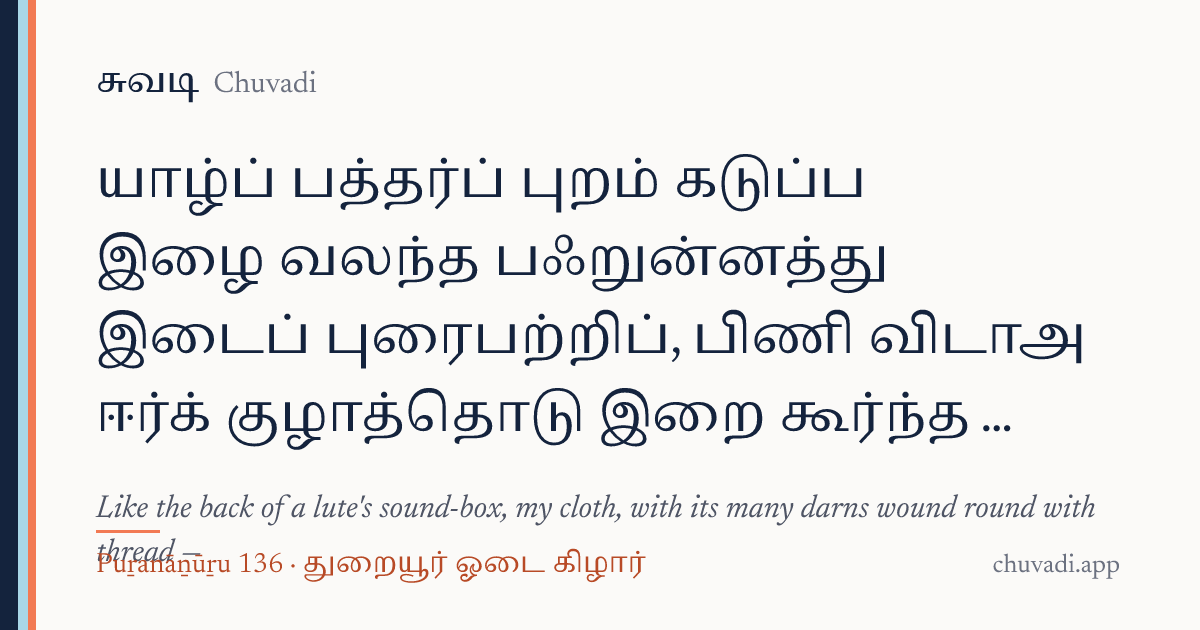
- Like the back of a lute's sound-box,
- my cloth, with its many darns wound round with thread —
- gripping the gaps between and never letting go,
- with swarms of nits, crowding the folds,
- the lice: shall I call that one enemy?
- Because they have not eaten, their flesh wasted,
- their eyes brimming with clear tears,
- my many kin melting in misery —
- the hunger that torments them: shall I call that one enemy?
- Knowing even such a state, giving nothing,
- saying 'Hand over what is yours,' so that we stagger,
- on the dense slopes where trees stand thick,
- the mean little robbers like monkeys
- who spread out and harass us: shall I call that one enemy?
- 'Āy knows every kind of enemy there is,'
- thinking so, praising your name,
- trusting your fame that fills men's mouths,
- climbing through the wasteland scorched by the sun,
- we have come here with great longing.
- 'Those who give to us give to others;
- those who give to others give to themselves' —
- so I have told it all; and so,
- weighing what is fitting for you,
- grant us a gift and let us go! Every day,
- at the ford before Tuṟaiyūr with its cool-watered gate,
- praising you more times than its fine sands are many,
- we shall enjoy, great one, the wealth you have granted.
What the poem says
Tuṟaiyūr Ōṭaikiḻār, a poet from Tuṟaiyūr, presses Āy Aṇṭiraṉ for a gift with a vivid, almost comic, account of his troubles. He lists his enemies one by one. First the lice that live in his much-darned cloth, which looks like the stitched back of a lute. Then hunger, which wastes his family until their eyes fill with tears. Then the petty robbers, like monkeys, who swarm out on the forest slopes and demand what little he has. Since Āy is known to understand every kind of enemy, the poet has crossed the scorching wasteland to reach him.
The tiṇai is pāṭāṇ, praise of a patron, and the turai paricil kaṭānilai, 'urging for a gift', where the suppliant presses the patron to give. The argument in lines 20–21 is neat: what is given to poets is shared on to others, and giving to others is really giving to oneself, since it brings fame.
The promise at the end ties the gift to the poet's home: at the ford of Tuṟaiyūr he will praise Āy more times than there are grains of sand. The word pēeṉ in line 5 is taken as 'louse'. The comparison with the back of a lute's bowl suggests a covering stitched together from pieces.