



புறநானூறு 137
பாடல் · The poem
Tap a word to see where else it occurs.
பொருள் · Meaning in TamilAI
முழங்கும் முரசும் கூட்டமான யானைகளும் கடலையே எல்லையாகக் கொண்ட நாடும் உடைய வெற்றி மிக்க மூவேந்தர்களை இன்னும் நான் விரும்பக் கற்கவில்லை. நீயே நான் முன்பே அறிந்தவன். உன் நாட்டில் நீர் நிறைந்த குளத்தில் இட்ட விதை வறட்சியிலும் சாவதில்லை; உயர்ந்த கரும்பைப் போல வளர்ந்து சலசலக்கும்; கீழைக்காற்று கொண்டுவந்த மழைநீர் கோடையில் வற்றினாலும், கண்களைப் போன்ற மலர்கள் பூக்கும்; கரிய அடியை உடைய வேங்கையின் பொன் போன்ற பூக்களை நாள்தோறும் சுமந்துகொண்டு, நீலமணி போன்ற தெளிந்த நீர் கடலை நோக்கி ஓடும். செம்மண் மலைச்சாரலில் தோட்டங்களை உடைய நாஞ்சில் நாட்டு வீரனே! சிறிய வெண்மையான அருவிகளும் பெரிய பாறைகளும் உடைய நாட்டுக்குத் தலைவன் நீ. நீ வாழ்க! உன்னைப் பெற்ற உன் தந்தையும் தாயும் வாழ்க!
பாடாண் திணை; துறை இயன்மொழி, பரிசில் என்றும் கொள்ளலாம். பாடியவர் ஒருசிறைப் பெரியனார்; பாடப்பட்டவன் நாஞ்சில் வள்ளுவன். நான்கு முதல் எட்டு வரையிலான அடிகளில் வளர்வது எது என்று வெளிப்படையாகச் சொல்லப்படவில்லை. நான்காம் அடியில் 'அரியுமோனே' என்பது 'அறியுமோனே' என்பதன் அச்சுப் பிழை.
ஆங்கிலம் · English translationAI
Translation
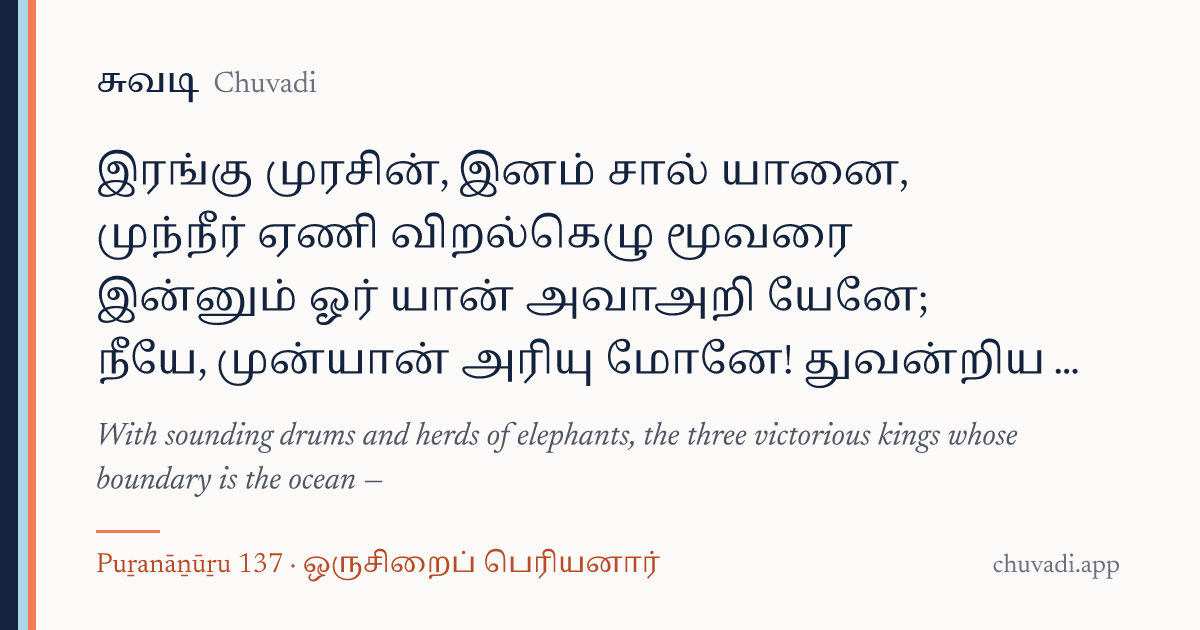
- With sounding drums and herds of elephants,
- the three victorious kings whose boundary is the ocean —
- even now I do not know how to long for them;
- you are the one I knew before! Sown in a brimming
- pond, the seed does not die in the drought;
- like the tall sugarcane it grows and rustles;
- though summer scorches the water the east-wind clouds brought,
- it blooms with flowers like eyes;
- with blossoms of the dark-stemmed vēṅkai, every day
- carrying flowers like gold,
- water like sapphire flows down to the sea;
- warrior of Nāñcil with gardens on red hills!
- you are lord of a land of great rocks and little white waterfalls!
- May you live long! May your father
- and your mother live long, they who gave you birth!
What the poem says
Oruciṟaipperiyaṉār addresses Nāñcil Vaḷḷuvaṉ, lord of the Nāñcil hills. He opens by declaring loyalty: he has never learned to want the three great kings, with their drums and elephant herds and realms bounded by the sea; this chieftain is the one he knew first. The poem then praises the fertile land: seed sown in its ponds never dies in a drought, the crop grows tall and rustles like sugarcane, flowers bloom like eyes even in the heat of summer, and the streams carry gold-coloured vēṅkai blossoms down to the sea in water clear as sapphire. It ends with blessings on the patron and on the parents who bore him.
The tiṇai is pāṭāṇ, praise of a patron; the turai is iyaṉmoḻi, praise of the patron's nature, or paricil, a gift-poem.
Lines 4–8 are compressed and their subject is not stated; the translation takes them as the growth of crops (perhaps rice or water-flowers) in the pond. The phrase muṉ yāṉ ariyumōṉ in line 4 has a misprint: ariyum should be aṟiyum, 'whom I know'. Nāñcil is the name of the patron's hill; the poem says nothing more about his history.