



புறநானூறு 138
பாடல் · The poem
Tap a word to see where else it occurs.
பொருள் · Meaning in TamilAI
பசுக்கூட்டங்கள் செழித்த பல வழிகளைக் கடந்து, மான்கூட்டங்கள் நிறைந்த மலைகளைப் பின்னே விட்டு, மீன்கூட்டங்கள் துள்ளும் பல நீர்த்துறைகளை நீந்திக் கடந்து, அவனை நினைத்து வந்த, வளமான ஒலியுடைய சிறிய யாழையும் கிழிந்த ஆடையையும் உடைய அறிவு முதிர்ந்த பாணனே! நீ அதிகம் எண்ண வேண்டியதில்லை. அடர்ந்த கரிய கூந்தலும் அழகிய அணிகளும் உடையவளின் கணவனாகிய உன் தலைவன், 'இப்போது போய் பிறகு வா' என்று ஒருபோதும் சொல்ல மாட்டான். கிளிகள் கூடும் அகன்ற தினைப்புனத்தில் தாளை அழகுபடுத்தும் பெரிய கதிரைப் போன்றவன் அவன். ஆகவே நீ வருவதை முன்னதாக யார் அறிய வேண்டும்?
பாடாண் திணை; துறை பாணாற்றுப்படை, அதாவது பரிசில் பெற்ற ஒருவர் பாணனை வள்ளலிடம் வழிகாட்டி அனுப்புவது. பாடியவர் மருதன் இளநாகனார்; பாடப்பட்டவன் ஆய் அண்டிரன். ஒன்பது முதல் பதினொன்று வரையிலான அடிகளின் பொருள், குறிப்பாகக் 'குரல்' என்பது கதிரா ஒலியா என்பது, உறுதியாகத் தெரியவில்லை.
ஆங்கிலம் · English translationAI
Translation
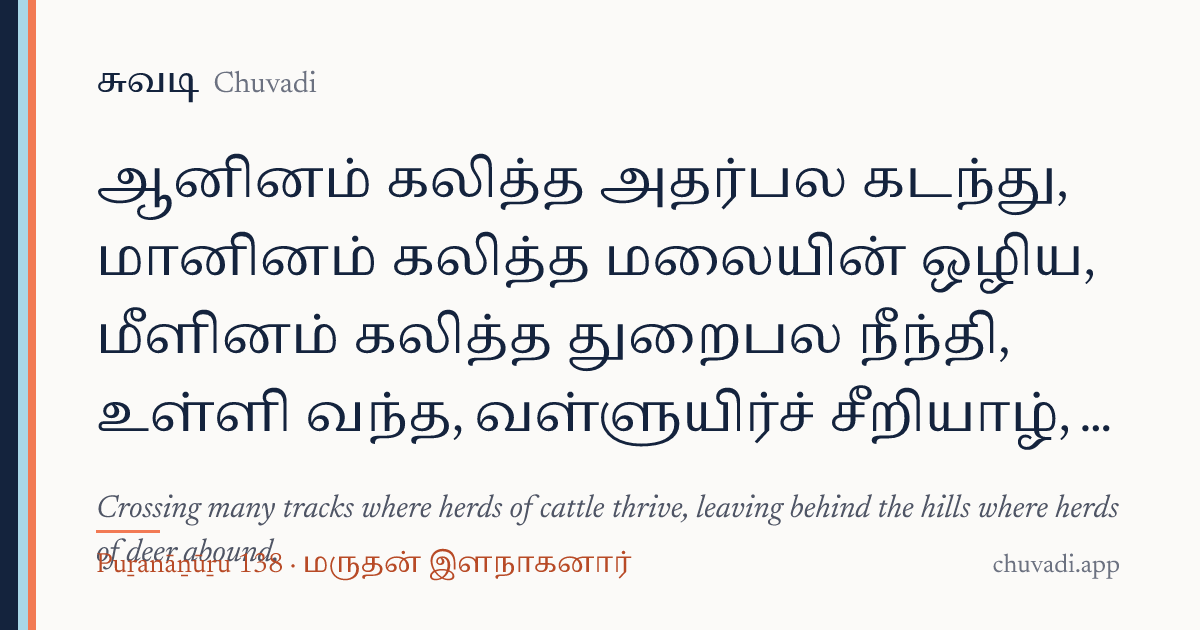
- Crossing many tracks where herds of cattle thrive,
- leaving behind the hills where herds of deer abound,
- swimming through many fords where shoals of fish leap,
- you have come with him in mind — with your rich-voiced little lute,
- your ragged garments, wise old bard!
- You need not think too much: your lord
- will never say, 'Go now and come back later' —
- the husband of the woman with fine jewels and thick dark hair;
- in the wide millet field that parrots haunt,
- he is like the great ear of grain that crowns the stalk; and so
- who would even need to know that you were coming?
What the poem says
Marutaṉ Iḷanākaṉār guides a poor old bard to Āy Aṇṭiraṉ. He describes the bard's long journey across cattle tracks, deer-filled hills and fish-filled fords, his small lute and his ragged clothes. Then he reassures him: there is no need to worry, for Āy will never put him off with 'come back another day'.
The tiṇai is pāṭāṇ, praise of a patron, and the turai pāṇāṟṟuppaṭai, 'guiding a bard', where one performer points another towards a generous patron.
The three opening lines are built in parallel, each with iṉam kalitta, 'where herds thrive'. Lines 9–11 are difficult. The translation takes kural as 'ear of grain': Āy is like the heavy ear of millet in a field full of parrots, ready for whoever comes, so no one needs to announce the bard's arrival. The phrase maraṉ aṇi, 'adorning the tree' or 'stalk', and the exact force of the last line are uncertain; another reading might take kural as 'voice'. The patron is named only as the husband of a woman with fine jewels.